7 Reasons You Need an AI Chatbot on Your Website
Created: 06/04/2026
Ravi runs a mid-size insurance brokerage. Good website, decent traffic, and a team that works hard from 9 to 6. One evening he noticed something in his analytics: 34% of his website sessions happened between 7pm and midnight. He had no live chat, no chatbot, and no automated response. Just a contact form and a promise that "someone will get back to you soon."
He was losing a third of his potential customers to silence.
That's the story behind most businesses that haven't added an AI chatbot yet. They think it's a nice-to-have. It's not. It's plugging a hole that's actively leaking revenue every single day.
Here are seven concrete reasons to add one - with real examples of what each reason costs you when you don't act on it.
1. Your website never sleeps - but your team does
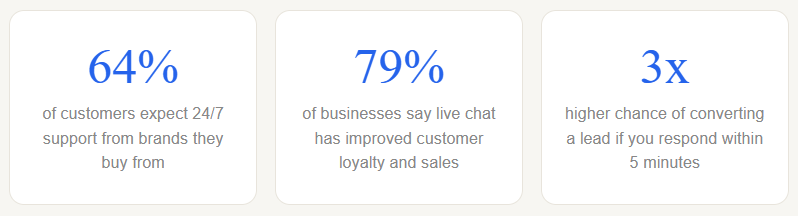
Think about the last time you searched for something at 10 pm. You were ready to buy, or at least to decide. You landed on a site, had a question, and found... nothing. No one to ask. You left and found a competitor who had their information clearer.
That's what your visitors do every night.
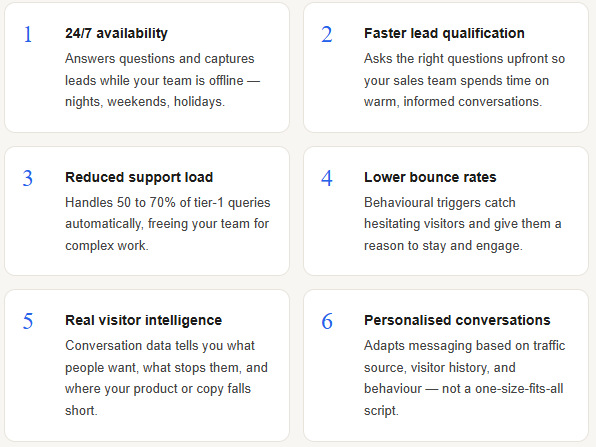
An AI chatbot answers questions at 2 am on a Sunday with the same accuracy and tone as it does at 10 am on a Monday. It doesn't get tired, doesn't give rushed answers, and doesn't make the customer feel like a burden for asking something "obvious."
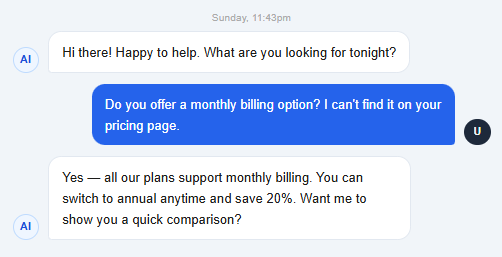
That conversation, at 11:43pm on a Sunday, just saved a customer who was about to leave. No human was awake to have it. The chatbot handled it in 40 seconds

2. You're losing leads while your team types emails
There's a well-documented sales truth: if you respond to an inbound lead within 5 minutes, you're 21 times more likely to qualify them than if you wait 30 minutes. Most businesses take hours. Some take days.
An AI chatbot qualifies leads the moment they land. It asks the right questions - company size, use case, timeline, budget - before your sales team has even seen the notification. By the time a rep picks up the conversation, they already know who they're talking to.
A B2B software company I know added a chatbot specifically to their pricing page - the highest-intent page on their site. Visitors who engaged with the chatbot converted to booked demos at 2.4x the rate of visitors who just read the page and filled out a form.
The difference? The chatbot caught them at the exact moment of intent and gave them a reason to act immediately instead of "thinking about it."
3. Your support team is buried in repetitive questions
Ask any support manager to pull a report on their top 10 incoming ticket types. In most businesses, those 10 categories account for 60 to 70% of all tickets. And most of them have the exact same answer every time.
"What's your return policy?" "How do I reset my password?" "Where's my order?" "Can I change my subscription plan?" "Do you integrate with Slack?"
A support agent answering these questions is the human equivalent of paying a skilled chef to repeatedly butter toast. The agent gets bored, the customer waits unnecessarily, and the tickets pile up.
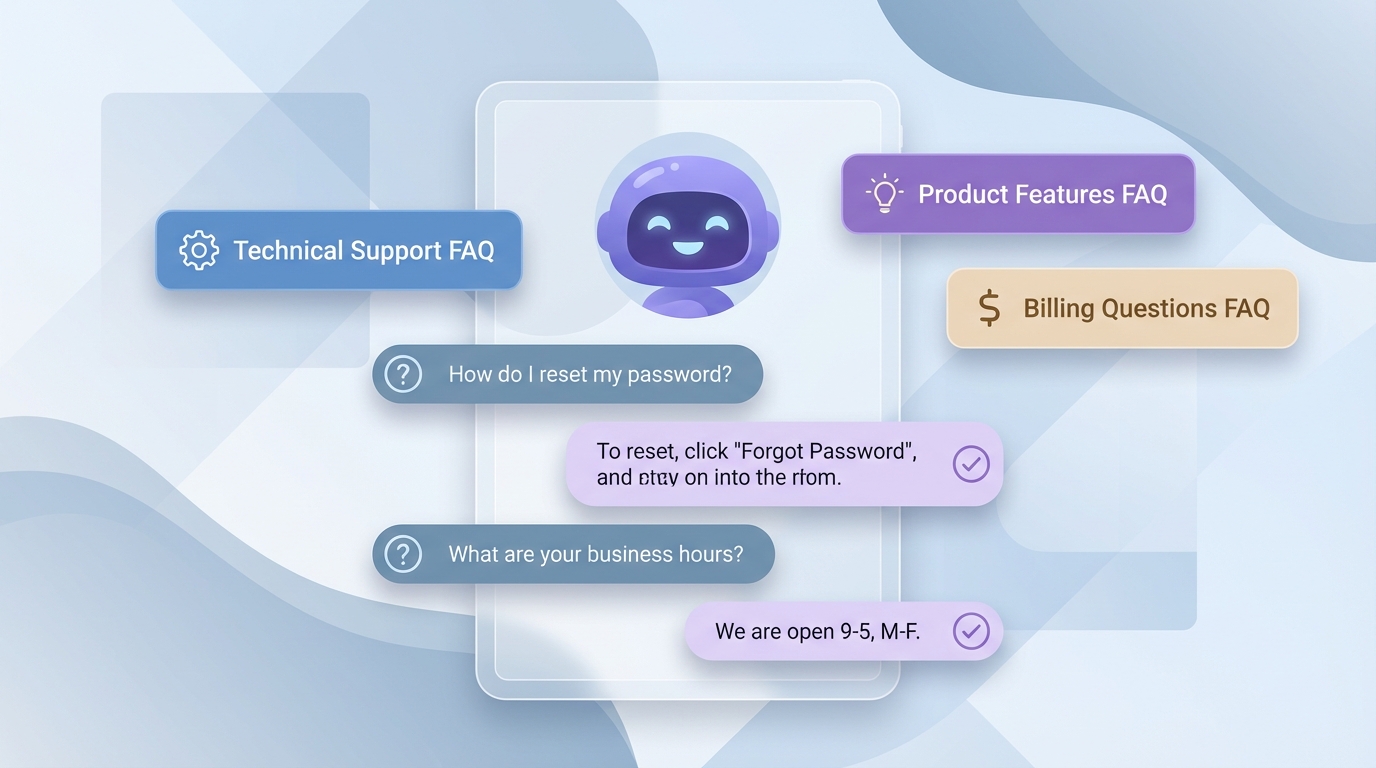
An AI chatbot handles tier-1 support questions instantly. It pulls from your help center, your FAQs, your product documentation. And when something comes up that genuinely needs a human - a billing dispute, a complex technical issue, an angry customer - it hands off cleanly to a live agent with the full conversation context already there.
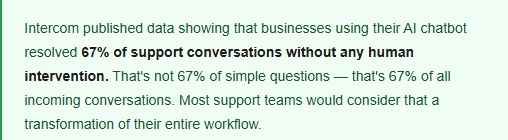
One e-commerce brand with a 12-person support team added a chatbot and cut their average ticket volume by 40% in the first month. Their agents now handle complex cases, escalations, and high-value customers - the work that actually requires empathy and judgment. Response times for human-handled tickets dropped because there were fewer of them.
4. Visitors leave because nobody nudged them to stay
The average website bounce rate sits between 40 and 60%. Most of those people weren't uninterested - they were undecided. They needed a small push: an answer, a suggestion, a reason to keep reading.
A chatbot watches visitor behaviour and acts on it. Someone's been on your pricing page for 90 seconds and hasn't scrolled past the middle? The chatbot surfaces a message: "Trying to figure out which plan fits? I can help narrow it down in 2 questions." Someone's reading a product page and clicked on a feature that's only in your enterprise tier? The bot flags it and offers to explain the difference.
This is behavioural nudging - matching the conversation to where the visitor actually is, not just blasting a generic "Can I help?" message 3 seconds after they land.
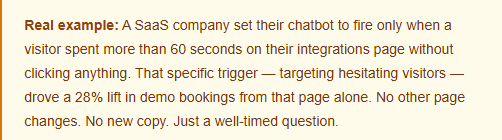
Good chatbots don't interrupt. They read the room and show up when a visitor's behaviour signals they're stuck or uncertain. That's the difference between a chatbot that annoys people and one that genuinely helps them make a decision.
5. You're collecting zero data from people who don't convert
Most businesses only know about customers who buy. They have no idea why the people who didn't buy left. Was it price? A missing feature? A confusing page? A question that went unanswered?
A chatbot gives you that data. Every conversation is a window into what your visitors actually want, what's stopping them, and what language they use to describe their problems. That's market research happening in real time, at scale, for free.
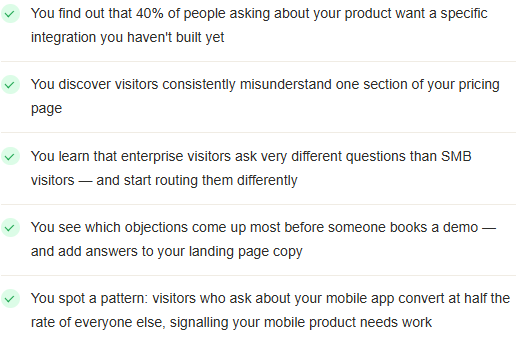
None of this data exists if people land, bounce, and leave silently. The chatbot makes the invisible visible
6. Personalisation at scale was impossible - until now
When a visitor lands on your site, you usually know a few things about them: where they came from, what device they're on, maybe their location. A smart chatbot uses that context to start a relevant conversation instead of a generic one.
Someone coming from a Google ad about "HR software for remote teams" gets a different chatbot greeting than someone who typed your URL directly. Someone returning to your site for the third time gets a different message than a first-time visitor. Someone from a specific industry - healthcare, let's say - gets answers that speak to healthcare use cases, not generic ones.
This kind of personalisation used to require a large team, careful segmentation, and a lot of manual setup. A modern AI chatbot does it dynamically, based on data that's already available to you.
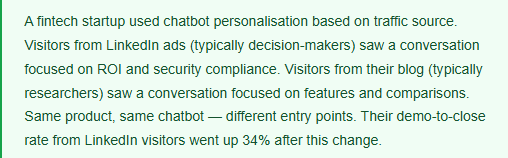
The goal isn't to seem clever. It's to make the visitor feel like the conversation was meant for them - because it was.
7. Your competitors already have one
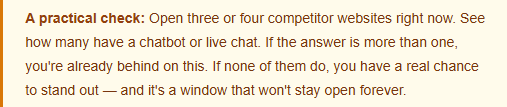
This is the least exciting reason on the list, but it's real. According to Drift's State of Conversational Marketing report, chatbot adoption among B2B companies grew by over 90% in two years. In sectors like e-commerce, SaaS, and financial services, it's now table stakes.
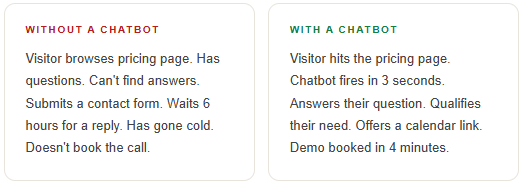
When a visitor bounces from your site and lands on a competitor's - and that competitor's chatbot greets them, answers their question, and books them a call in four minutes - you didn't just lose a lead. You lost a customer to someone who simply made the process easier.
Speed and convenience win in a world where everyone sells a reasonably good product. The business that responds faster, answers clearer, and removes more friction wins more often. A chatbot is one of the most direct ways to improve all three of those things at the same time.
Quick recap: what you actually get
Where to start
Don't try to build a chatbot that does everything on day one. Pick the single biggest leak in your current funnel. If 40% of your traffic is after hours, start there. If your support team drowns in repetitive tickets, start there. If your pricing page has high traffic but low conversions, start there.
Build for one use case, measure it over 30 days, and expand from what you learn. The businesses that get the most from chatbots are the ones who treat them as a living thing - something you tune based on actual conversations - not a one-time setup you forget about.
And if you're still unsure whether a chatbot fits your business, here's the simplest test: look at your last 100 support emails or chat logs. Count how many questions repeat. If the number is above 30%, a chatbot will pay for itself.
Ready to add a chatbot that actually converts?
Set one up in under an hour. No developers needed. Start with the use case that matters most to your business.