Customer Feedback Survey Questions for SaaS You Should Ask
Created: 10/03/2026
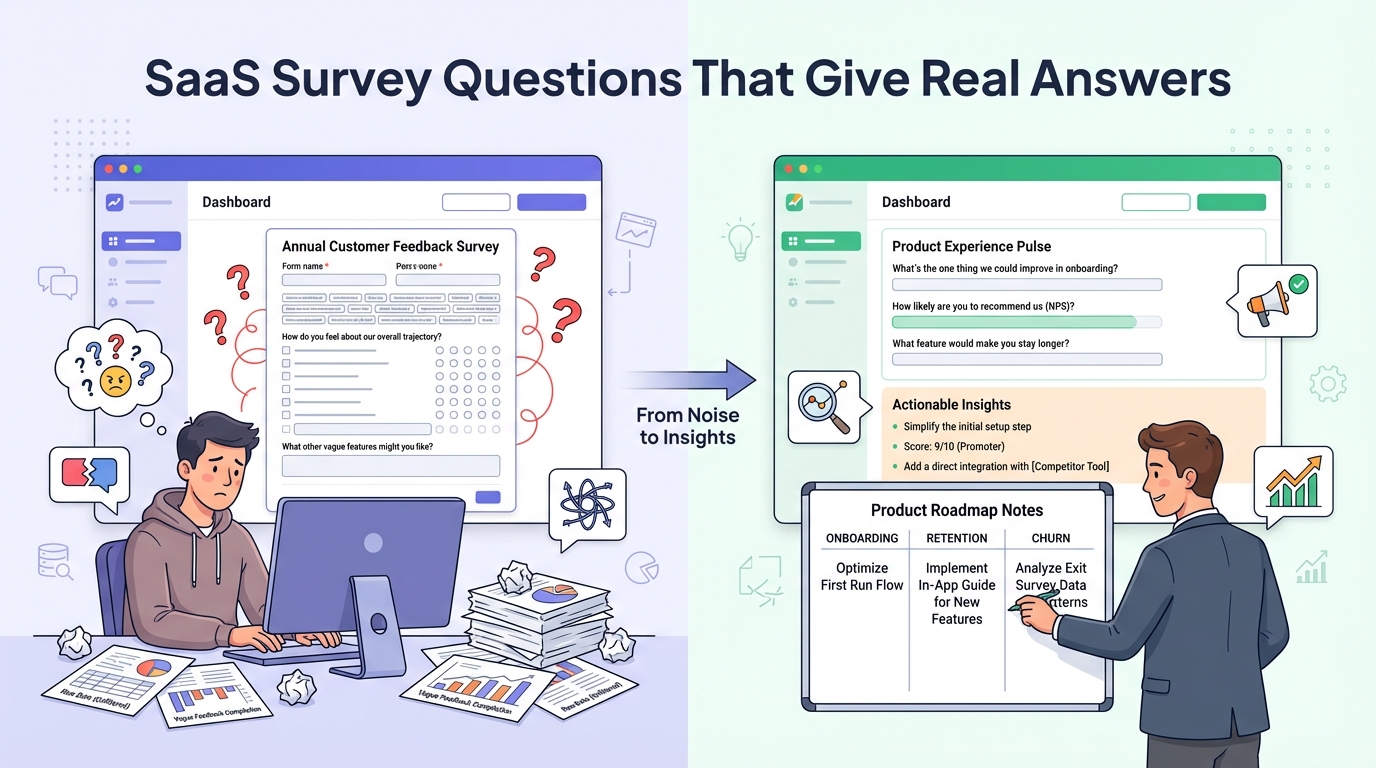
Most SaaS feedback surveys share the same problem: they ask customers how they feel instead of what they actually did, thought, or decided. You get a satisfaction score. You get a thumbs up or down. And then you sit with a spreadsheet full of numbers that don't tell you why anyone churned, why they stayed, or what would make them pay more.
The questions below are different. They're built around specific moments in the customer journey, and each one is designed to give you an answer you can actually do something with.
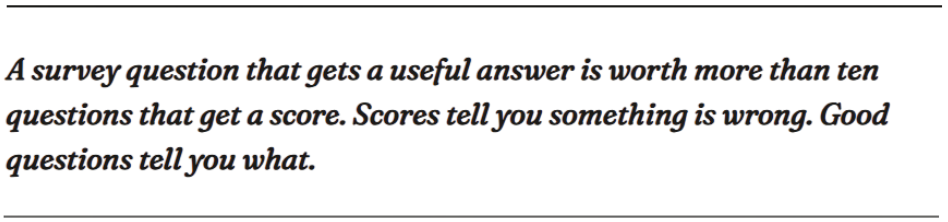
Before the Questions: Two Rules That Change Everything
First, timing matters more than wording. The same question asked on day 3 versus day 30 gives you completely different answers. Ask "how's it going?" too early, and the customer hasn't seen enough to tell you. Ask it too late, and they've already made up their mind without you.
Second, keep surveys short. One well-placed question beats a 15-question form every time. Completion rates for single-question surveys sit around 83%. Add five more questions, and that drops to under 40%. Pick the one question that matters most for where the customer is right now.
With that, here are the questions - organized by when to send them.
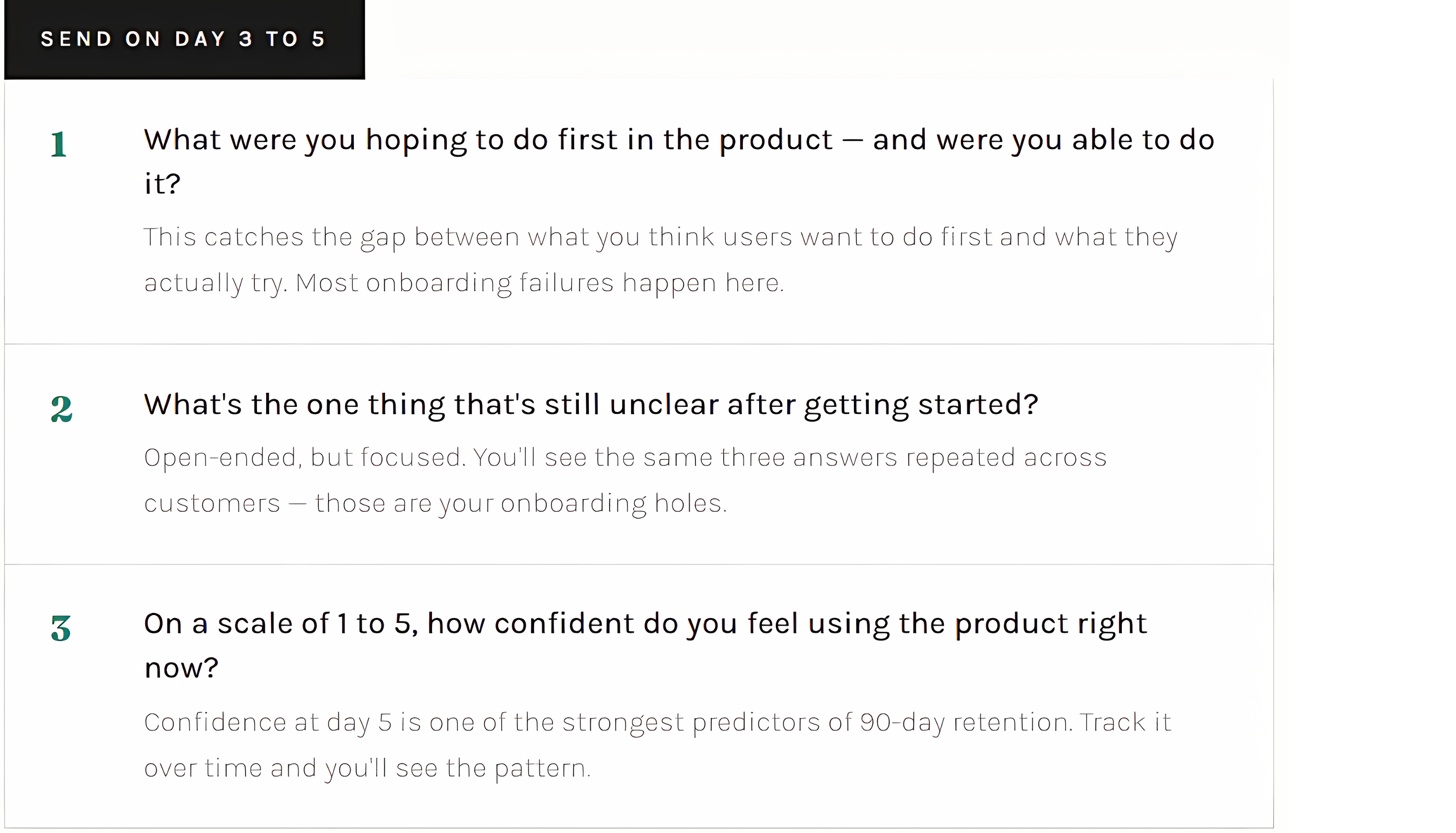
Onboarding (Days 3 to 7)
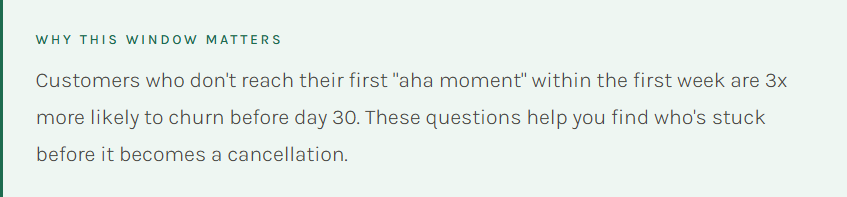
This is the highest-stakes window in the customer lifecycle. People are forming their first impressions, hitting their first walls, and deciding whether the product is worth figuring out. Ask the wrong thing here, and you waste the window.
After First Value (Day 14 to 30)
By now, customers have used the product enough to have an opinion. This is when you want to understand what's actually working, not just whether they're happy.
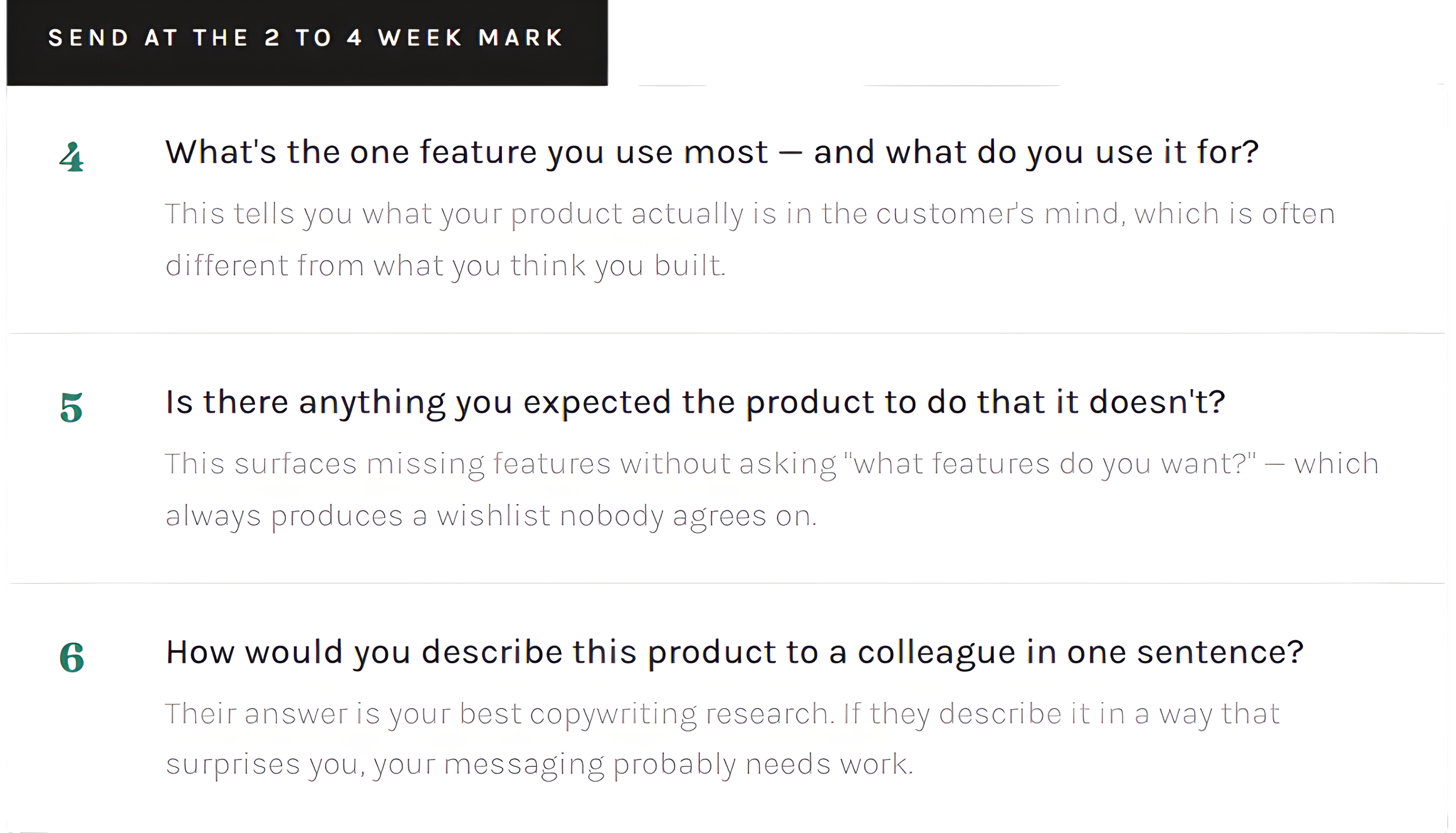
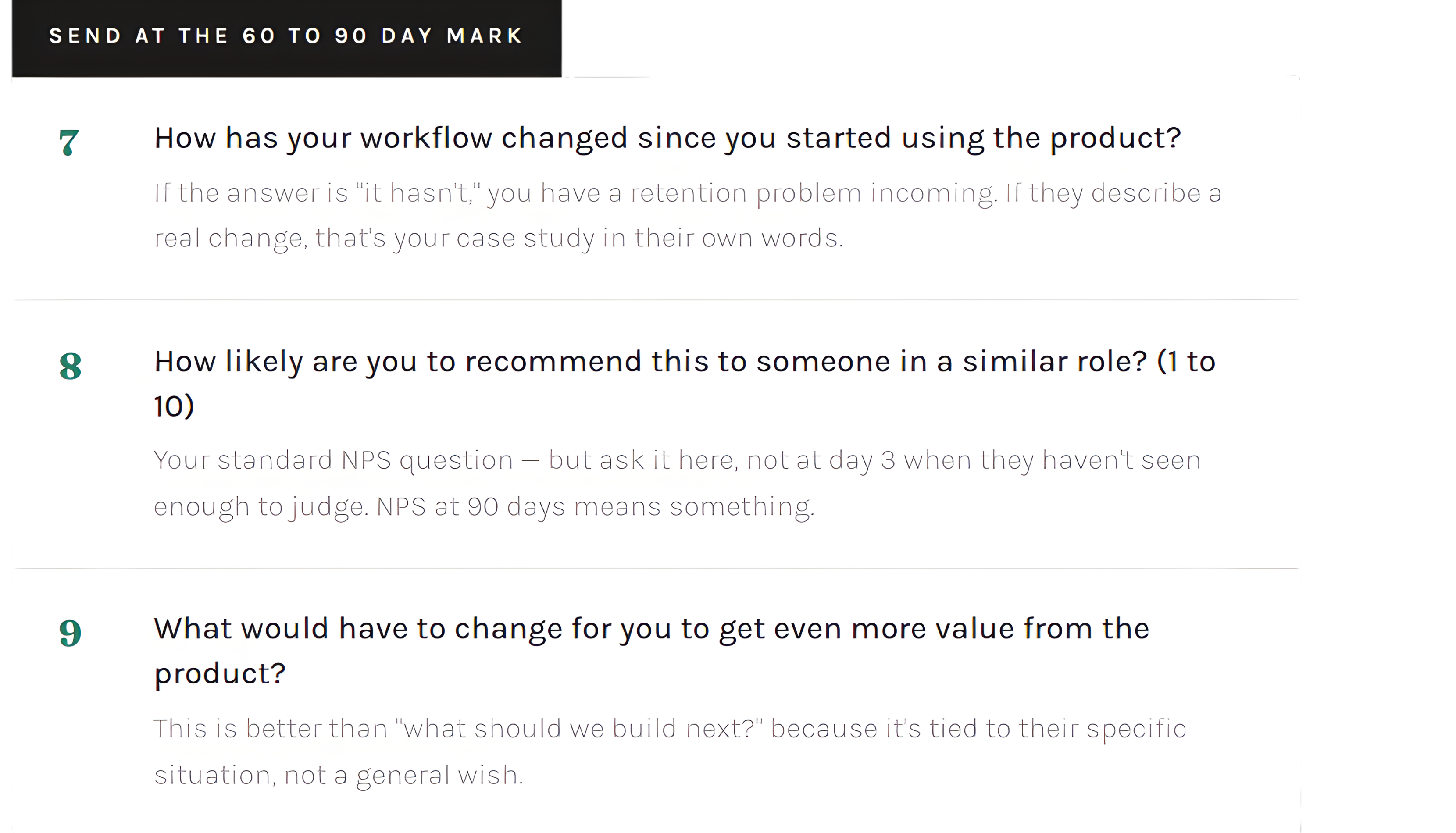
Retention Check (60 to 90 Days)
Customers who've made it to 90 days have decided the product is worth keeping - for now. This is when you find out if they're getting real value or just haven't gotten around to cancelling.
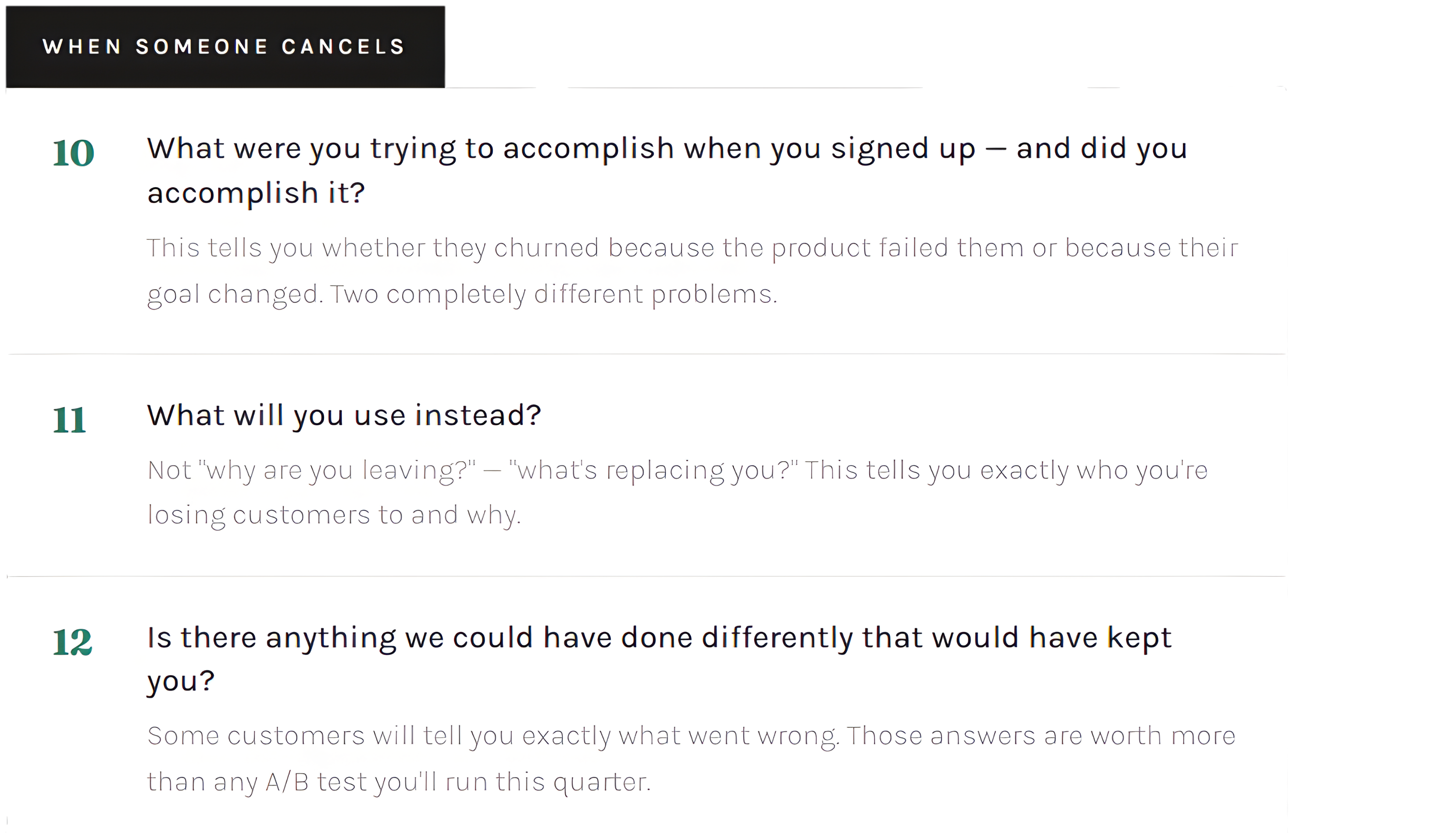
Churn Exit Survey
Most exit surveys ask "Why are you leaving?" and get vague answers like "too expensive" or "missing features." Those answers aren't wrong - but they're not specific enough to act on. Ask these instead.
How to Word Questions So People Actually Answer Them
The wording matters almost as much as the question itself. Vague questions get vague answers. Here's the difference in practice:
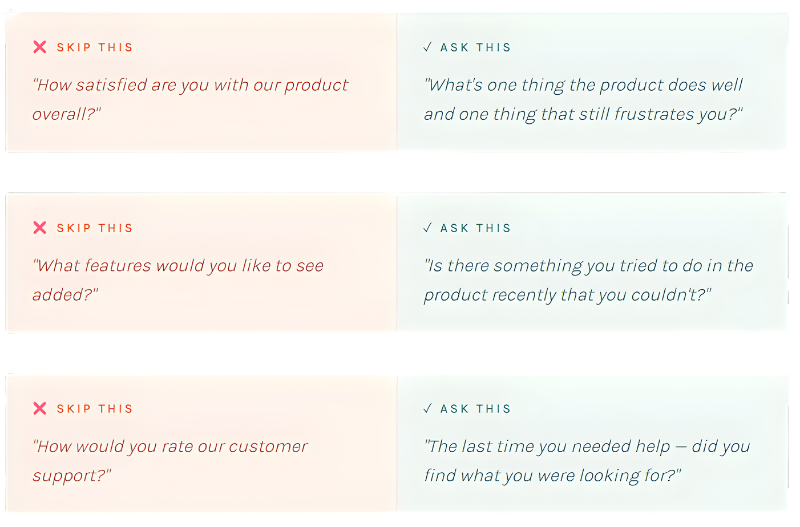
The pattern is the same each time. Specific, situational questions get specific, useful answers. Rating scale questions get numbers you can track but can't act on.
When to Send Each Survey
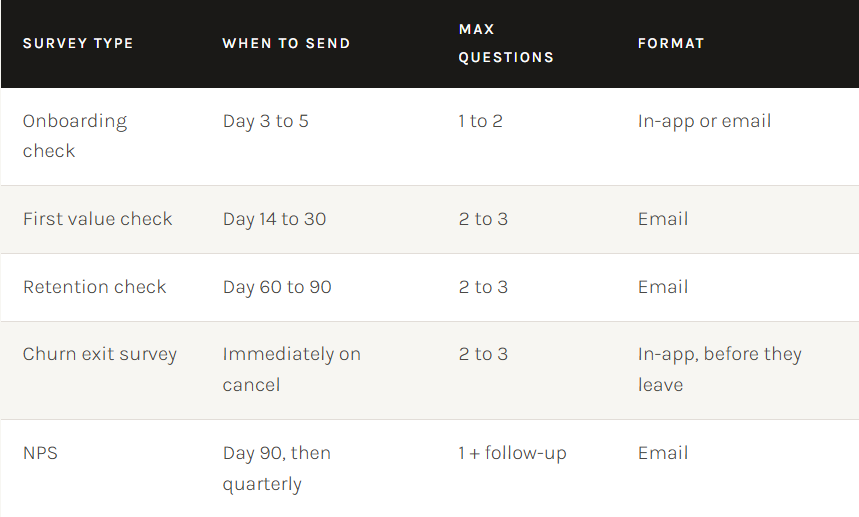
The One Thing Most SaaS Teams Skip
Collecting the feedback is the easy part. The teams that actually improve retention are the ones who close the loop - they tell customers what changed because of what they said.
Even a short email that says "you mentioned onboarding was confusing, so we rebuilt the setup flow last month" does two things: it shows the customer their feedback mattered, and it gives a disengaged customer a reason to come back and try again.
Most SaaS teams send the survey, read the results, share them in a Slack channel, and move on. That's why the same feedback shows up in next quarter's survey too.
Good survey questions are specific, timed to a real moment, and short enough that people actually finish them. The 12 questions above cover the full customer journey - pick the ones that fit where your customers are right now, not all of them at once.
One useful answer beats ten vague ones every time.

Improve Retention With Better Questions
Build surveys that uncover why users stay, churn, or upgrade instead of collecting empty scores.
What survey form would you like to create?
Describe your idea, and AI will generate and configure the perfect survey form.