Chatbot Solutions for Shopify Store
Created: 25/12/2025
Running a Shopify store means answering the same questions again and again. Where is my order. Do you ship to my city. What is your return policy. As your store grows, these questions pile up. Customers expect fast replies. Waiting hours costs trust and sales.
Customer support chatbots help Shopify stores handle this load without hiring more agents. When set up well, they answer common questions, guide shoppers, and free your team to focus on real problems.
This guide explains what Shopify-compatible customer support chatbots are, how they work, and how to choose the right one.
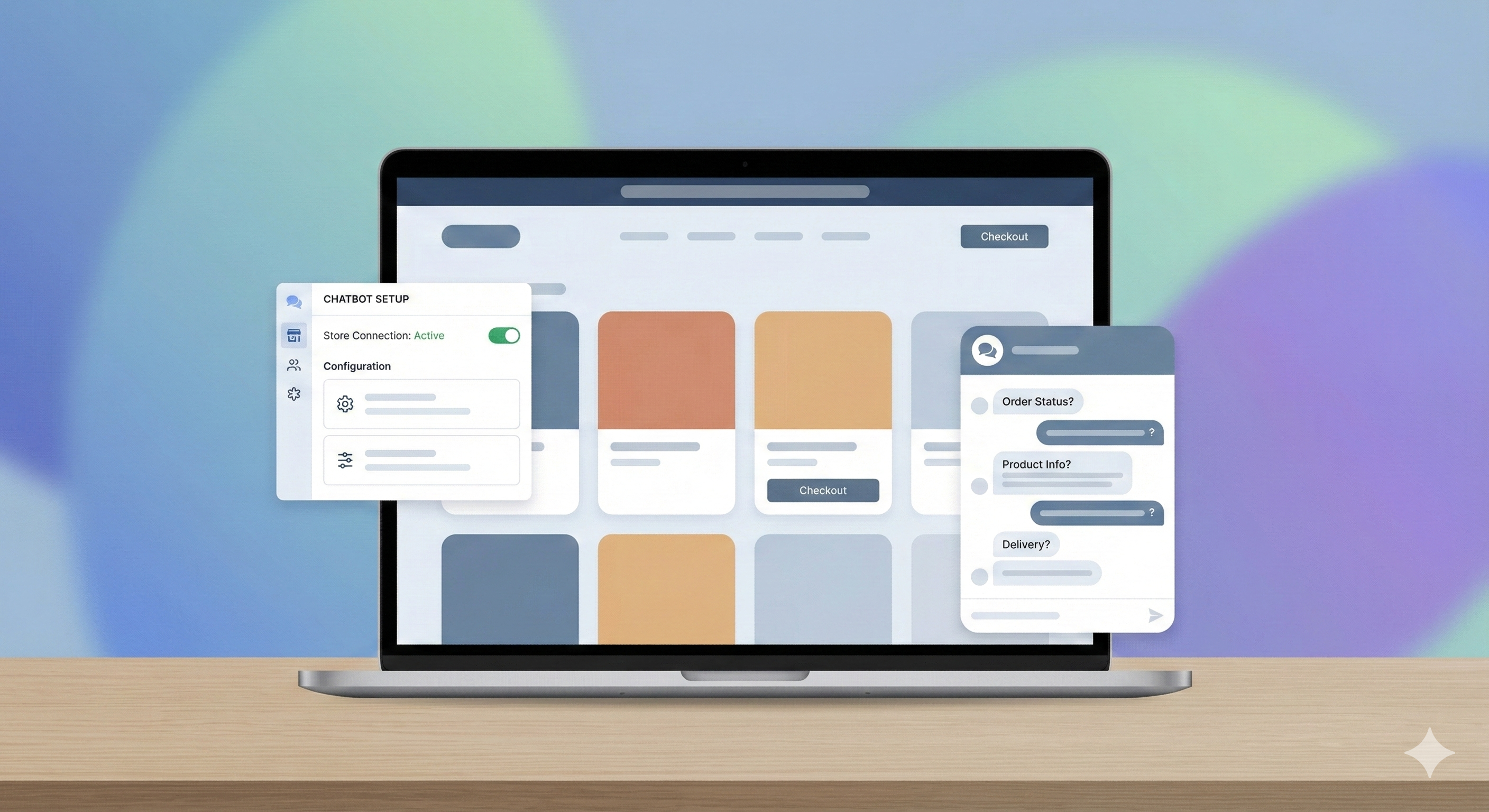
Build a Chatbot for Your Shopify Store
Create a chatbot that answers customer questions about products, orders, and policies directly on your Shopify store.
Why Shopify Stores Need Customer Support Chatbots
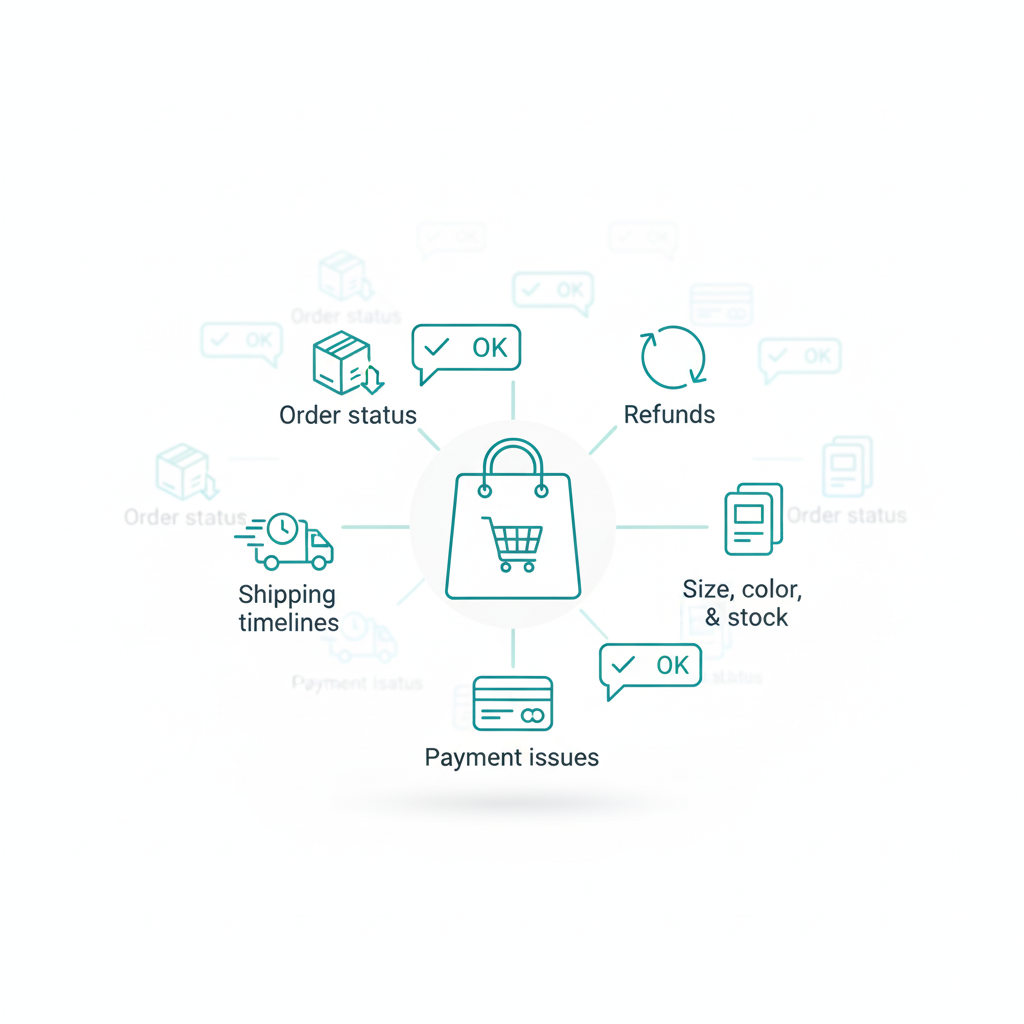
Most Shopify support tickets fall into a few categories.
Order tracking
Shipping and delivery timelines
Returns and refunds
Product details like size, color, and stock
Payment and checkout issues
These questions do not need a human every time. A chatbot can answer them instantly, day or night.
Without a chatbot, support teams spend hours replying to the same messages. That slows response time for customers with urgent issues. It also increases support costs as ticket volume grows.
A chatbot handles repetitive questions automatically. Customers get answers right away. Support teams get fewer tickets. Everyone wins.
What Makes a Chatbot Compatible With Shopify
Not every chatbot works well with Shopify. The good ones integrate directly with your store's data. They can pull information about products, check order status, review shipping details, and reference your return policies without you manually updating anything.
The best solutions let the chatbot actually help customers take action. That might mean updating a cart, applying a discount code, or starting a return. All without leaving the chat window.
For store owners who aren't developers, setup matters. Look for solutions that don't require coding skills. Many modern chatbots offer visual builders where you drag and drop conversation flows.
And since most shopping happens on phones now, the chatbot needs to load quickly and work smoothly on small screens.
Key Features to Look for in a Shopify Customer Support Chatbot
24/7 Automated Customer Support
Customers shop at all hours. A chatbot gives instant responses at 2 AM or during holidays when your support team is offline. It answers frequently asked questions about shipping times, return policies, and payment methods without waiting for someone to clock in.
Order Tracking and Account Queries
"Where is my order?" is the most common support question in e-commerce. A good chatbot pulls tracking information automatically when a customer provides their order number or email. It shows the current status, estimated delivery date, and carrier details. No ticket needed.
Product and Inventory Assistance
Shoppers need help choosing products. Chatbots can recommend items based on what someone is looking at, answer questions about size or color availability, and let customers know when out-of-stock items will return. This pre-purchase support directly impacts conversion rates.
Returns, Refunds, and Policy Handling
Return policies confuse people. A chatbot explains your rules clearly, checks if an order qualifies for a return, and walks customers through the process step by step. This prevents frustrated customers from opening tickets or leaving negative reviews.
Multilingual Support
If you sell internationally, language becomes a barrier. Chatbots with multilingual capabilities can detect a customer's language and respond accordingly. This builds trust and makes international customers more likely to complete purchases.
Try a Shopify Support Chatbot
Create a simple chatbot and see how it works with your Shopify store.
3 Month Free Trail
Types of Customer Support Chatbots for Shopify Stores
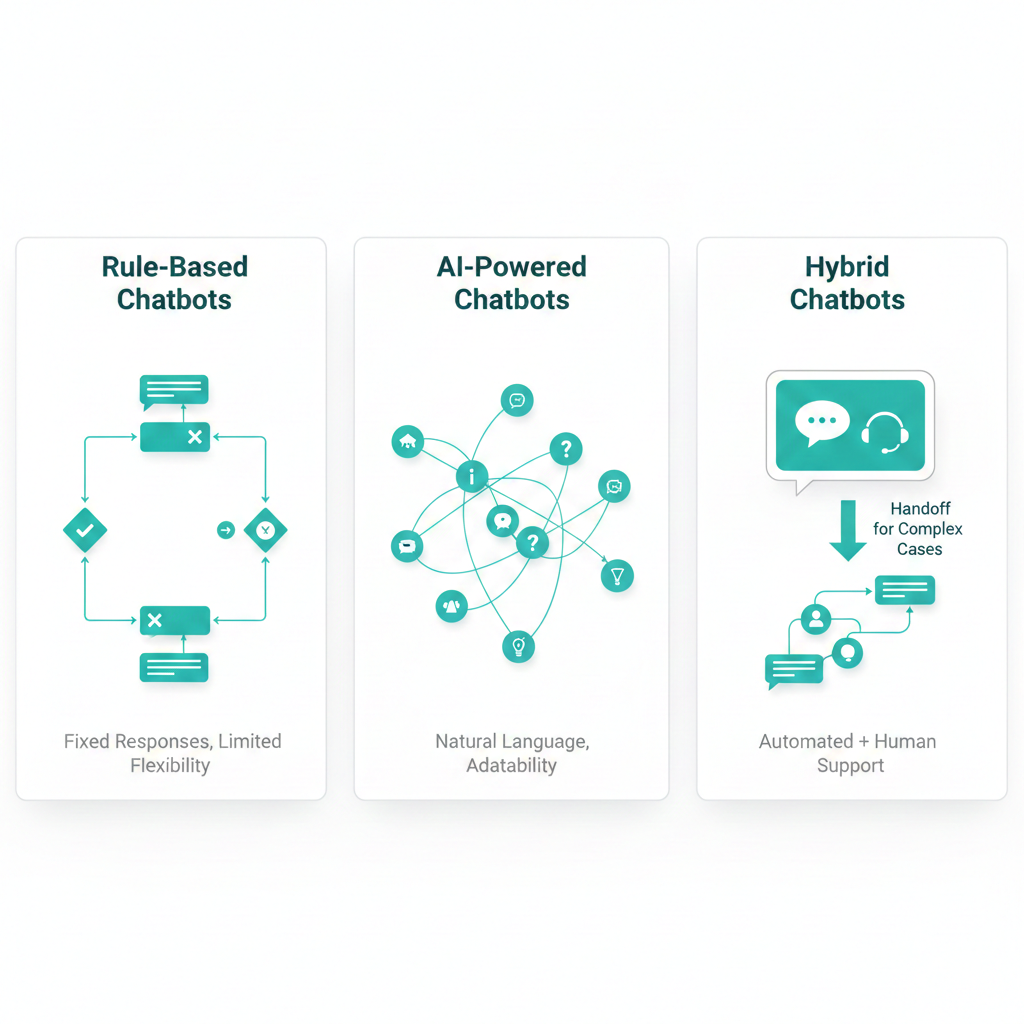
Rule-based chatbots work like flowcharts. When a customer picks option A, they get response B. These handle simple FAQs well but struggle with anything outside their script. If someone phrases a question differently than expected, the bot gets confused.
AI-powered chatbots understand natural language. They can interpret questions even when phrased in unusual ways and learn from past conversations to improve over time. These handle complex queries much better but cost more and take longer to set up properly.
Hybrid chatbots combine automation with human backup. The bot handles everything it can, then transfers complicated issues to a real person. This gives you efficiency without frustrating customers when the bot hits its limits. For most growing Shopify stores, this is the sweet spot.
Popular Customer Support Chatbot Solutions for Shopify
Several chatbot platforms integrate directly with Shopify. They differ in how easy they are to set up, how smart their AI is, how deeply they connect with your store data, and what they cost.
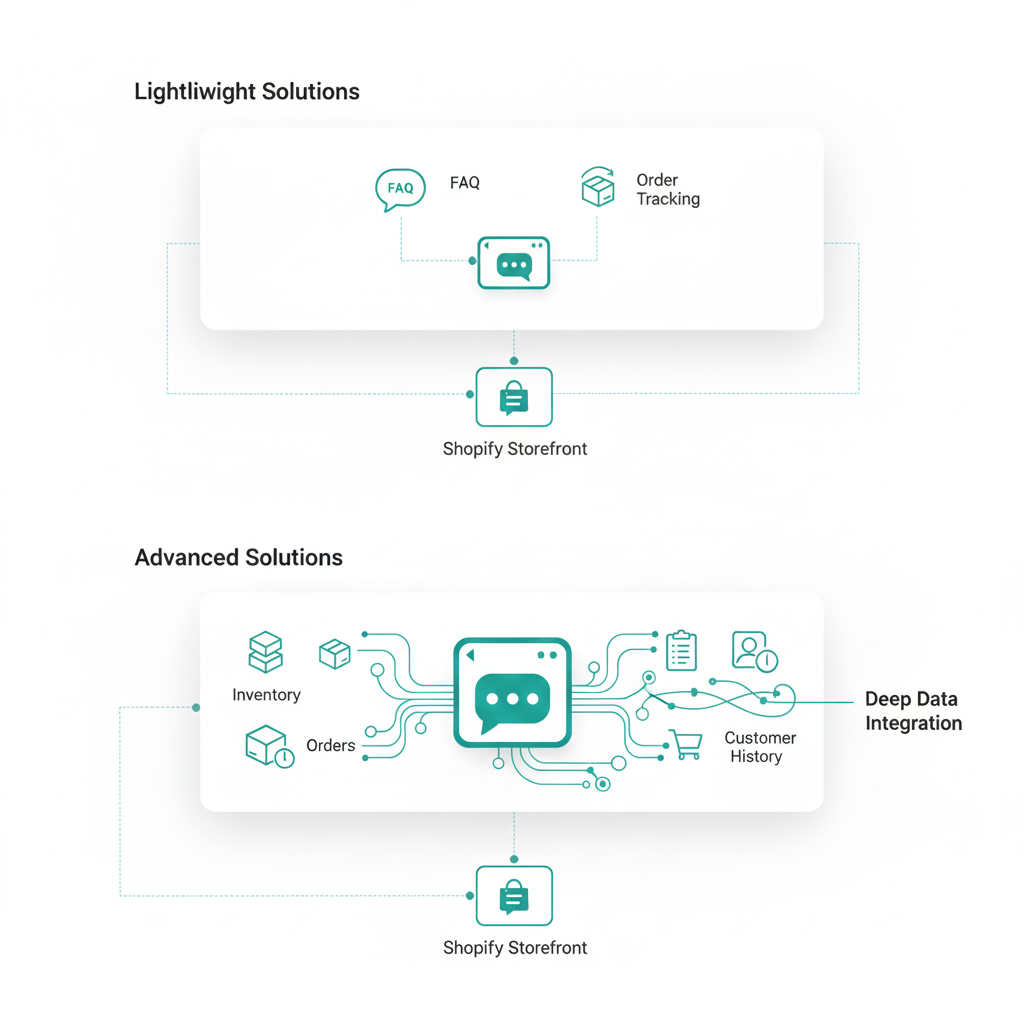
Lightweight solutions work well for stores getting 50-200 support messages per month. They handle basic FAQs and order tracking without much configuration. Think of these as entry-level options that get you started quickly.
Advanced solutions make sense for stores with higher volume or more complex needs. They offer better AI, more customization options, deeper Shopify integration, and features like abandoned cart recovery through chat. The tradeoff is steeper pricing and more setup time.
When comparing options, test how well they actually pull data from your Shopify store. Some claim deep integration but only connect at a surface level. Check if they can access real-time inventory, order status, customer purchase history, and policy information.
How to Choose the Right Shopify Support Chatbot
Start by looking at your support data.
What questions repeat most
How many tickets arrive each day
How often do customers ask about orders
Whether support slows down during peak hours
If most tickets are repetitive, automation will help immediately.
Tools like Simplagents work well for stores that want to automate common questions while keeping the option for human support. It suits stores that want quick setup, control over training data, and answers that reflect their actual store content.
Do not automate everything on day one. Start with the top questions. Expand as you see results.
Benefits of Using a Shopify Compatible Support Chatbot
Faster response times
Lower support workload
More consistent answers
Better customer satisfaction
Higher chance of repeat purchases
Customers remember quick help. They leave when support feels slow or unclear.
Common Mistakes Shopify Stores Make With Chatbots
Over-automation without human fallback frustrates customers. If the bot can't answer something and there's no way to reach a person, people give up. Always include an escalation path.
Poor training data makes AI bots give wrong answers. If you feed the bot incomplete or outdated information about your policies, it spreads that misinformation to customers. Start with accurate data and update it regularly.
Ignoring brand tone creates a disconnect. If your brand is casual and friendly, but the bot sounds like a corporate manual, it feels jarring. Customize the bot's personality to match how you normally talk to customers.
Treating a chatbot as a replacement instead of support loses the human element that builds loyalty. Bots handle volume and repetition. Humans build relationships and solve complex problems. You need both.
Best Practices for Implementing a Shopify Support Chatbot
Pull your top 20 most common support questions and build bot responses for those first. This immediately takes repetitive work off your plate.
Train the bot using real customer conversations. Look at actual tickets to see how people phrase questions. Don't just write responses in your own words; make sure the bot recognizes how customers actually ask things.
Monitor what the bot can't answer. Most platforms show you questions the bot struggled with. Review these weekly and add new responses or refine existing ones.
Keep improving based on customer feedback. If people frequently ask for a human after the bot responds, that response needs work. If certain topics always escalate, those might need to stay human-only.
Future of Customer Support Chatbots in Shopify
Chat commerce is growing. More stores let customers browse products, ask questions, and complete purchases entirely through chat conversations. The line between support and sales blurs.
Chat-based checkout removes friction. Instead of navigating a checkout page, customers can complete their purchase by responding to the chatbot's prompts. This works particularly well on mobile.
Personalization using customer data makes bots more helpful. A returning customer might see product recommendations based on past purchases. The bot might proactively offer help based on browsing behavior.
AI agents are getting sophisticated enough to replace traditional help desk software for smaller stores. They handle tickets, track conversations, assign complex issues to humans, and report on common problems. The full support workflow happens through conversational AI.
Conclusion
Customer support chatbots have moved from nice-to-have to necessary for Shopify stores that want to scale. Customers expect fast answers. Manual support can't keep up without major hiring. Chatbots handle the repetitive questions that make up most tickets, freeing your team for work that matters.
The right chatbot does more than save money. It improves the customer experience by providing instant help, answers pre-purchase questions that close sales, and gives customers confidence they'll get support if needed.
For Shopify merchants considering automation, start simple. Identify your most common support questions, choose a chatbot solution that integrates directly with Shopify, and launch with answers to those top questions. You can always expand from there. The stores that implement support automation now will have a clear advantage as customer expectations keep rising.
Ready to Add a Shopify Support Chatbot?
Create a chatbot that helps customers on your store.