The Difference Between AI Chatbots, AI Assistants, and AI Agents
Created: 11/01/2026
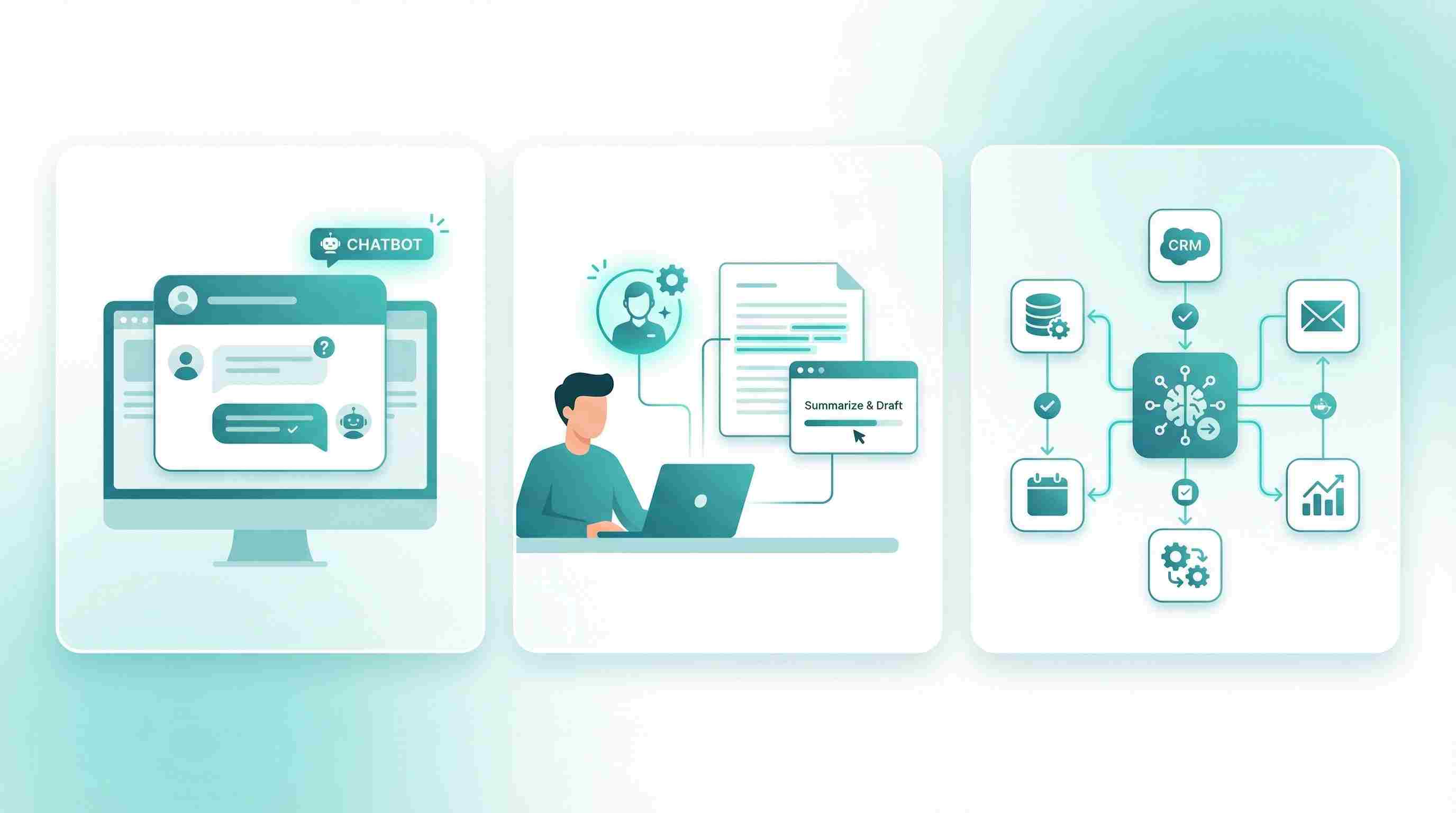
People use these terms interchangeably. That creates confusion and bad buying decisions. Each category solves a different problem and fits a different stage of business maturity. This guide clears it up with plain language and real examples.
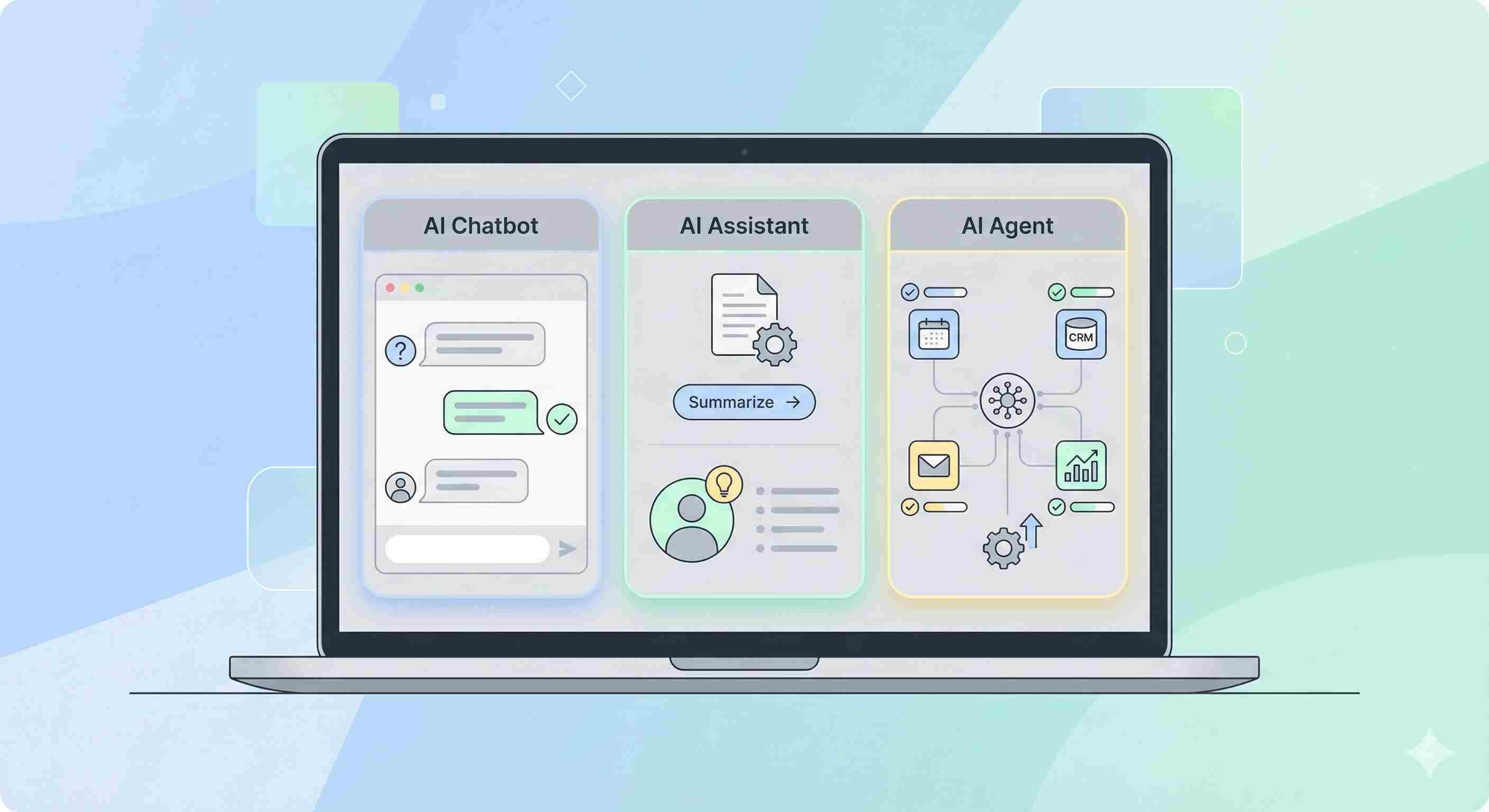
Start with the AI That Fits You Best
Create AI chatbots, assistants, or full AI agents based on how much automation and control your business needs.
What AI chatbots actually do
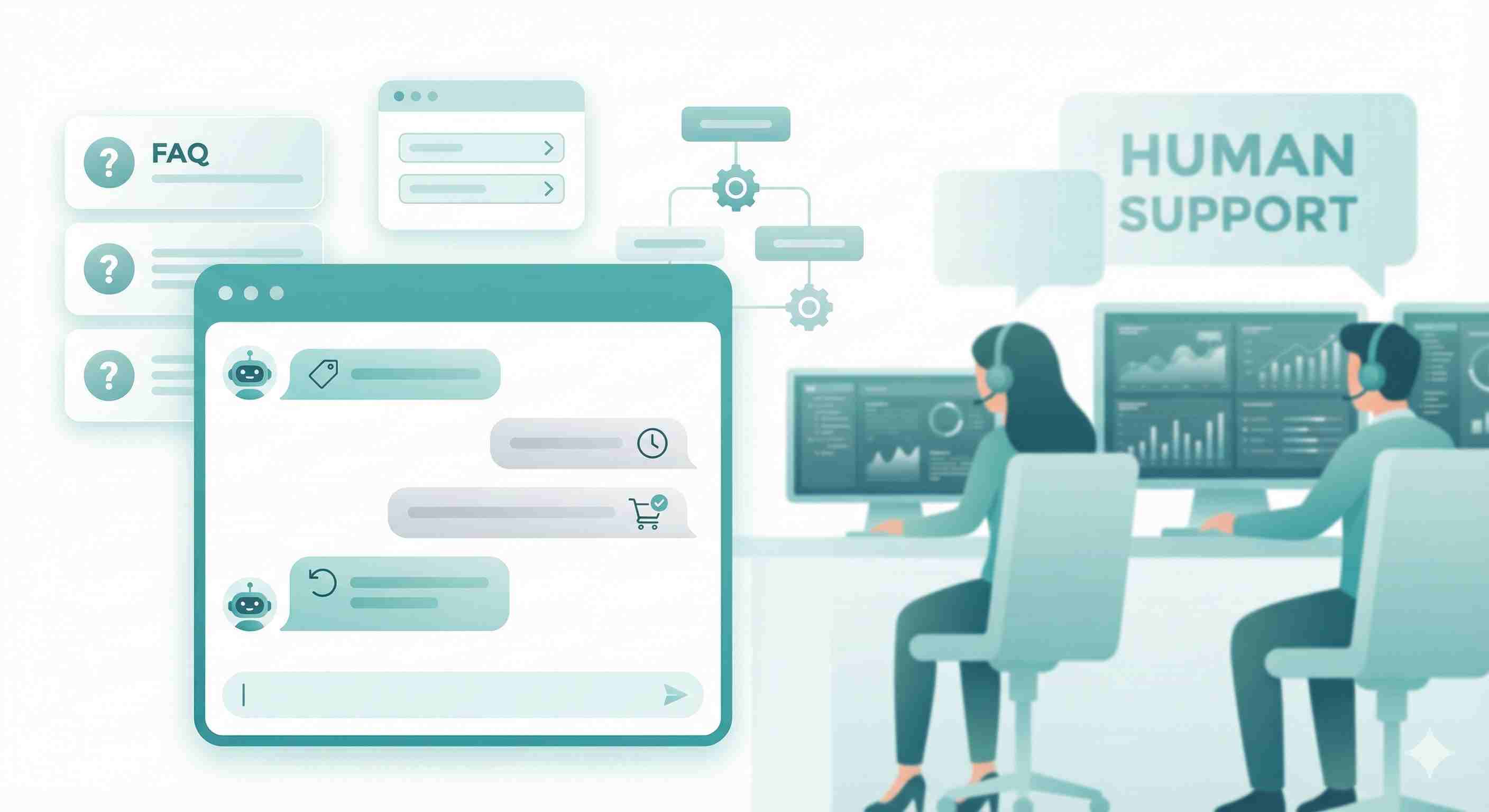
AI chatbots handle conversations. They respond to messages based on rules or trained data. Most live on websites apps, or messaging tools.
You see them answering common questions like pricing hours, refunds, or order status. Some are rule-based. Some use language models. Either way, their job stays narrow.
Where chatbots work well
1. Website support for repetitive questions
2. Lead capture with simple forms
3. Order tracking and basic troubleshooting
What to watch out for
They stop being useful when the question needs context across systems or a decision that changes a process.
Example
An e-commerce store uses a chatbot to answer shipping questions and share return links. It cuts ticket volume and keeps humans free for harder cases.
What AI assistants are built for
AI assistants help a person do tasks faster. They sit beside the user and respond to instructions. Think drafting emails summarizing documents, scheduling meetings, or pulling info on request.
They rely on prompts. They do not act on their own.
Where assistants work well
1. Writing emails, proposals, or reports
2. Summarizing calls, documents, or threads
3. Personal productivity and research
What to watch out for
They wait for instructions. If no one asks, they do nothing. They also struggle when tasks require coordination across tools without human guidance.
Example
A sales rep asks an assistant to summarize a call and draft a follow-up email. The rep reviews and sends it.
.jpg)
What AI agents are designed to handle
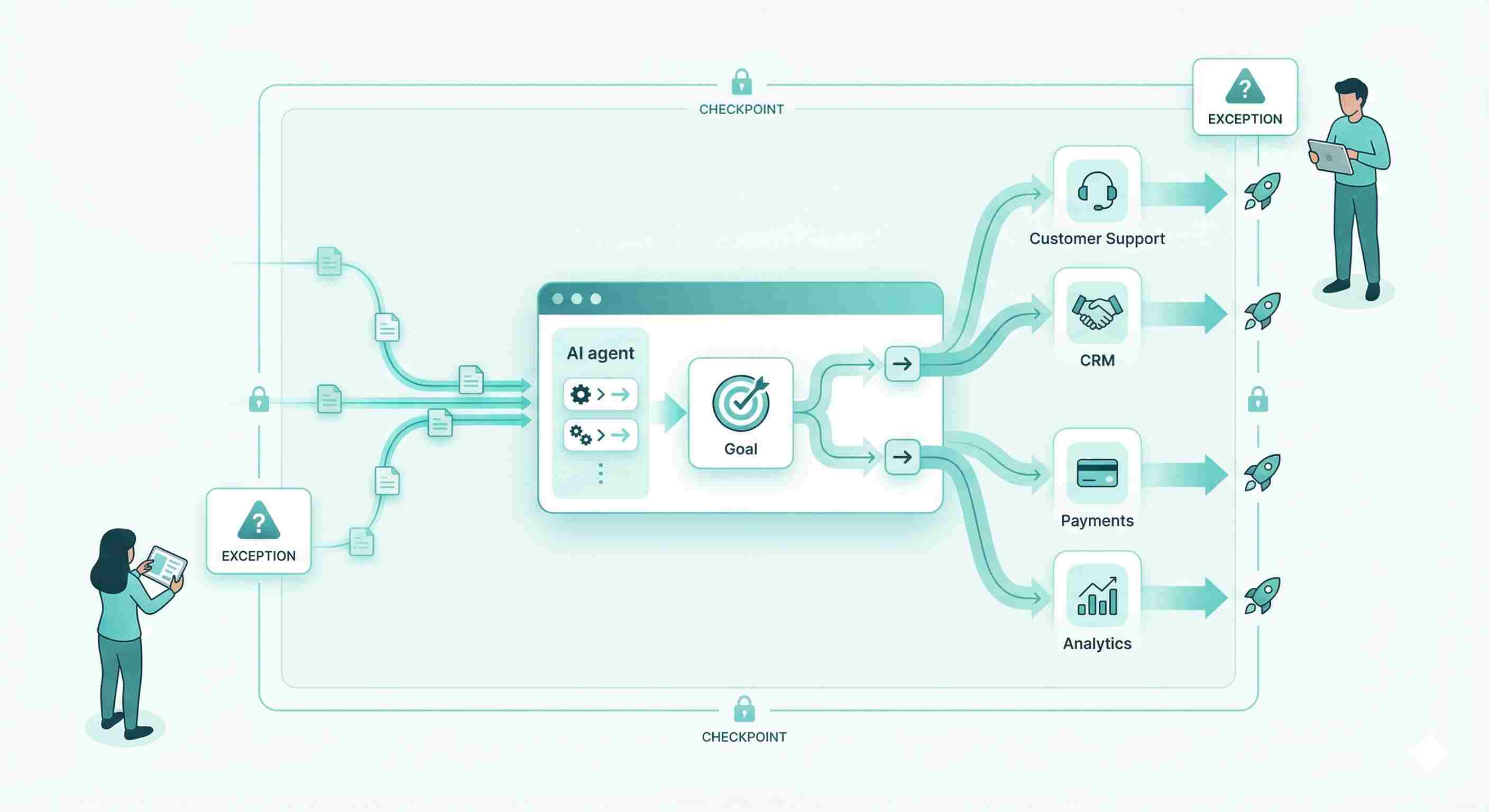
AI agents take goals and act on them. They connect to tools, follow steps, make decisions, and keep going until the job is done or a limit is hit.
Agents can monitor data, trigger actions, and adapt based on outcomes. They work with minimal human input once set up.
Where agents work well
1. Customer support that resolves tickets end-to-end
2. Sales follow-ups based on behavior and timing
3. Operations tasks like data syncing, reporting, or alerts
What to watch out for
They need clear guardrails. Poor setup leads to errors or wasted actions. Governance matters.
Example
A support agent watches incoming tickets. It checks order data, processes refunds when rules match, updates the CRM and notifies the customer. Humans step in only for exceptions.
So Which One Do You Actually Need?
It depends on what problem you're solving.
Go with a chatbot if:
• You're answering the same questions over and over
• The interactions are straightforward
• You want something simple and affordable
• You need basic customer service coverage after hours
Choose an assistant if:
• You want help managing multiple tasks across different apps
• Personalization matters
• You need something that remembers context
• You're looking to streamline your daily workflow
Consider an agent if:
• You have complex, ongoing tasks that require judgment
• You can clearly define the goal, but the path to get there varies
• You're comfortable with some level of autonomous operation
• You have the resources to monitor and refine the agent's performance
What This Means for Your Business
If you're thinking about implementing AI, start by mapping out what you actually need it to do.
Are customers asking the same five questions constantly? A chatbot probably solves that.
Do your team members waste time on repetitive tasks that span multiple tools? An assistant might save hours every week.
Do you have strategic work that requires ongoing attention but doesn't need to be done by a human? That's where agents could make a real difference.
And remember, you don't have to pick just one. Many businesses use chatbots for customer service, assistants for internal productivity, and are starting to experiment with agents for specialized projects.
The key is understanding what each type of AI can actually do, so you're not expecting a chatbot to act like an agent or paying for an agent when a simple chatbot would do the job.
As this technology continues developing, the distinctions will probably shift. But for now, knowing these differences helps you make smarter decisions about which AI tools are worth your time and money.
Build the Right AI for Your Needs
Create a simple chatbot, assistant, or agent and see what works best for you.