Why Most Static Forms Fail (And What Actually Works)
Created: 19/12/2025
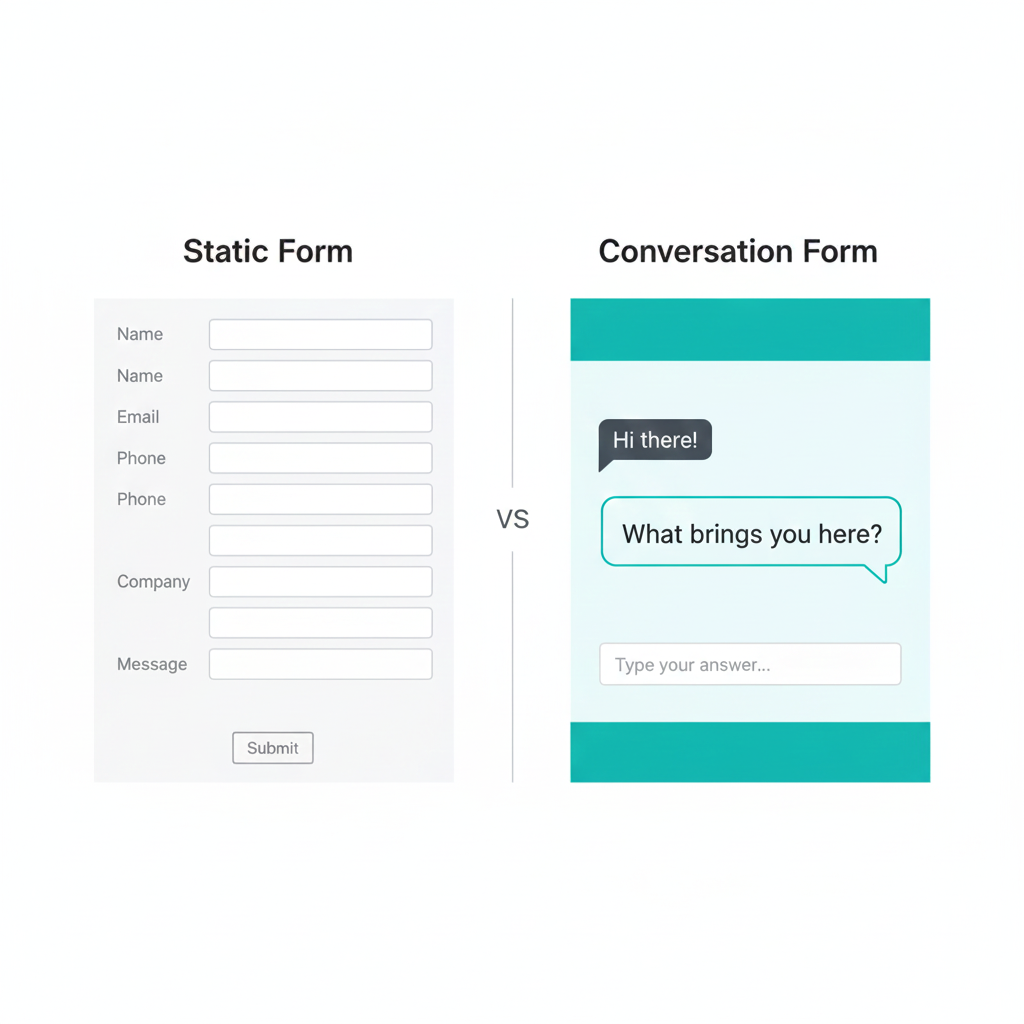
You've seen them everywhere. Those boring boxes asking for your name, email, and a message. You fill them out, hit submit, and wonder if anyone will actually respond.
Static forms have become background noise on the internet. People ignore them, abandon them halfway through, or fill them with garbage data just to get past them. The completion rates tell the story: traditional forms convert around 5-10% of visitors who start them.
There's a reason for this. Filling out a form feels like paperwork. It's one-sided. Cold. You're doing all the work while a website just sits there, waiting.
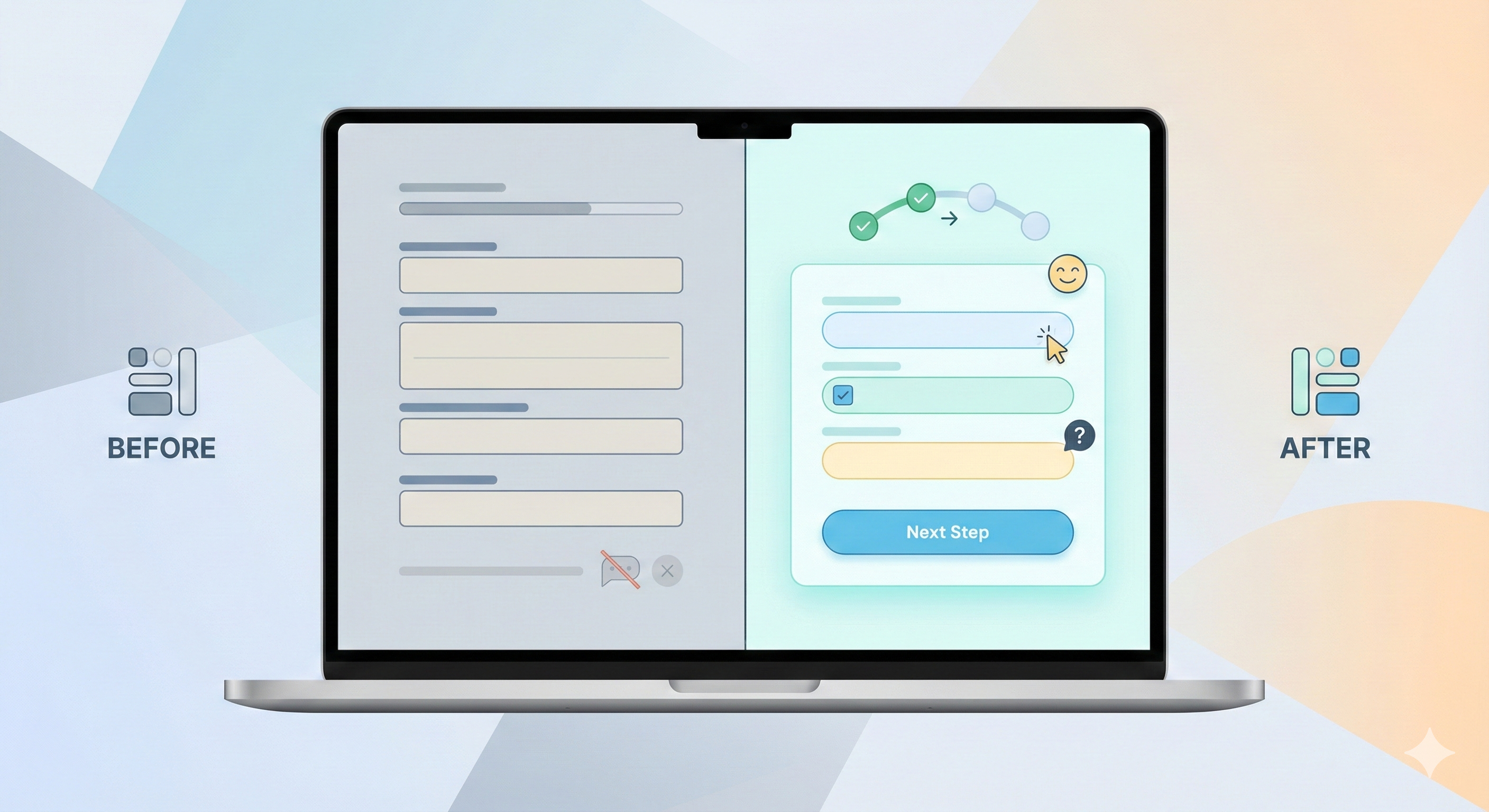
Try a Better Form Experience
Create a simple form and see how interactive flows improve engagement.
The Problem With Traditional Forms
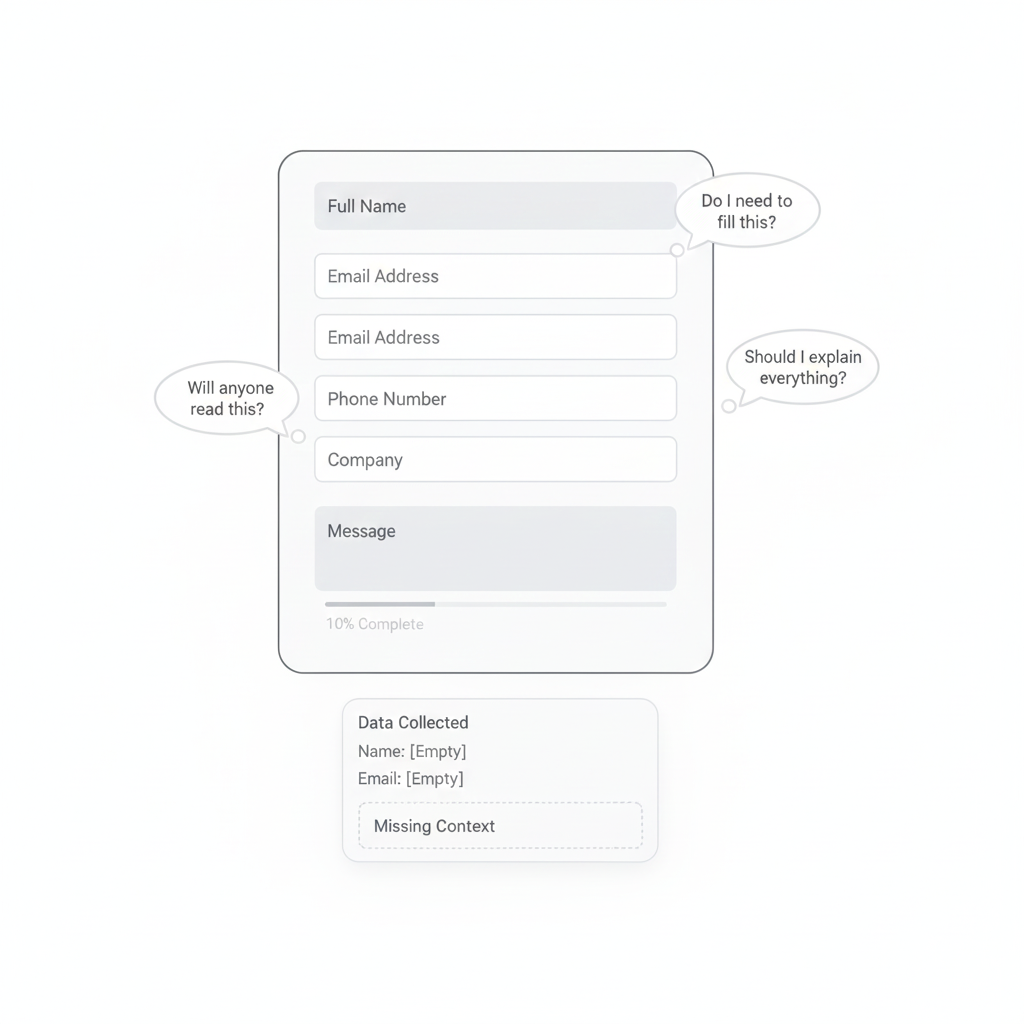
Think about the last time you filled out a contact form. You probably had questions. "Do I need to include my phone number?" "Should I explain everything here, or keep it brief?" "Will someone actually read this?"
The form doesn't answer. It just stares back at you with empty fields.
Static forms from Google Forms, Typeform, or embedded website builders all share the same issues:
They collect data, not context. You get a name and email, maybe a job title. But you don't know why someone reached out, what they've already tried, or what matters most to them.
They feel impersonal. There's no warmth, no acknowledgment, no sense that a real person cares about the response.
They create friction. Every field is a decision point. Every required field is a reason to quit. Studies show that each additional form field can reduce conversions by up to 10%.
They offer zero immediate value. Fill this out and... wait. Maybe someone gets back to you. Maybe they don't.
Companies keep using them because they're easy to set up. But easy for you means painful for your visitors.
What Conversation Forms Actually Do
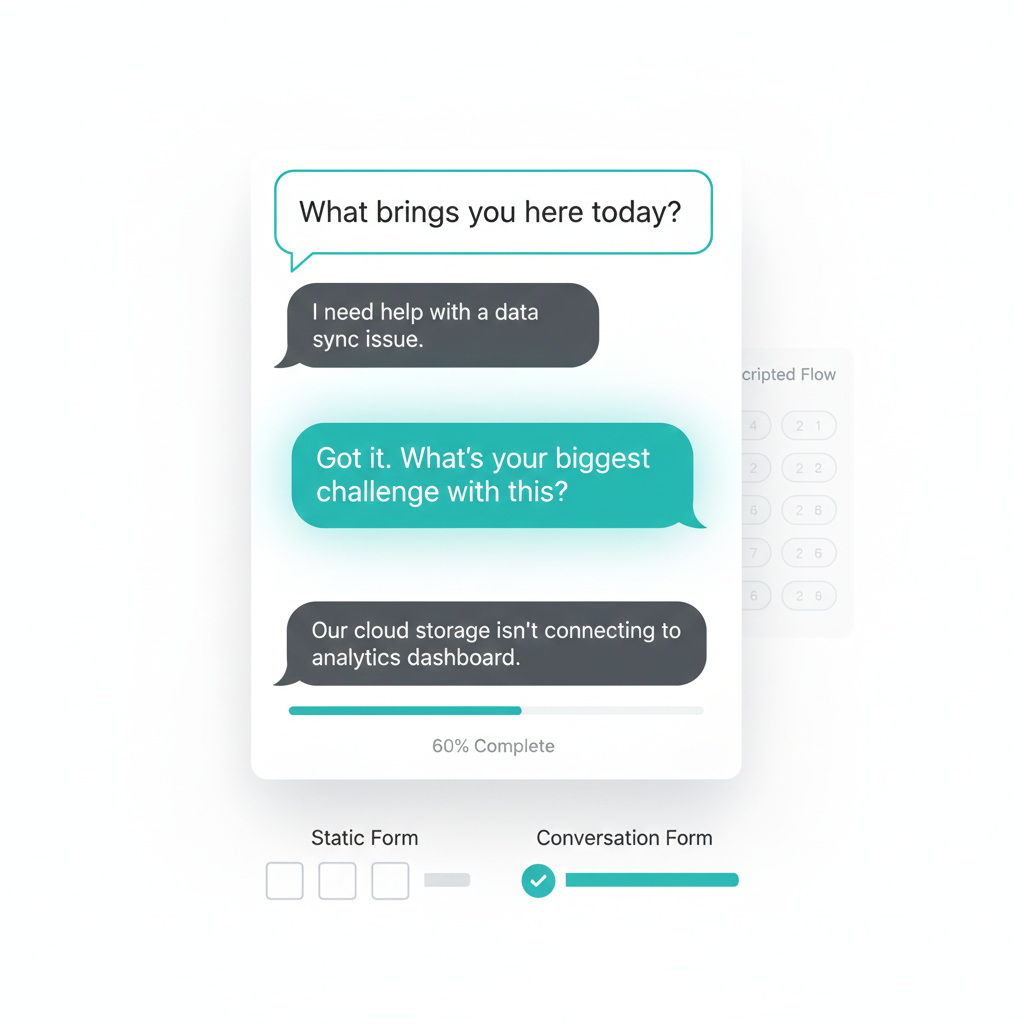
Conversation forms work differently. Instead of presenting a wall of fields, they ask one question at a time, like a real person would.
"What brings you here today?"
You answer.
"Got it. What's your biggest challenge with [topic]?"
You answer again. And something interesting happens: it starts to feel less like a form and more like someone's actually listening.
This matters because people are wired for conversation. We've been talking to each other for thousands of years. We've been filling out forms for, what, a few decades?
Conversation forms typically see completion rates of 40-50%, sometimes higher. That's 4-5x better than static forms. The data quality improves too, because people naturally give more detail when they feel heard.
But most conversation-form tools still have limits. Typeform made this format popular, but you're still clicking through predetermined questions in a predetermined order. Landbot and Tars add chat bubbles, which helps, but the experience is scripted.
They're better than static forms. They're still not conversations.
How Simplagents changes this
Simplagents takes conversation forms further by adding actual intelligence.
Instead of following a script, it adapts. It understands context. It asks follow-up questions that make sense based on what someone just told you.
Here's what that looks like in practice:
Natural language understanding. Someone types "I need help with my account," and Simplagents knows to ask about the specific issue rather than moving to the next predetermined question.
Dynamic questioning. If someone mentions they're a small business owner, the next questions shift to be relevant to small businesses. If they mention enterprise needs, the conversation adjusts.
Immediate qualification. Instead of collecting leads and sorting them later, Simplagents identifies high-intent visitors during the conversation and can route them appropriately.
Always available. Your best salesperson sleeps. Simplagents doesn't. It handles conversations at 2 AM with the same quality as 2 PM.
The technology runs on AI that's been trained specifically for business conversations. It's not trying to be a general chatbot that answers anything. It's focused on understanding what people need and gathering information that actually helps your team follow up effectively.
What this means for your business?
Better conversion rates matter, obviously. But the real advantage is what happens after someone fills out your form.
With static forms, your team gets basic information and has to start from scratch. "Let me understand your situation..." means asking questions someone has already tried to answer.
With Simplagents, your team gets the full context. They know what the person tried before reaching out, what didn't work, what their timeline looks like, and what matters most to them. The first conversation can skip the basics and get straight to solving problems.
This changes the entire sales or support process. Response times drop. Qualification improves. Customers feel heard from the first interaction, which sets the tone for everything that follows.
Practical steps to switch:
If you want to move away from static forms, start small.
1. Identify your worst-performing page. Look for the landing page with the highest bounce rate.
2. Convert the fields into questions. Instead of "Company Size," ask "How many people are on your team?"
3. Set up a pilot with Simplagents. Replace the static box with a chat interface.
4. A/B test. Run the static form against the conversational version for two weeks. Compare the number of completed submissions and the quality of the data.
The goal is to make it easy for people to talk to you. Stop making them fill out paperwork.
Ready to Move Beyond Static Forms?
Create forms that adapt and convert better.
3 Month Free Trail
When Conversational Forms makes sense
Even as websites change and attention spans shrink, one thing stays the same: people want to be understood.
Conversational forms work because they match how humans already communicate. We don’t think in fields. We think in stories, problems, and half-formed thoughts. A conversational form lets someone start where they are, not where your form designer decided they should start.
They also reduce pressure. A long form feels like a commitment. A single question feels easy. Answering one question at a time lowers the mental load and keeps people moving forward.
They scale human interaction. You can’t have a real person ask follow-up questions for every visitor. A conversational form can. It listens, reacts, and adjusts without making the experience feel automated.
They capture intent, not just data. Knowing why someone reached out matters more than knowing their job title. Conversational forms surface urgency, motivation, and context early, when it’s most useful.
And they meet people where they are. Someone who’s just browsing can give a short answer and move on. Someone with a real problem can explain it fully. The form doesn’t force both into the same rigid structure.
Static forms are about efficiency for the company. Conversational forms balance efficiency with empathy.
That’s why, even when static forms still have their place, conversational forms continue to make sense wherever real understanding matters.

When Static Forms still make sense
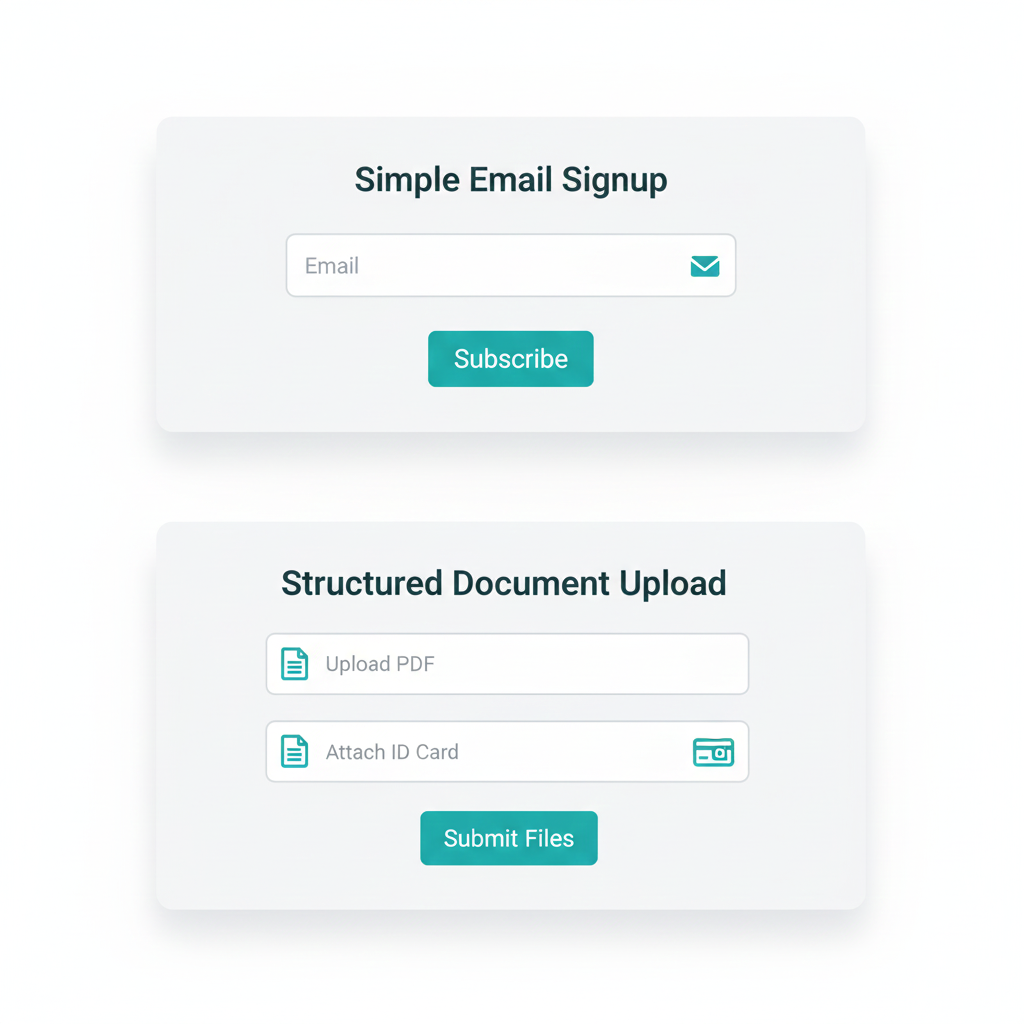
Conversation forms aren't always the answer. Sometimes you need a quick signup with just an email. Sometimes you're collecting structured data that needs to be in specific formats.
If you're running a newsletter signup, a simple email field works fine. If you need someone to upload specific documents, a static form might be clearer.
But for any interaction where understanding someone's needs matters-sales inquiries, support requests, consultation bookings, partnership discussions- conversation beats static every time.
Conclusion
People abandon forms because forms are boring and impersonal. They complete conversations because conversations feel human.
Simplagents brings intelligence to those conversations. It asks better questions, understands answers in context, and gives your team information they can actually use.
The result is more leads, better-qualified leads, and customers who feel like you actually care about helping them.
That's what separates tools that collect information from tools that build relationships.
Build Forms That Actually Work
Create a simple form and see how interactive flows improve engagement.