How Ecommerce Stores Handle Order Questions Without Support Teams
Created: 27/02/2026
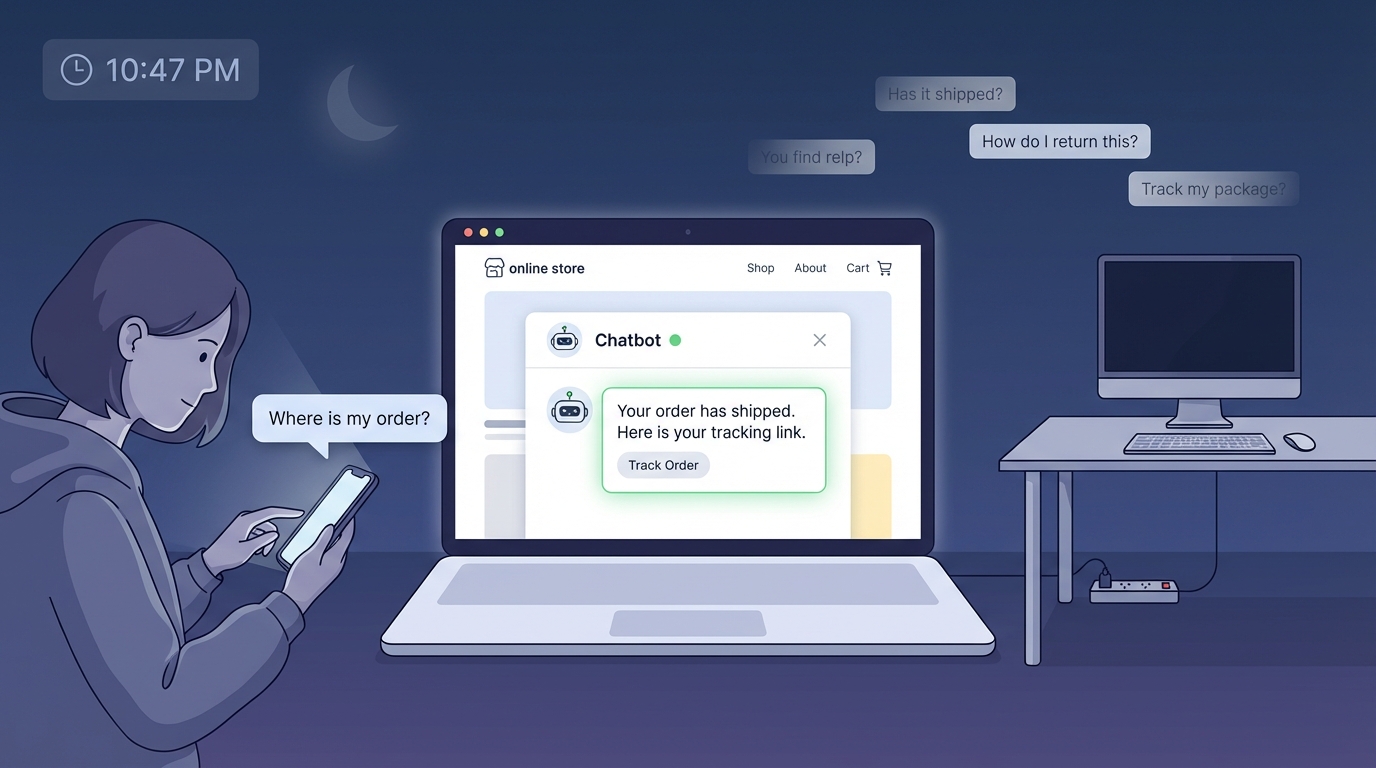
It is 10:47 pm. A customer opens your store and types, “Where is my order?”
No support agent is online. No one is checking email. But the customer still expects an answer.
This is how modern e-commerce stores handle order questions without a support team.
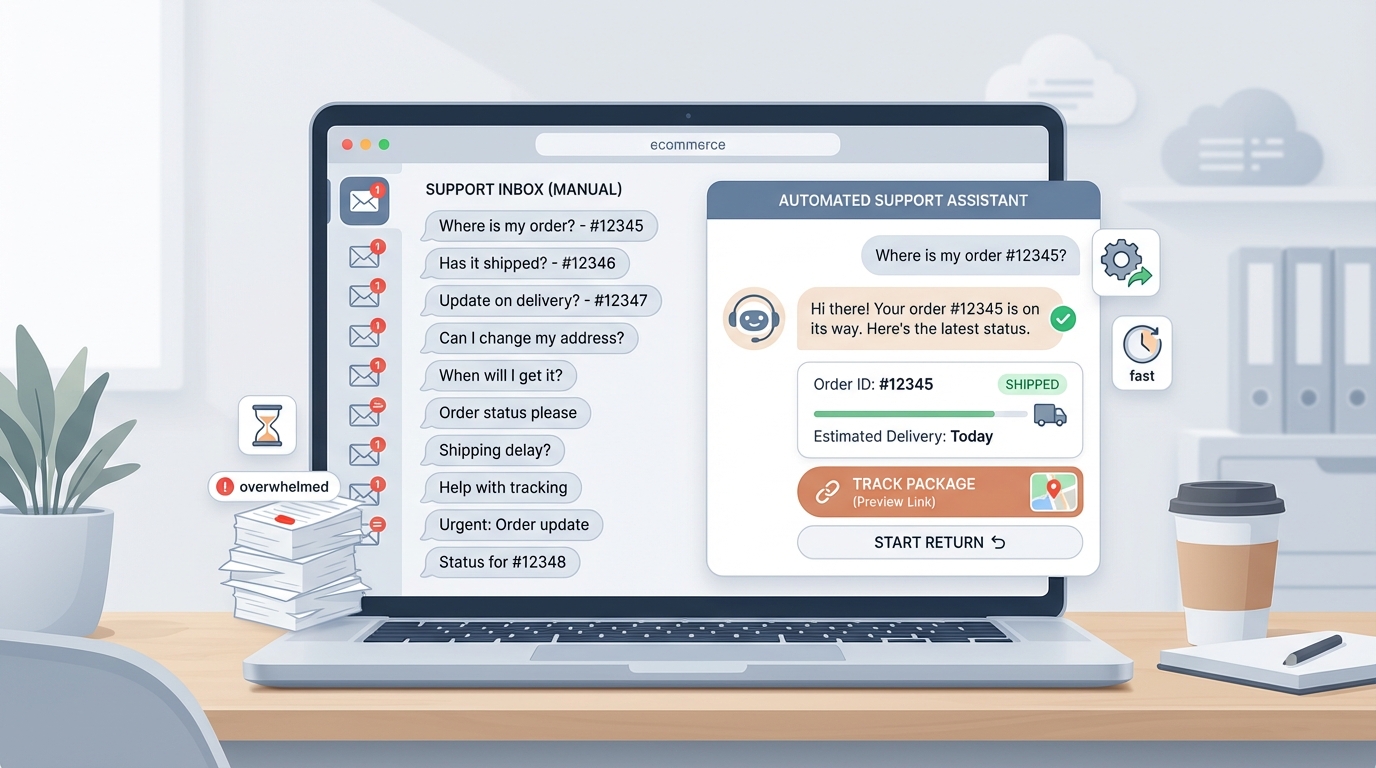
Handle Order Questions Without Hiring Support
Add a website chatbot that pulls order status, tracking links, and return details instantly from your store data.
The real volume of order questions
Most stores underestimate how many messages are about orders.
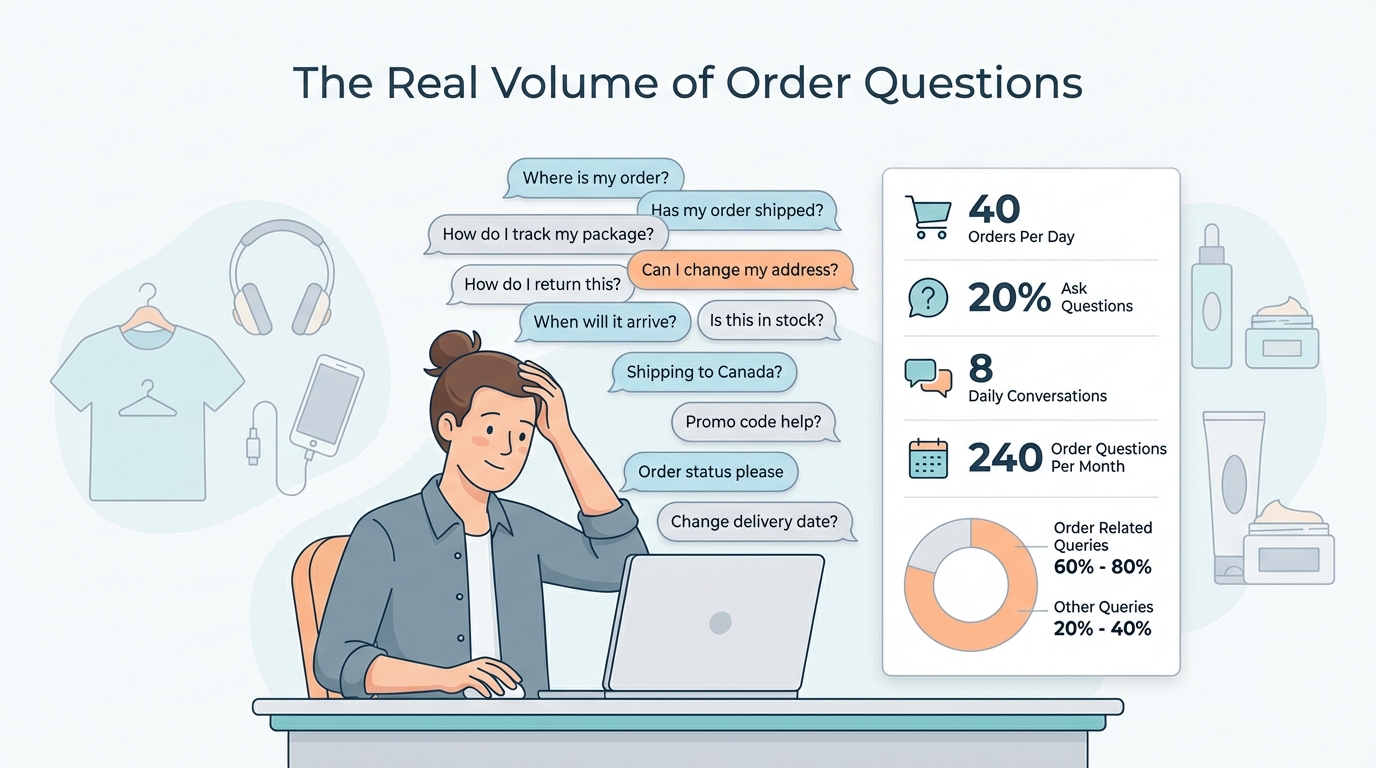
From stores we have observed across fashion, electronics, and DTC brands, 60 to 80 percent of incoming queries fall into a few buckets:
• Where is my order
• Has my order shipped
• How do I track my package
• Can I change my address
• How do I return this
If you sell 40 orders a day and even 20 percent of customers ask a question, that is eight conversations daily. In a month, that is around 240 order-related messages.
Hiring even one support executive costs far more than most early-stage stores can afford. So lean teams look for another system.
What successful stores actually do
They centralize answers and automate the repetitive parts.
And they do it in three layers.
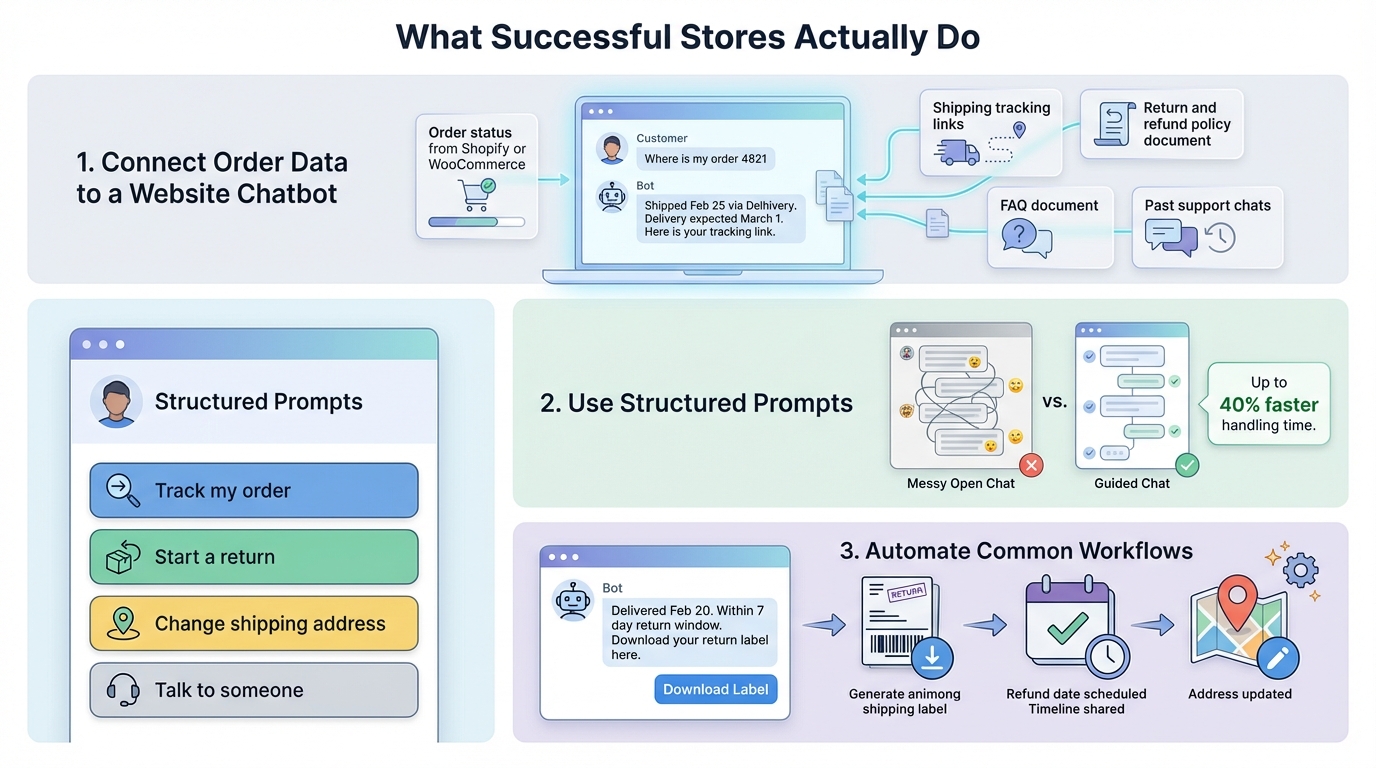
1. Connect order data to a website chatbot
Instead of pushing customers to email, stores add a chatbot trained on:
• Order status data from Shopify or WooCommerce
• Shipping partner tracking links
• Return and refund policies
• FAQ documents
• Past support conversations
When a customer types “Where is my order 4821”, the chatbot pulls the tracking link and replies instantly.
No ticket. No waiting.
This works because the bot is trained on store-specific data, not generic internet content. It understands your SKUs, your shipping rules, and your return window.
Example:
Customer: I ordered two days ago. Has it shipped
Bot: Yes. Order 4821 was shipped on Feb 25 via Delhivery. Here is your tracking link. Expected delivery is March 1.
That single flow can remove dozens of repetitive messages per week.
2. Use structured prompts inside the chat
Smart stores guide the conversation.
Instead of an empty chat box, they offer quick options:
• Track my order
• Start a return
• Change shipping address
• Talk to someone
Most users click one of these. This reduces confusion and keeps conversations short.
Data from live ecommerce chat tools shows that guided flows reduce average handling time by up to 40 percent compared to open ended chat.
Shorter conversations mean fewer escalations.
3. Automate common workflows
Handling order questions is not just about answering. It is about taking action.
A chatbot trained on your internal processes can:
• Generate return labels
• Share refund timelines
• Update shipping addresses before dispatch
• Escalate only complex cases
For example, if your return policy says returns are allowed within 7 days for unused items, the chatbot can check the delivery date and reply:
“Your order was delivered on Feb 20. You are within the 7-day return window. Click here to download your return label.”
No manual approval needed.
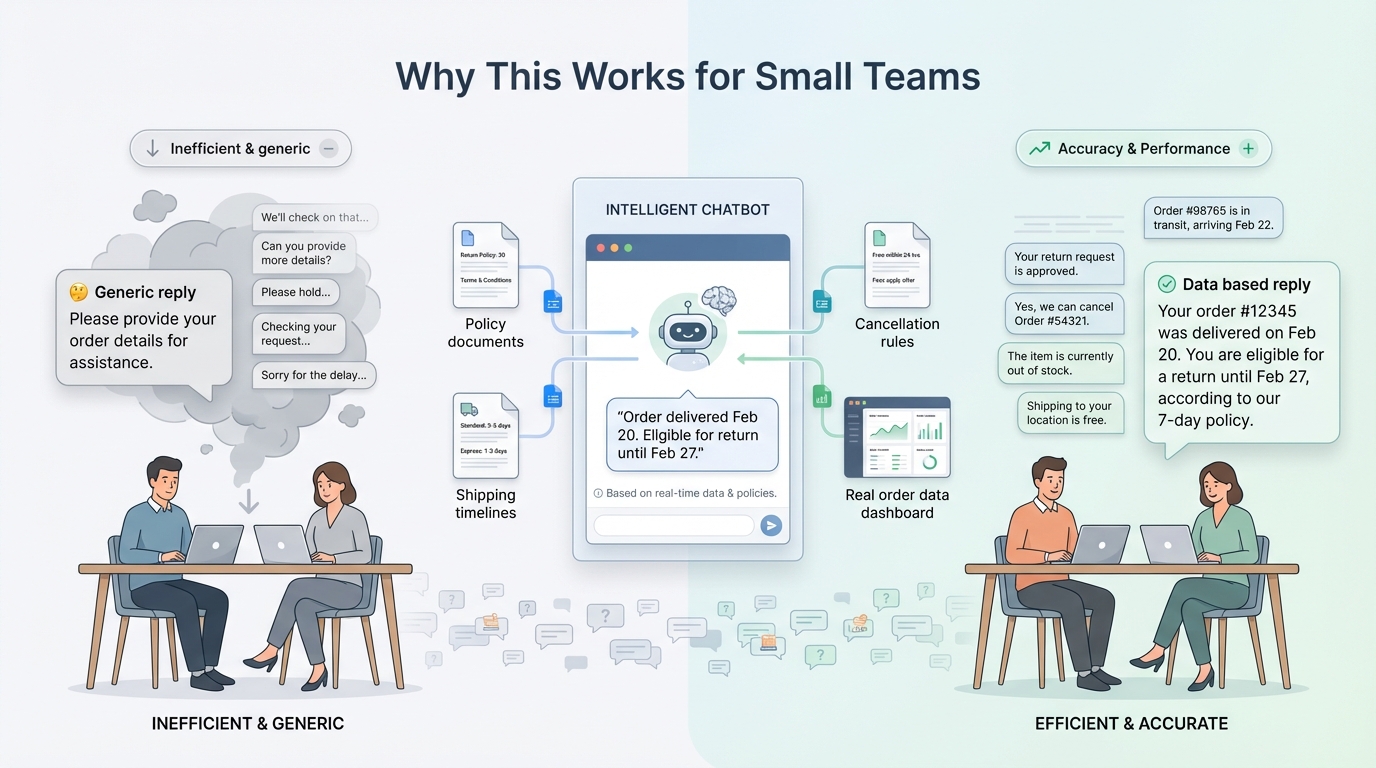
Why this works for small teams
The key is training the chatbot on your own data.
When the bot reads:
• Your policy documents
• Your shipping timelines
• Your cancellation rules
• Your real order data
It stops giving vague answers.
It responds like a support executive who has access to your dashboard.
And because most order queries follow predictable patterns, accuracy improves quickly after deployment.
What this looks like in practice
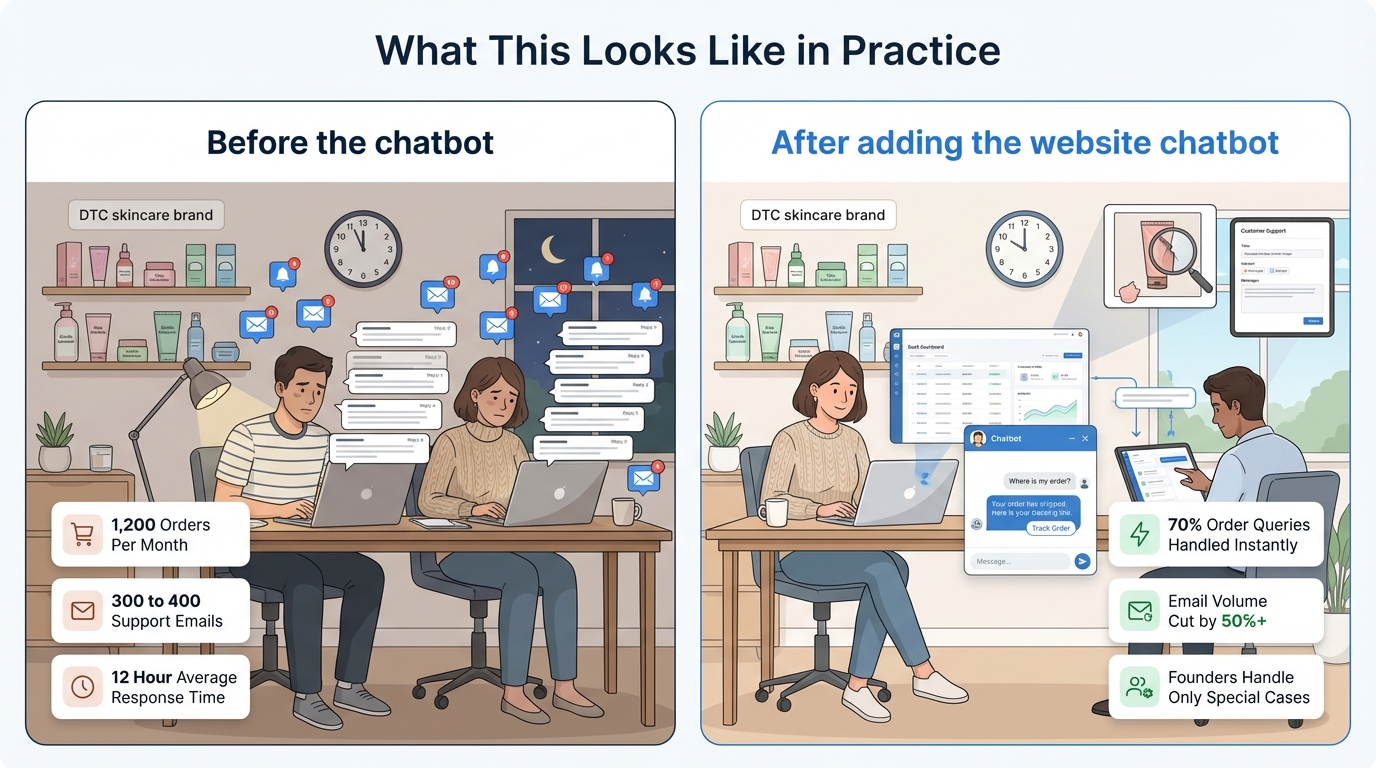
A small DTC skincare brand doing 1,200 orders per month added a website chatbot connected to their order system.
Before the chatbot:
• 300 to 400 support emails per month
• Two founders replying manually
• Average response time of 12 hours
After adding the chatbot trained on their order data:
• 70 percent of order-related queries are handled instantly
• Email volume dropped by more than half
• Founders only handled damaged products and special requests
No support team hired.
The difference was not fancy automation. It was structured data plus a chatbot that understood it.
How to set this up
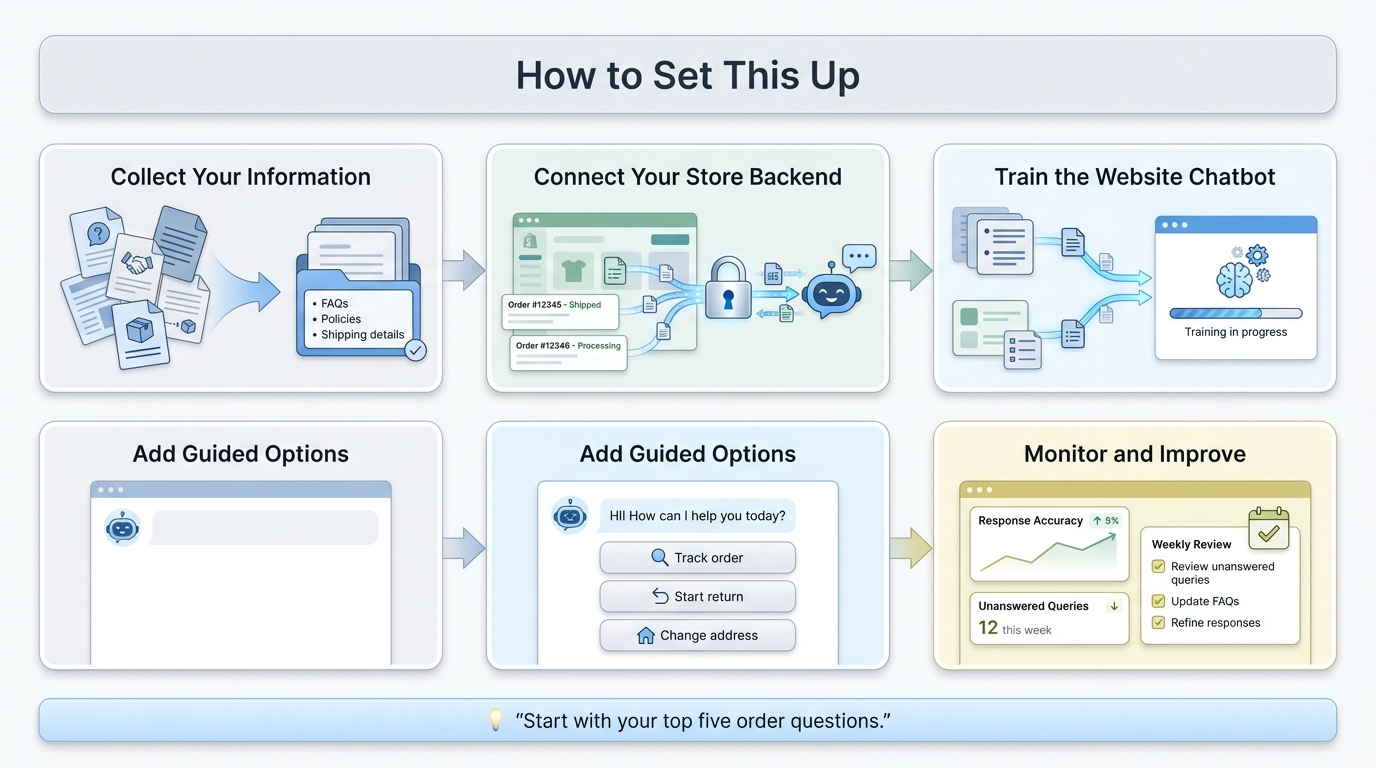
If you run an e-commerce store, here is a simple plan:
1. Collect your support FAQs, policies, and shipping details in one document
2. Connect your store backend so order status can be fetched securely
3. Train a website chatbot on this data
4. Add guided options like Track order and Start return
5. Monitor unanswered queries and improve responses weekly
You do not need complex flows. Start with the top five order questions.
The business impact
Instant answers reduce:
• Cart abandonment from shipping confusion
• Refund frustration
• Chargebacks caused by unclear tracking
• Negative reviews about slow support
And customers trust stores that respond fast.
Speed builds confidence. Confidence drives repeat purchases.
A website chatbot trained on your data lets you offer that speed without hiring a full support team.
For e-commerce brands that want lean operations and better customer experience, this is no longer optional. It is the simplest way to handle order questions at scale.
Handle Order Questions Without Hiring Support
Add a website chatbot that pulls order status, tracking links, and return details instantly from your store data.