Simplagents vs Typeform for Conversational Forms
Created: 23/05/2026
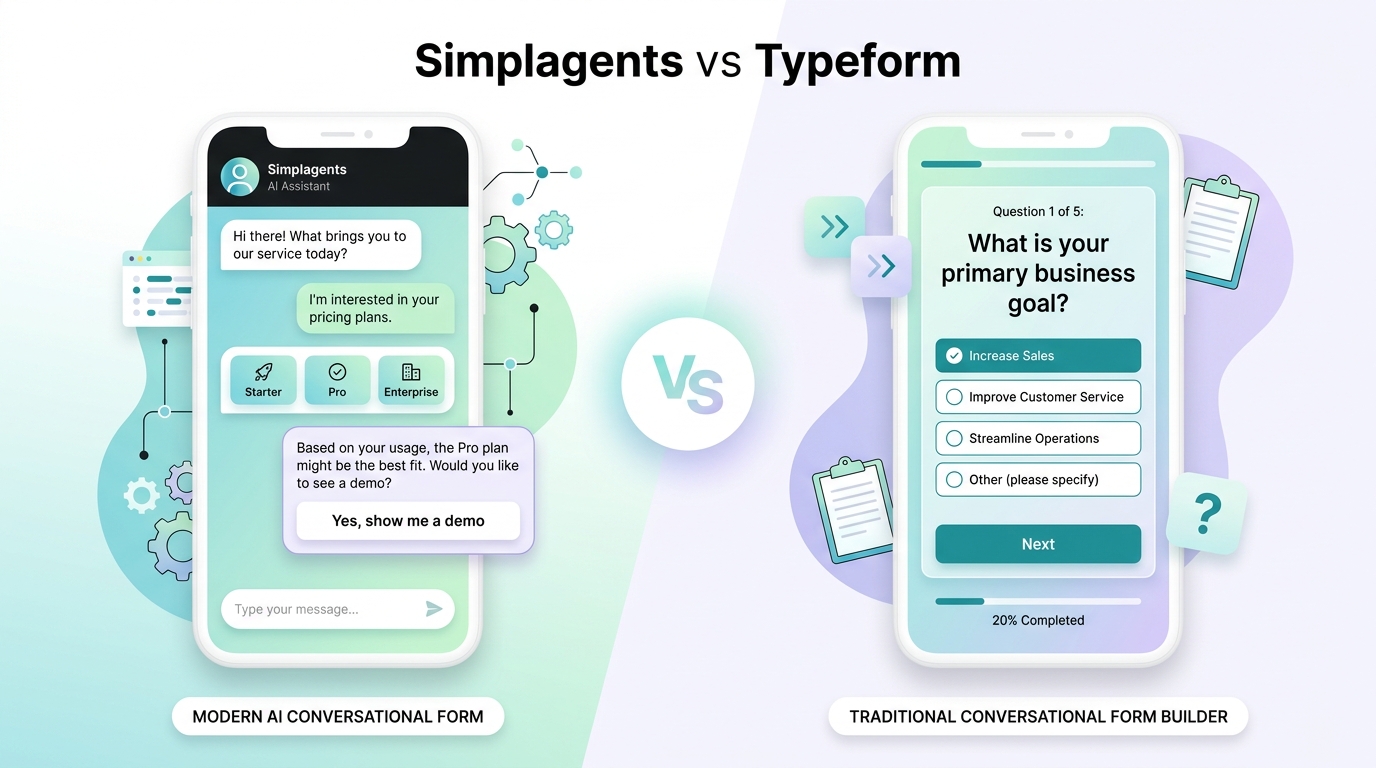
Most online forms still feel cold and repetitive.
You open a page and instantly see:
• Too many fields
• Long layouts
• Endless scrolling
• Zero interaction
That is why conversational forms became popular.
Instead of showing everything at once, conversational forms guide users step by step like a real conversation.
Both Simplagents and Typeform offer conversational form experiences, but they feel different once you start using them.
What Typeform Does Well
Typeform became popular because it made forms feel cleaner and more interactive than traditional forms.
Questions appear one at a time, which feels less overwhelming for users.
It works well for:
• Surveys
• Lead forms
• Registrations
• Feedback collection
• Basic conversational forms
The interface is polished and easy to use.
Example:
A fitness coach can create a lead form asking:
• What is your goal?
• How often do you work out?
• What is your biggest challenge?
The experience feels smoother than a traditional contact form.
Where Traditional Conversational Forms Feel Limited
Many conversational forms still follow a fixed question flow.
Users answer questions one after another, but the experience can still feel scripted.
Businesses now want forms that feel more natural and adaptive.
For example:
A visitor on a marketing agency website may not know exactly what service they need.
Instead of rigid form steps, they may want a conversation like:
• What are you trying to grow?
• Are you running ads currently?
• What is your monthly budget?
• What results are you struggling with?
That interaction feels closer to chatting than filling out a form.
Why Simplagents Conversational Forms Feel More Natural
Simplagents focuses heavily on conversation-first experiences.
The forms feel less like traditional questionnaires and more like guided chats.
That matters because users are more likely to continue when the interaction feels natural.
Instead of overwhelming visitors with multiple inputs, the conversation flows step by step in a cleaner way.
Better for Lead Generation
A conversational form should not only collect information.
It should keep people engaged.
Example:
An e-commerce brand can ask:
• Shopping for yourself or as a gift?
• What product category are you looking for?
• What budget range works for you?
The interaction feels personal instead of transactional.
That often leads to better completion rates.
Which One Should You Choose?
Choose Typeform if:
• You want polished traditional conversational forms
• You mainly create surveys and questionnaires
• Your workflows are simple
• You want a familiar form builder experience
Choose Simplagents if:
• You want more natural conversational flows
• You care about engagement and interaction
• You want forms that feel closer to real chat
• You want a more modern lead capture experience
Final Thoughts
Most businesses still use forms designed like paperwork.
But users respond better to interaction than static input fields.
That is why conversational forms continue growing across websites, sales funnels, and lead generation pages.
If your goal is simple data collection, Typeform works well.
But if you want forms that feel more conversational and engaging, Simplagents creates a smoother experience for visitors.
Create Online Forms With AI For Free
Describe the form you need, and AI builds it in seconds. Customize every field, publish anywhere, and start collecting responses for free.