Simplagents vs SiteGPT for Website Chatbots
Created: 23/05/2026
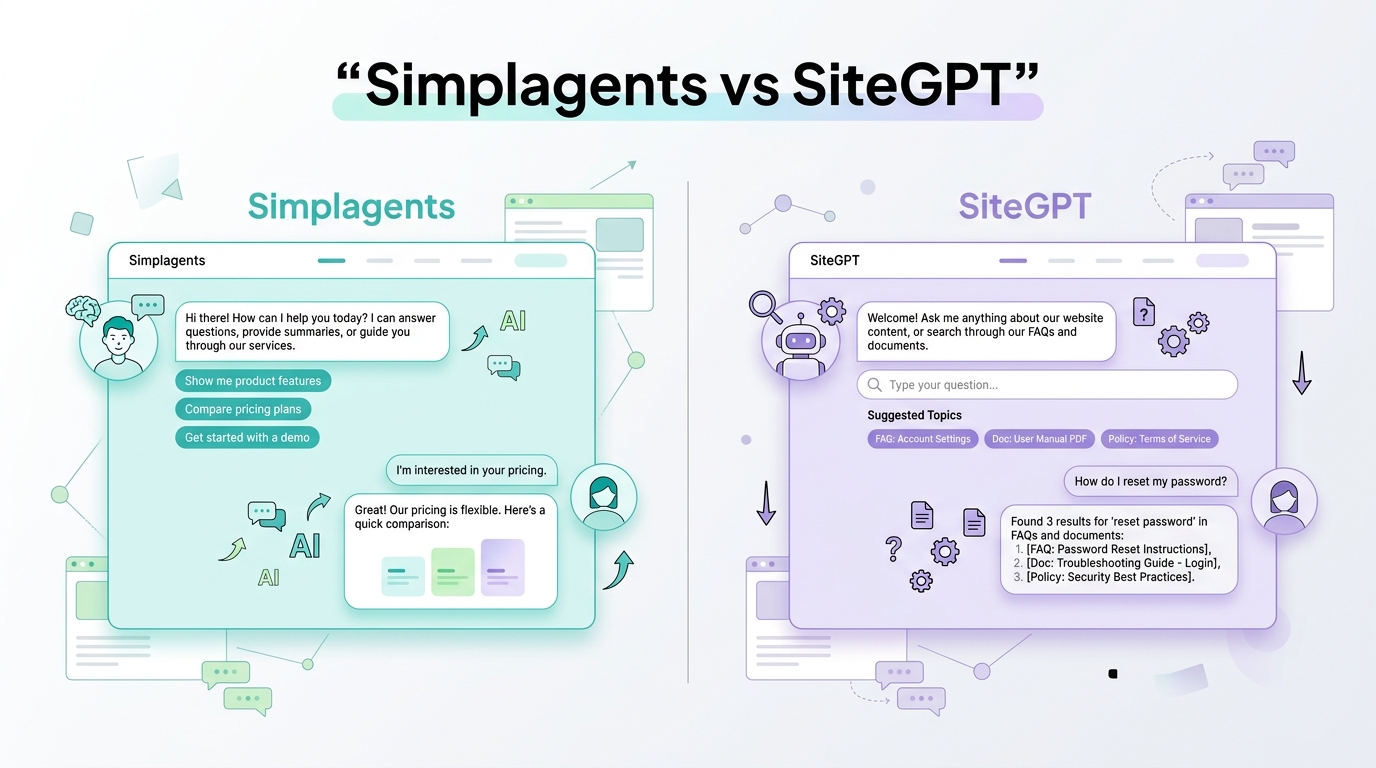
Adding a chatbot to a website used to be a technical project.
Now it takes a few minutes.
But once businesses start comparing chatbot tools, the real question becomes simple:
Do you only want a bot that answers questions, or do you want conversations that actually feel useful to visitors?
That is where Simplagents and SiteGPT take different approaches.
Both platforms help businesses create AI chatbots for websites. But the experience they create for visitors feels different in practice.
What SiteGPT Does Well
SiteGPT focuses heavily on website-trained chatbots.
You connect your website, upload content, and the chatbot learns from that information.\
For many businesses, that is enough.
Example:
• A SaaS company uploads:
• Help docs
• Pricing pages
• Product FAQs
• Tutorials
The chatbot then answers customer questions directly from that content.
That setup works well for:
• FAQ automation
• Basic customer support
• Simple website assistance
• Reducing repetitive support tickets
The onboarding process is straightforward, which makes it appealing for teams that want a chatbot quickly.
Where Website Trained Bots Start Feeling Repetitive
A lot of website chatbots eventually start sounding the same.
Visitors ask questions.
The bot searches uploaded content.
Then it returns information.
That works for support.
But businesses often want conversations that feel smoother and more natural.
For example:
A visitor asking:
• Which pricing plan is best for me?
• Can this work for a small team?
• What setup option should I choose?
Needs more than copied website information.
The conversation flow matters.
Why Simplagents Chatbots Feel More Conversational
Simplagents focuses more on conversational interaction instead of only document retrieval.
The chatbot experience feels guided instead of robotic.
Questions flow naturally, follow-ups feel smoother, and conversations feel closer to messaging a real assistant instead of searching a help center.
That difference becomes noticeable when businesses use chatbots for:
• Lead generation
• Website engagement
• Product discovery
• Customer qualification
• Interactive support
Better for Guided Conversations
A strong chatbot does not only answer questions.
It helps users move forward.
Example:
• A digital agency chatbot can ask:
• What service are you looking for?
• What is your budget range?
• Are you running ads currently?
• What is your biggest challenge right now?
Instead of giving static answers, the chatbot guides the visitor step by step.
That creates a more engaging experience.
More Natural for First Time Visitors
Many visitors do not know exactly what to ask.
Traditional AI support bots depend heavily on direct questions.
Conversational chatbots work better when visitors are uncertain.
Example:
An e-commerce visitor may type:
“I need help choosing.”
A conversational chatbot can continue naturally:
• Shopping for yourself or as a gift?
• What type of product are you looking for?
• What budget range works for you?
That feels easier for users.
Which One Should You Choose?
Choose SiteGPT if:
• You mainly want a website-trained FAQ chatbot
• Your use case is support-focused
• You want a fast setup with uploaded content
• You mostly need knowledge base responses
Choose Simplagents if:
• You want more conversational interactions
• You care about visitor engagement
• You want guided chatbot experiences
• You want visitors to feel like they are chatting, not searching
• You want a chatbot experience that feels more natural on modern websites
Final Thoughts
Most website chatbots today can answer questions.
That is no longer the hard part.
The real difference comes from how the conversation feels to the visitor.
Some bots behave like search boxes with AI responses.
Others feel closer to real interaction.
If your goal is simply answering support questions, tools like SIteGPT can work well.
But if you want website conversations that feel smoother, more guided, and more engaging, Simplagents offers a more conversational approach.