How Many Sales You Lose When Your Website Has No Instant Answers
Created: 25/02/2026
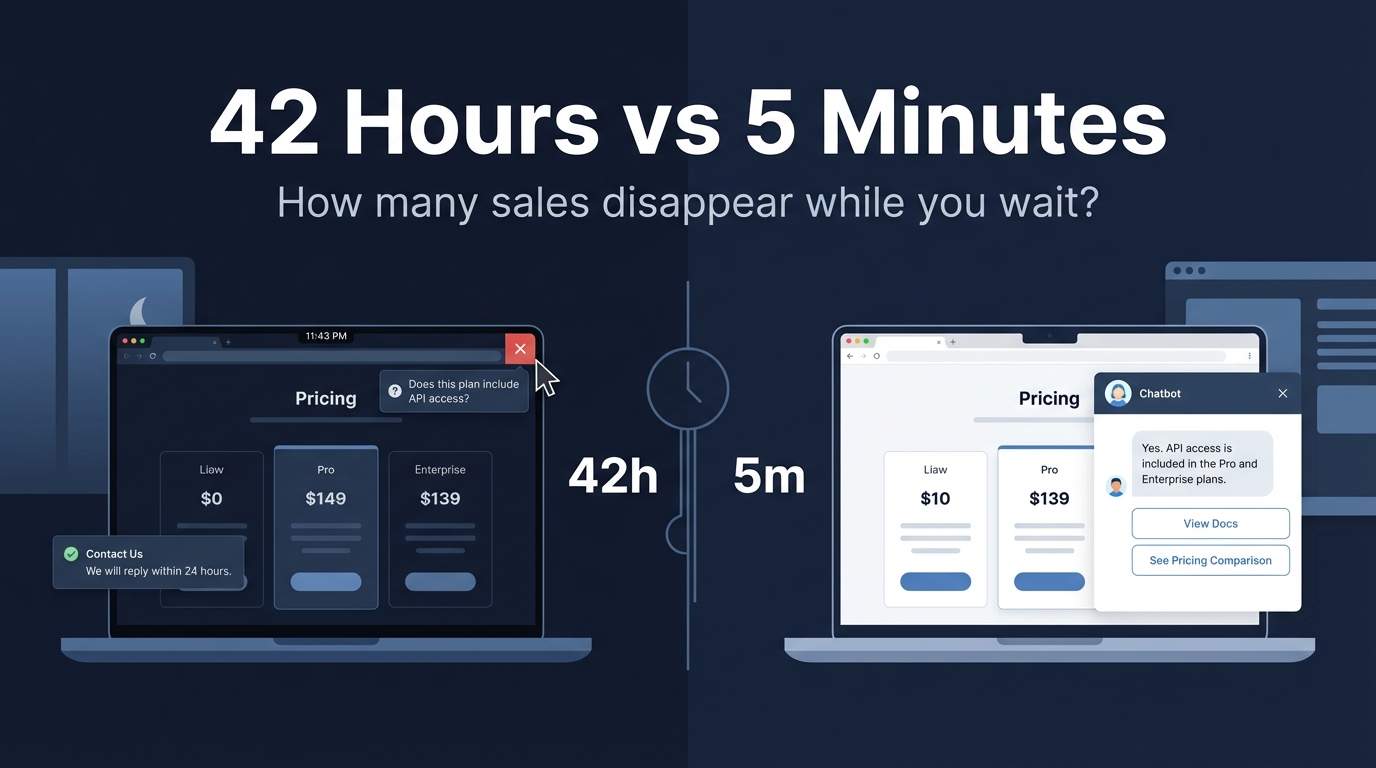
Picture this: someone lands on your pricing page at 11:43 PM. They have one question - "Does this plan include API access?" No live chat. No answer in the FAQ. Just a "Contact Us" form that promises a reply within 24 hours.
They close the tab. You lose the sale. And you never even knew they were there.
This happens hundreds of times a day on websites that haven't plugged the instant-answer gap. The numbers behind it are uncomfortable to look at, but worth understanding.
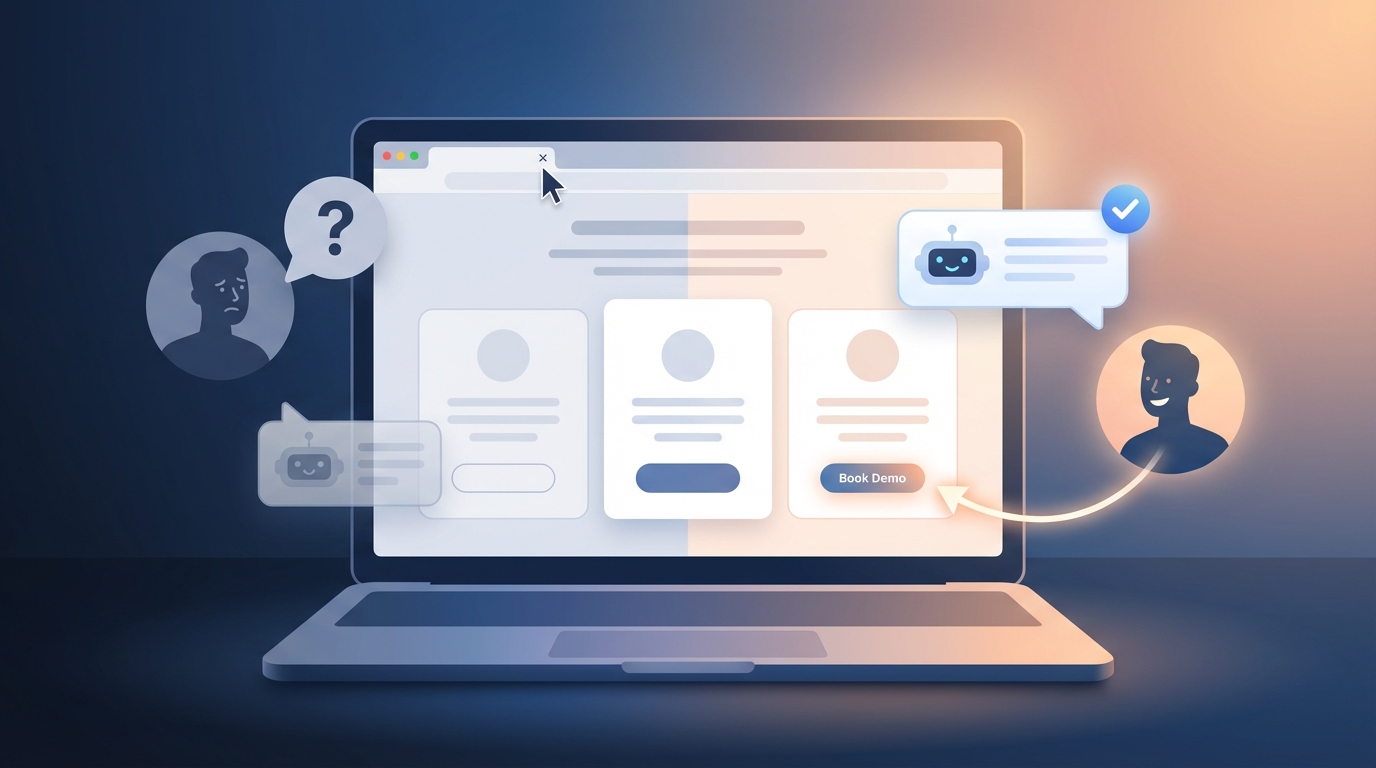
Turn Questions Into Conversions
Deploy a chatbot that not only answers instantly but reveals what buyers are unsure about.
The 5-Minute Rule Is Real and It's Brutal
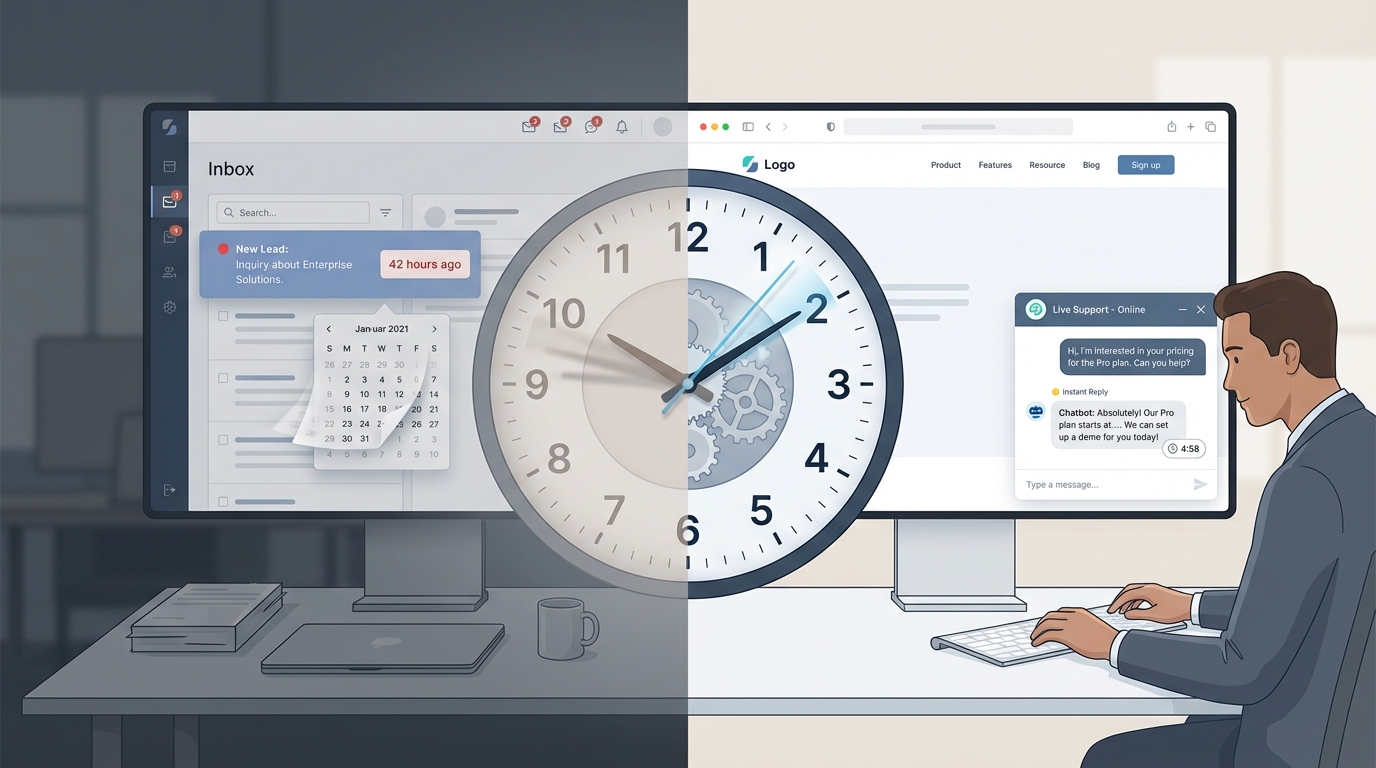
A study by Harvard Business Review looked at more than 2,000 companies and how quickly they followed up with web leads. Companies that responded within 5 minutes were 100 times more likely to reach the lead than those who waited 30 minutes. One hundred times.
But most businesses don't respond in 5 minutes. The average first response time to a web lead is 42 hours.
42 hours. By that point, your prospect has already signed up with a competitor, told three colleagues about it, and forgotten your brand name.
The buying window on most product categories is short. A person shopping for project management software isn't going to wait two days. They're going to try four free trials in a single afternoon and pick whichever one answers their questions fastest.
What Visitors Actually Do When They Can't Get Answers
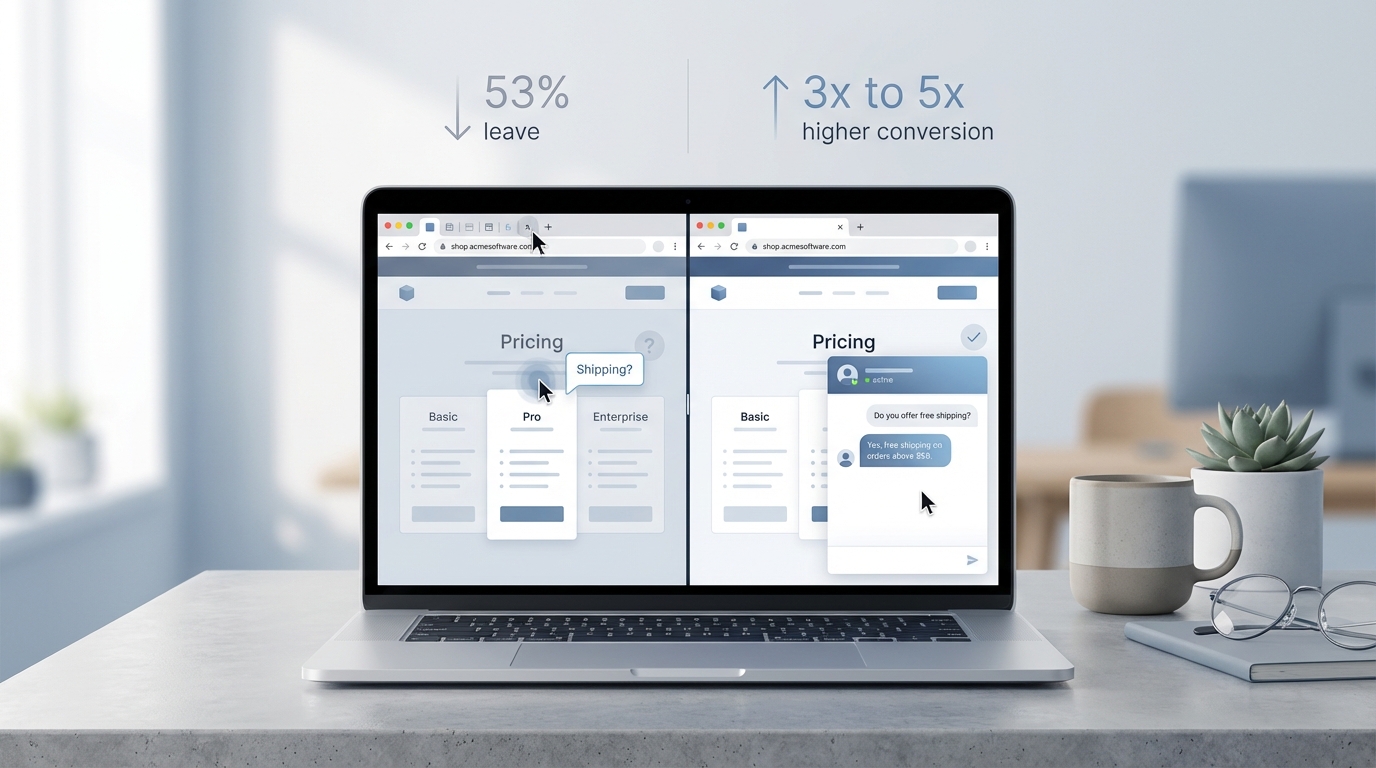
Forrester Research found that 53% of adults in the US are likely to abandon an online purchase if they can't find a quick answer to their question. That's more than half your potential customers walking out the door because your website stayed silent.
And it gets more specific than that. Visitors who engage with a chat widget convert at 3 to 5 times the rate of visitors who don't. They spend more time on the site. They view more pages. Their average order value is higher.
The difference between a visitor who converts and one who bounces is often a single answered question.
Think about the last time you were on a site and couldn't figure out whether shipping was free, or whether the software worked on Mac, or whether you needed a credit card to start a trial. What did you do? Probably left.
Where Sales Quietly Leak
Here are common scenarios:
• Pricing confusion
• Feature clarification
• Integration questions
• “Is this right for my use case?”
• Refund or trust concerns
If these answers are buried in blog posts or scattered across pages, users hesitate.
And hesitation kills momentum.
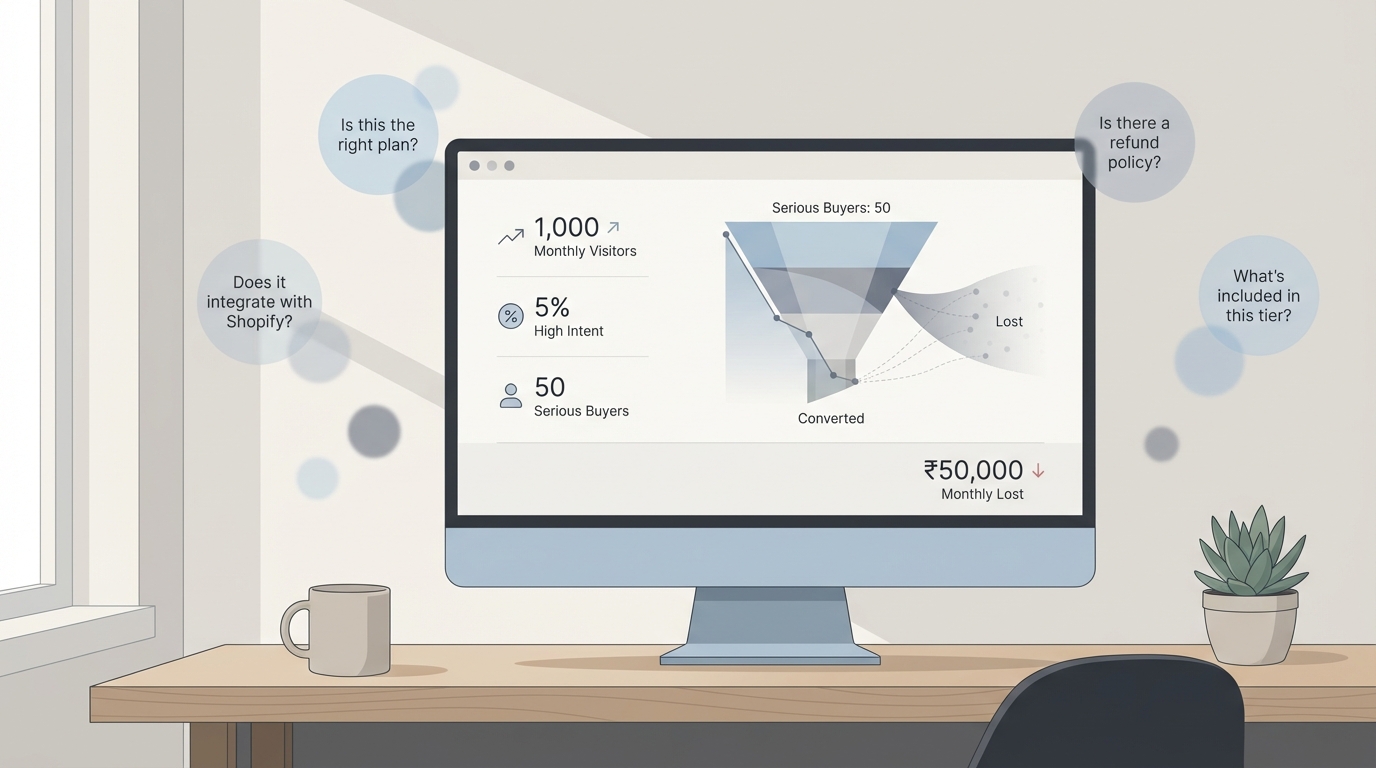
Let’s say:
• 1,000 visitors per month
• 5 percent are high intent
• That is 50 serious buyers
• Even 20 percent of them leave because they cannot find quick answers
That is 10 missed opportunities.
If your average deal value is ₹5,000, that is ₹50,000 lost monthly. Quietly.
Multiply that over a year.
Why Contact Forms Do Not Fix This
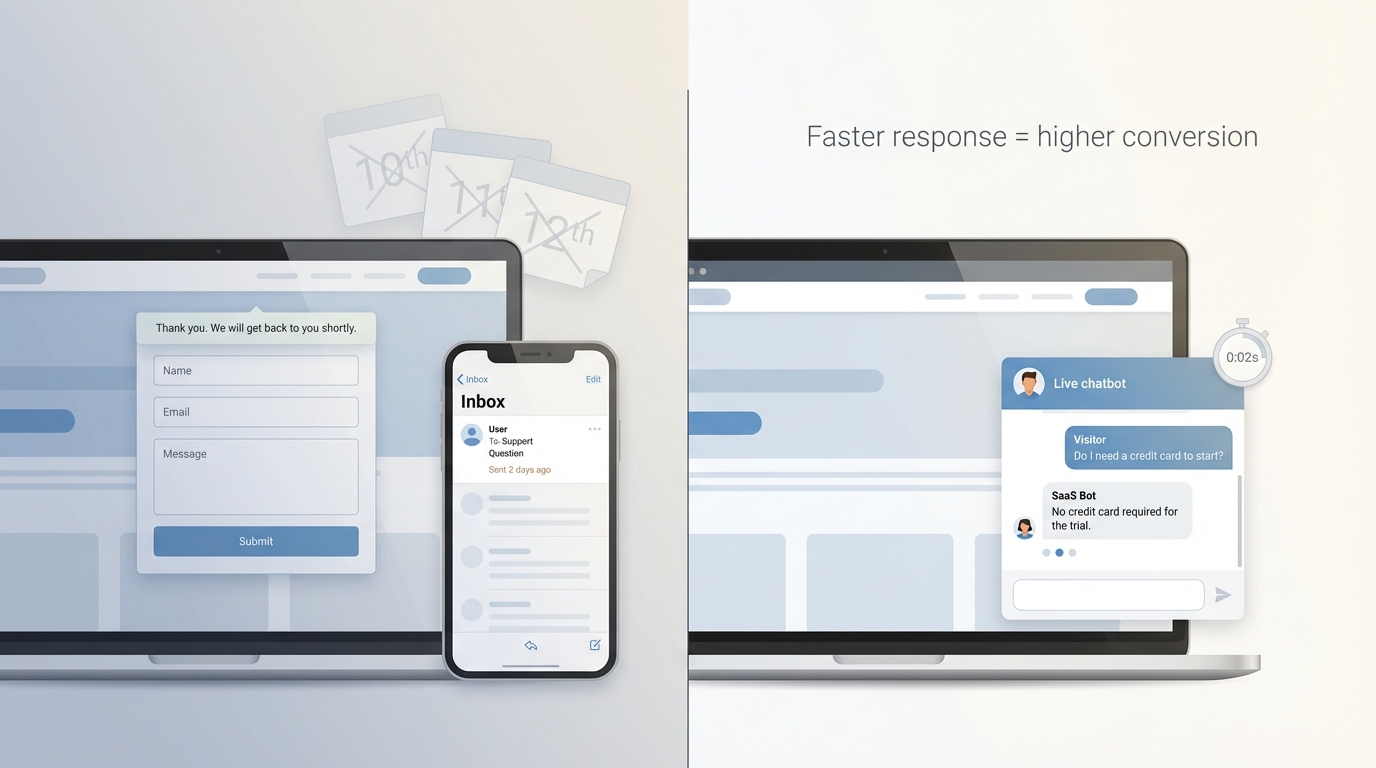
“Contact us” is not instant.
Email replies take hours. Sometimes days.
And most visitors will not wait. According to Harvard Business Review, companies that respond faster to leads see higher qualification and conversion rates.
Speed signals seriousness. Delay signals risk.
When someone is ready to buy, they want clarity now.
What Changes With a Website Chatbot
Now imagine this:
A visitor asks,
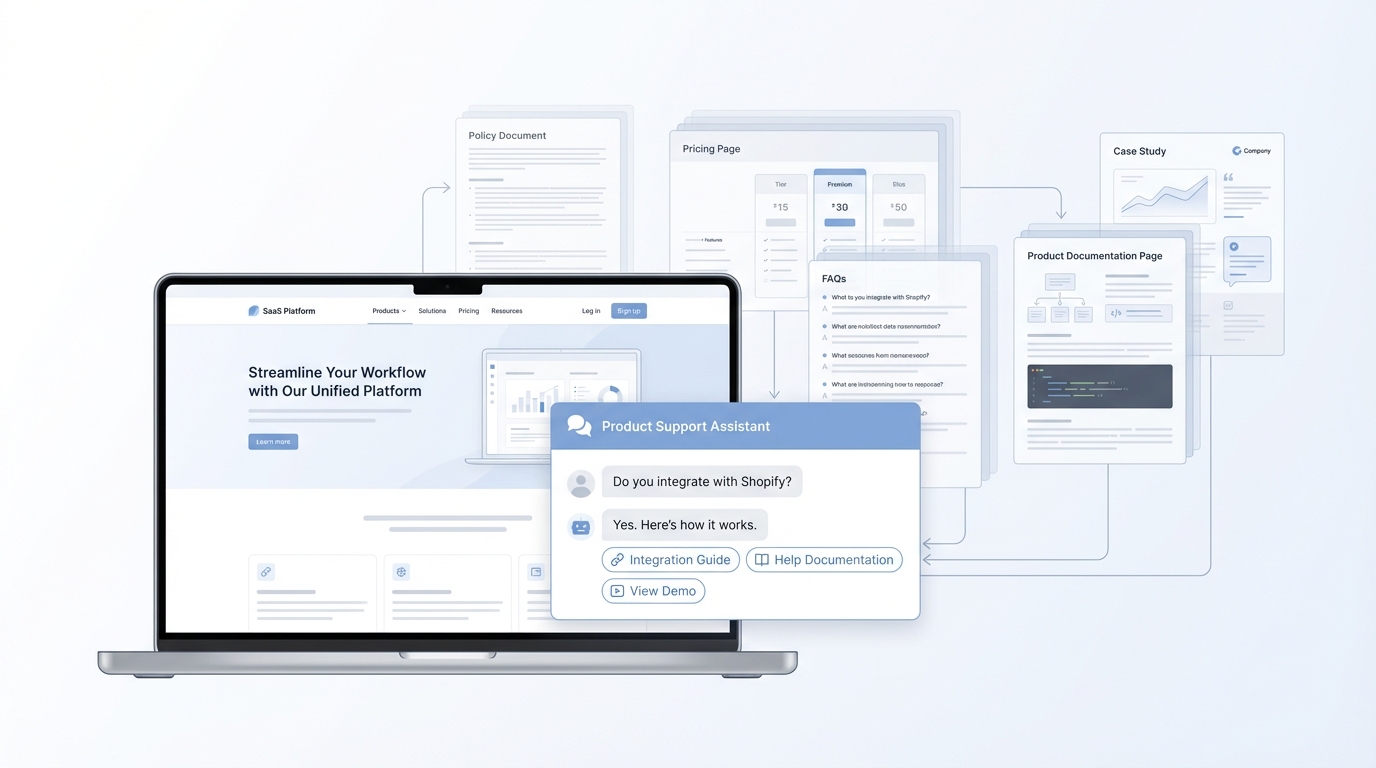
“Do you integrate with Shopify?”
Your chatbot responds immediately.
Yes. Here is how it works. Here is a help doc. Here is a demo link.
No delay. No confusion. No exit.
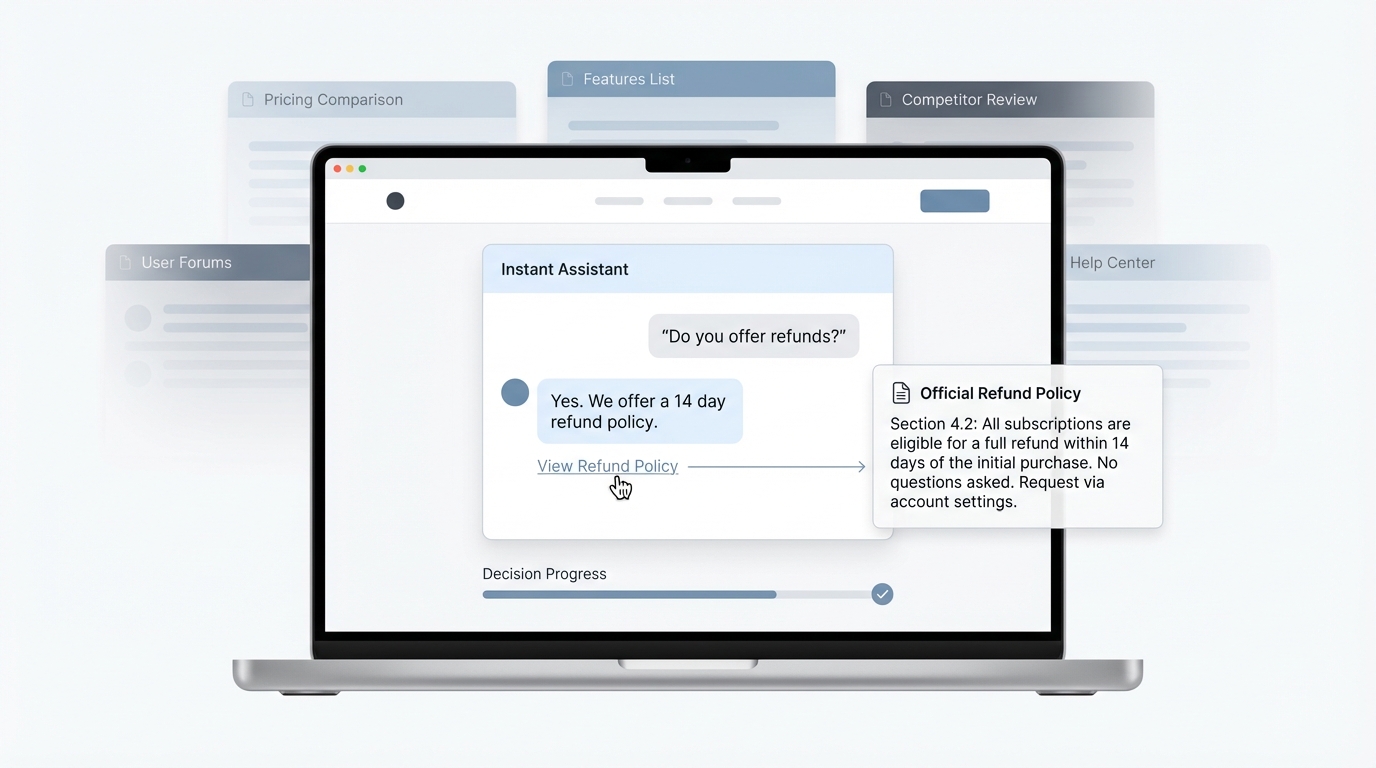
The key difference is this: a modern chatbot is trained on your own data.
• Your FAQs
• Your product documentation
• Your pricing pages
• Your policies
• Your case studies
It does not guess.
It answers based on your actual content.
That means consistent responses. Accurate details. Brand-aligned tone.
Data Changes the Conversation
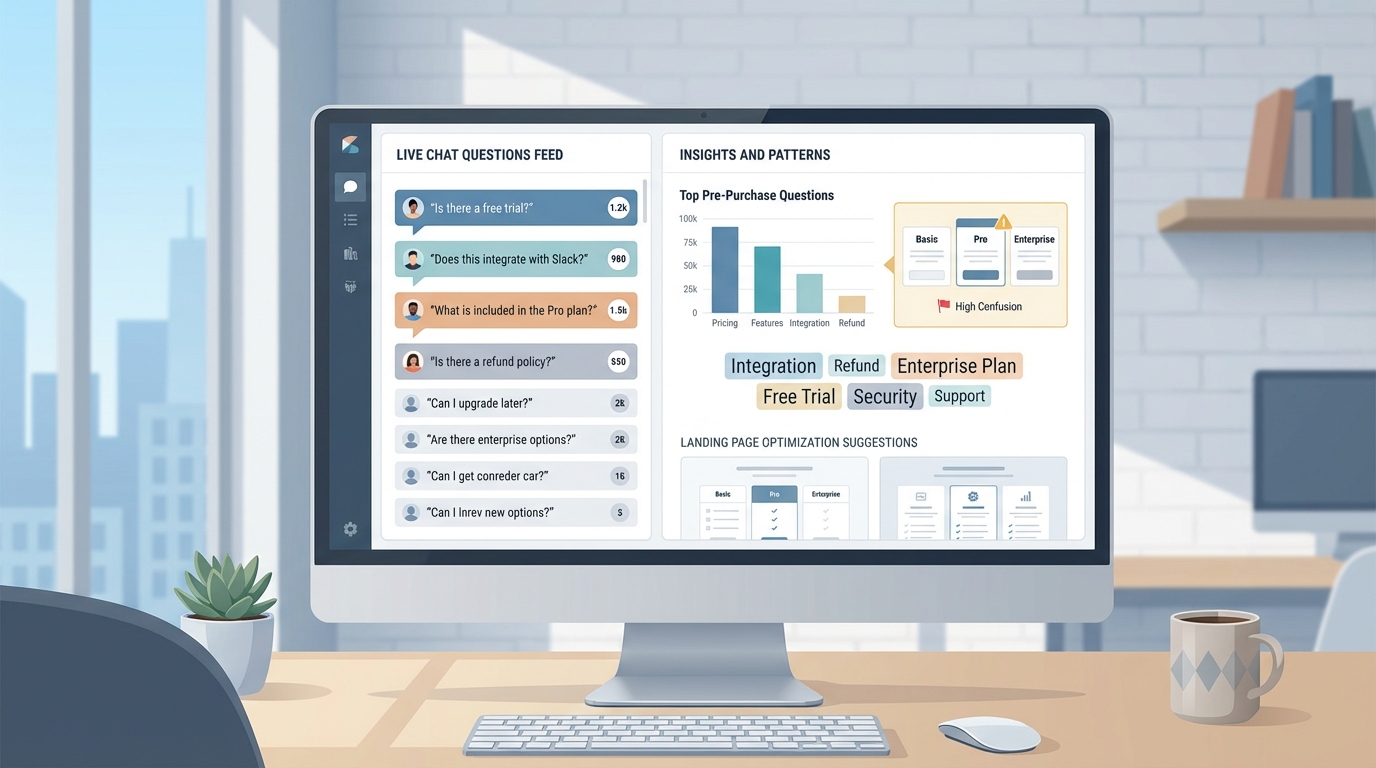
When your chatbot trains on your data, it does more than reply.
It surfaces patterns.
You start seeing:
• The most asked pre-purchase questions
• Objections that repeat
• Confusion around pricing tiers
• Features people assume you have
This insight helps you refine your landing pages, pricing copy, and onboarding flow.
The chatbot becomes both a sales assistant and a feedback engine.
Why Instant Answers Build Trust
When visitors ask a question and get a precise response tied to your own documentation, it feels reliable.
They are not searching through five tabs.
They are not waiting for support.
They are not guessing.
They feel guided.
That confidence shortens the decision cycle.
And shorter cycles increase conversions.
What to Do Next
If your website does not provide instant, accurate answers, start here:
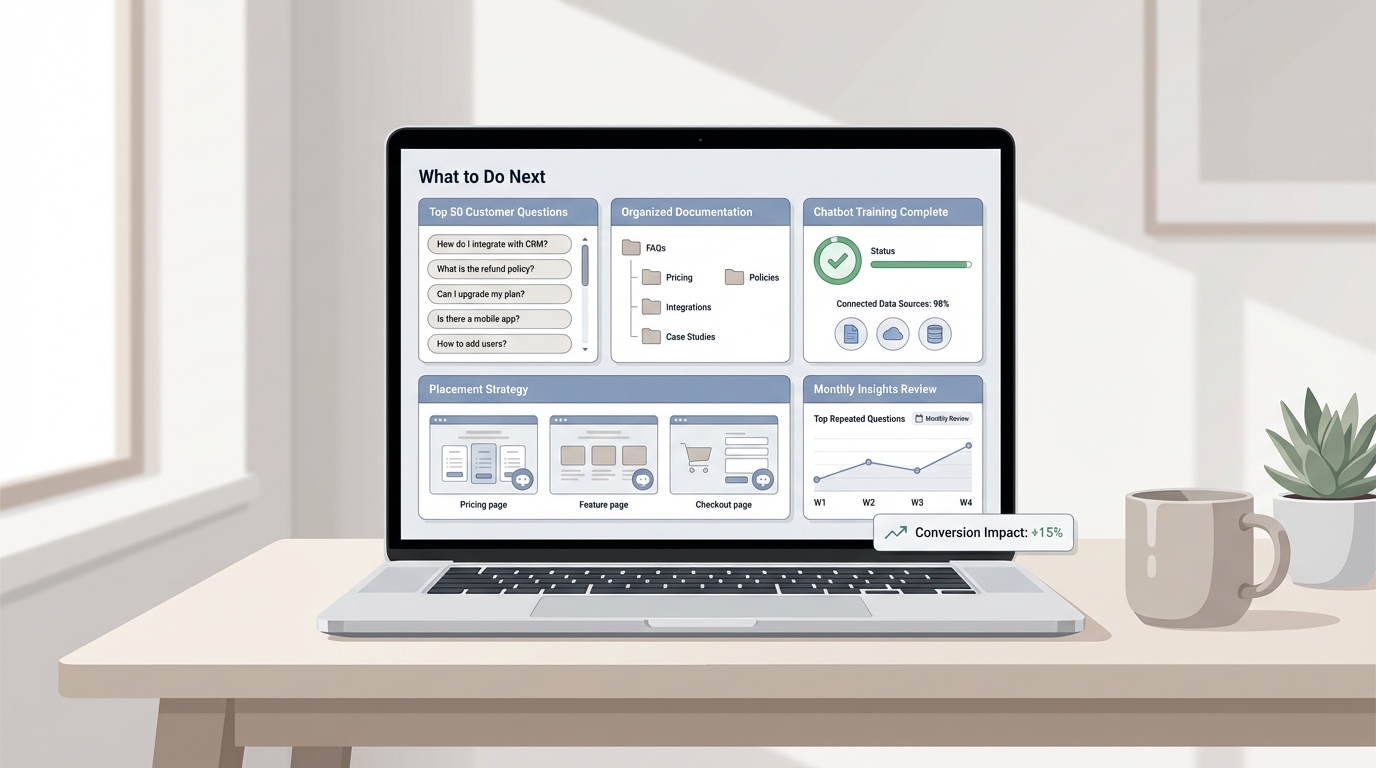
1. List your top 50 customer questions.
2. Organize your documentation and FAQs clearly.
3. Train a website chatbot on that data.
4. Place it where buying decisions happen. Pricing pages. Feature pages. Checkout pages.
5. Track questions and refine content monthly.
This is practical. Measurable. Revenue-linked.
The Cost of Silence
A website without instant answers is quiet when buyers need clarity.
And silence is expensive.
Every unanswered question increases doubt.
Every delay increases the drop off.
A chatbot trained on your data keeps the conversation alive. It protects buying momentum. And it captures revenue that would otherwise disappear.
If you care about conversion rate, start by asking one question:
How many buyers leave your site tonight because no one answered them?
Stop Losing Sales to Silence
Add a website chatbot trained on your content so buyers get instant answers while intent is high.