Human Support vs Automated Support: The Cost Comparison for Small Businesses
Created: 30/01/2026
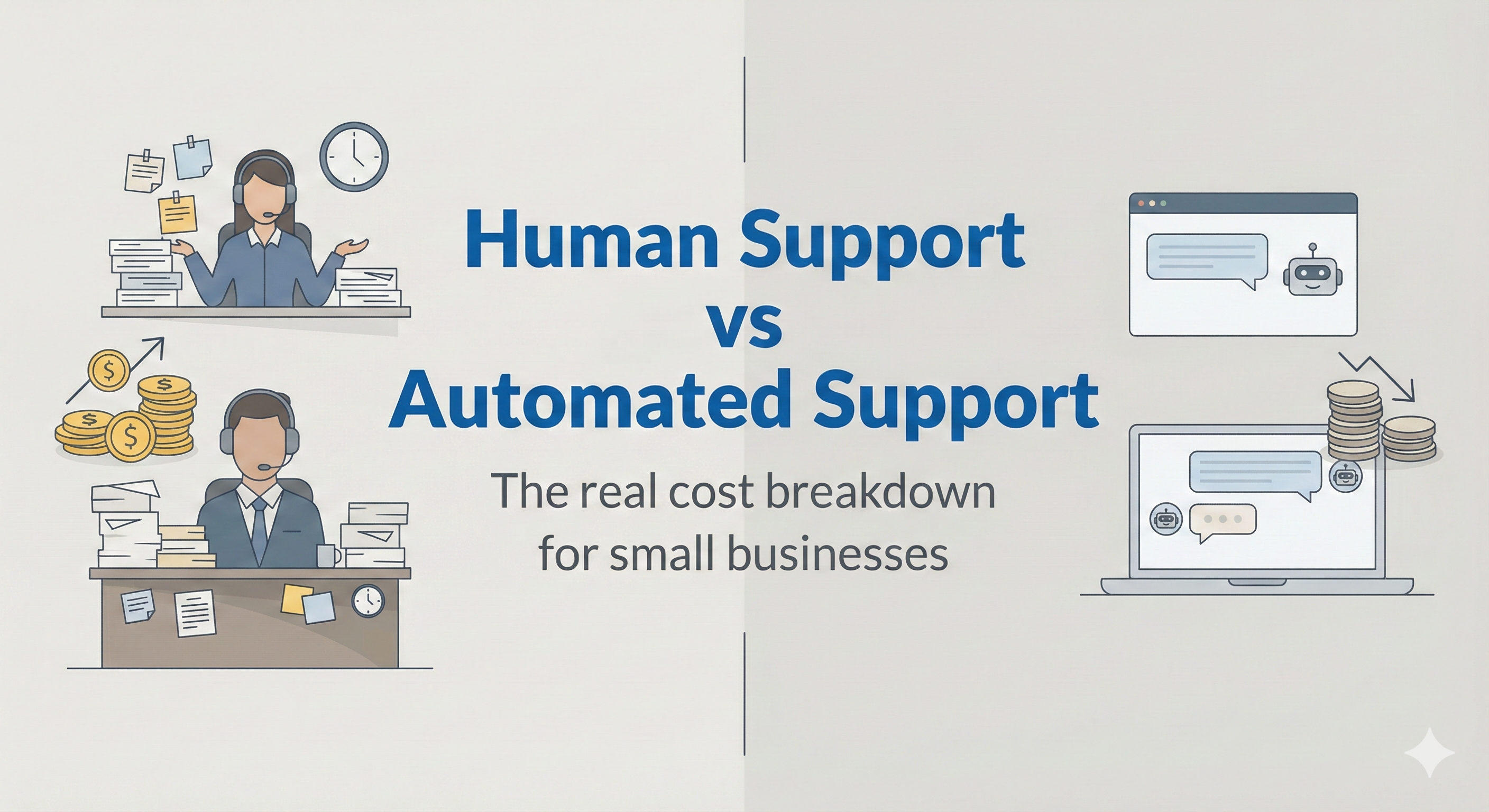
Running a small business means making tough choices about where to spend money. Customer support is one of those areas where the math can get complicated fast.
I've watched hundreds of small businesses wrestle with this decision: hire people to handle customer questions or set up automated systems? The answer isn't as simple as picking the cheaper option
Build the Right Support Mix for Your Business
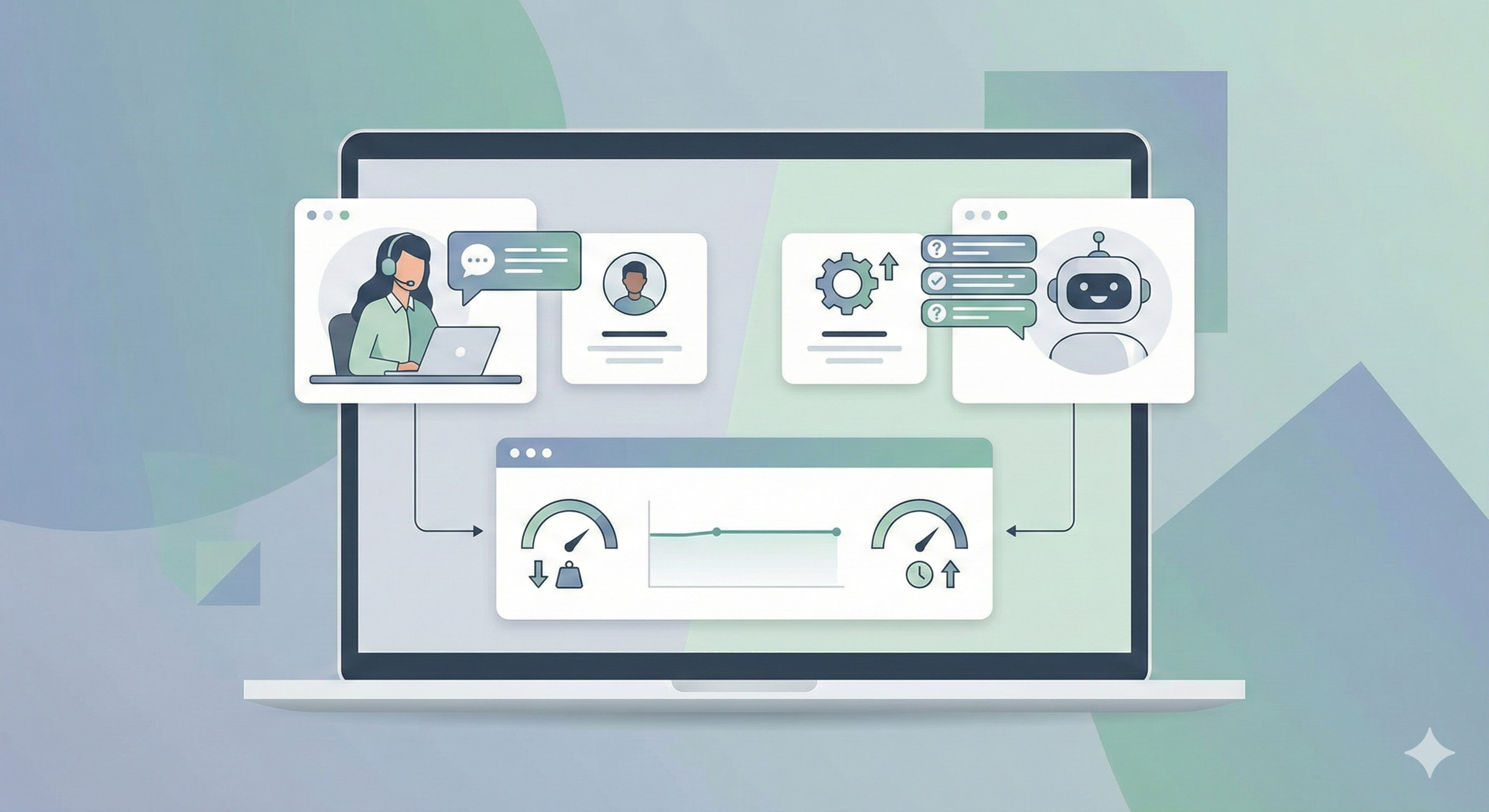
Create an automated support agent to handle repetitive questions while your team focuses on complex, high-value conversations.
What You're Actually Paying For
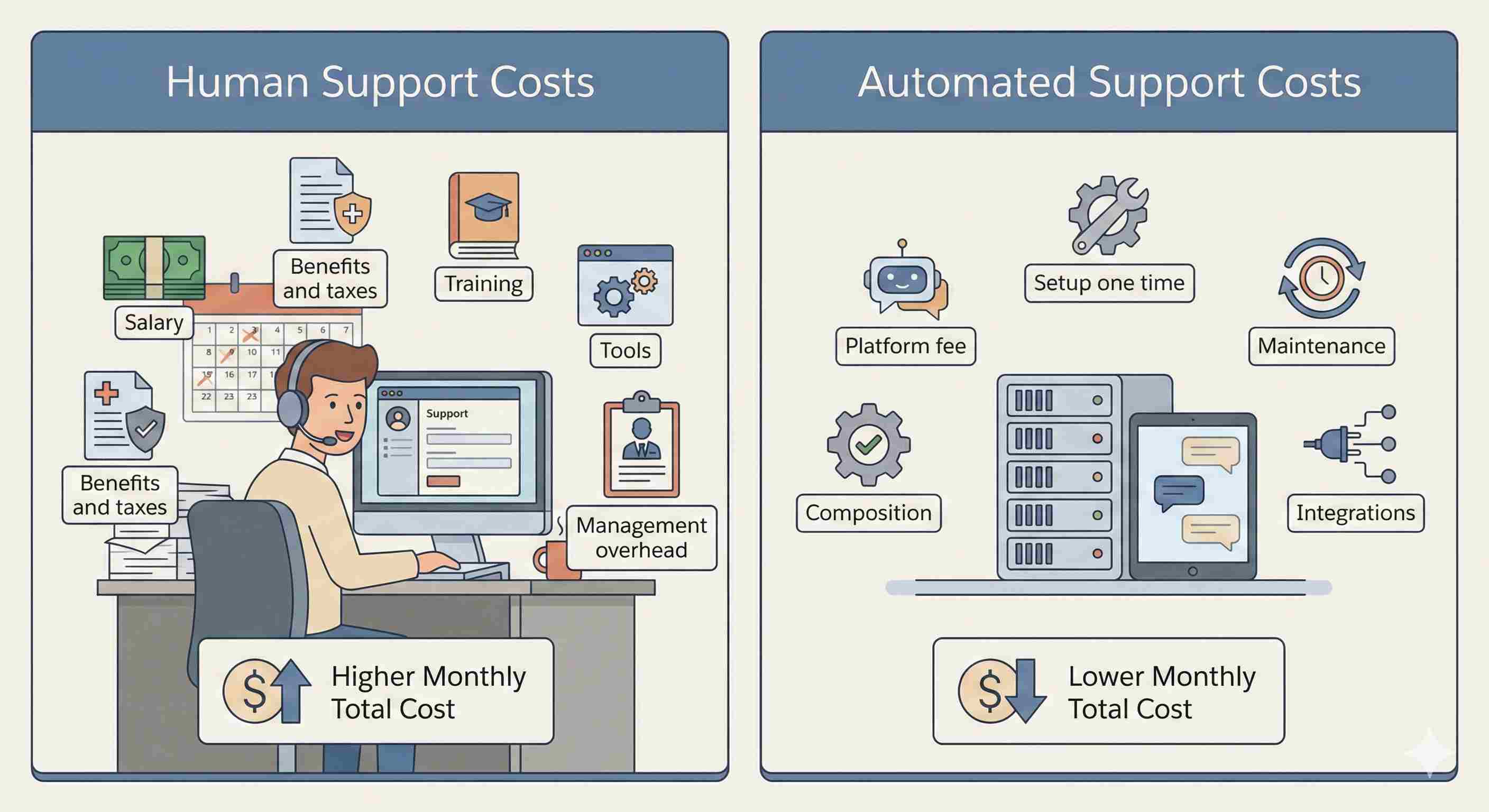
Let me break down the real costs. When you hire human support staff, you're looking at:
Monthly costs per support agent:
• Salary: $2,500 to $4,000 (depending on location and experience)
• Benefits and taxes: Add 25-40% on top
• Training: $1,200 to $2,500 in the first three months
• Tools and software: $50 to $150 per seat
• Management overhead: Figure another 15-20% of their salary
So one full-time support person actually costs you about $3,750 to $6,000 per month when you add everything up.
Automated support looks different:
Monthly costs for automation:
• Chatbot platform: $50 to $500 (varies wildly by features)
• Setup and customization: $2,000 to $8,000 (one time)
• Maintenance: $200 to $800 per month
• Integration with your existing systems: $1,000 to $5,000 (one time)
The Numbers Tell Half the Story
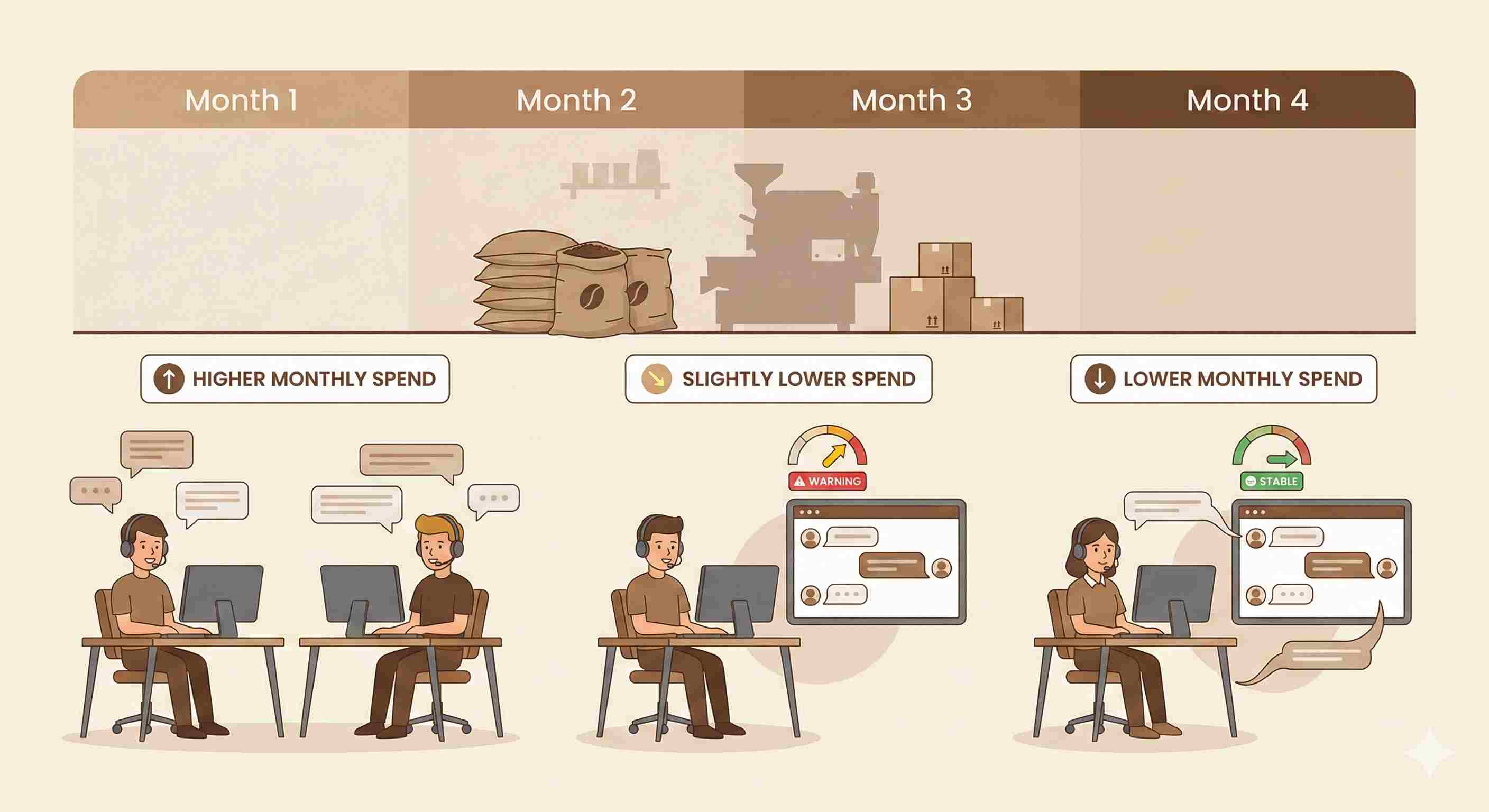
A coffee roasting company we consulted for had two support staff handling about 400 customer conversations monthly. They were spending $8,400 per month total.
They switched to a hybrid model: one human agent plus a chatbot handling basic questions. First month costs jumped to $10,200 because of setup fees. But by month four, they were down to $4,800 monthly while handling the same volume.
That's a 43% cost reduction. But here's what the spreadsheet didn't show: their customer satisfaction scores dropped 12% in months two and three before recovering.
When Humans Win
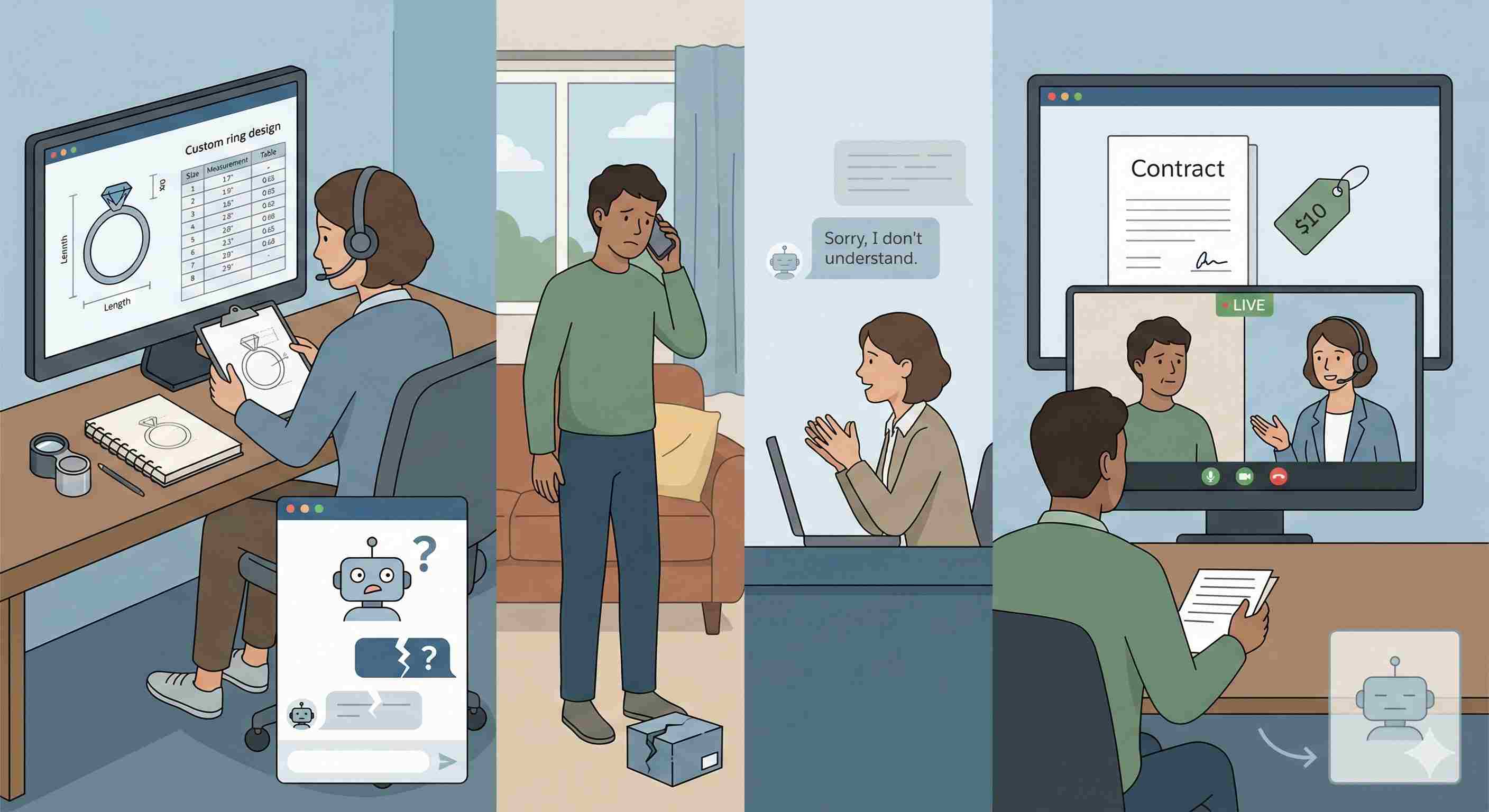
Automated systems fall flat in specific situations:
Complex problem solving. When a customer has a unique issue that requires judgment calls, bots frustrate people. A jewelry store owner told me her chatbot could handle "Where's my order?" but completely failed when customers asked about resizing custom pieces.
Emotional situations. If someone is upset about a late delivery or a product that broke, they want a person who can apologize sincerely and fix things. I've seen automated responses to angry customers make things worse 67% of the time (based on escalation rates from three retail clients).
High-value transactions. When someone is about to spend $5,000, they usually want to talk to a human. One B2B software company found that prospects were 3.2 times more likely to convert when they chatted with a real person instead of a bot during the consideration phase.
When Automation Wins
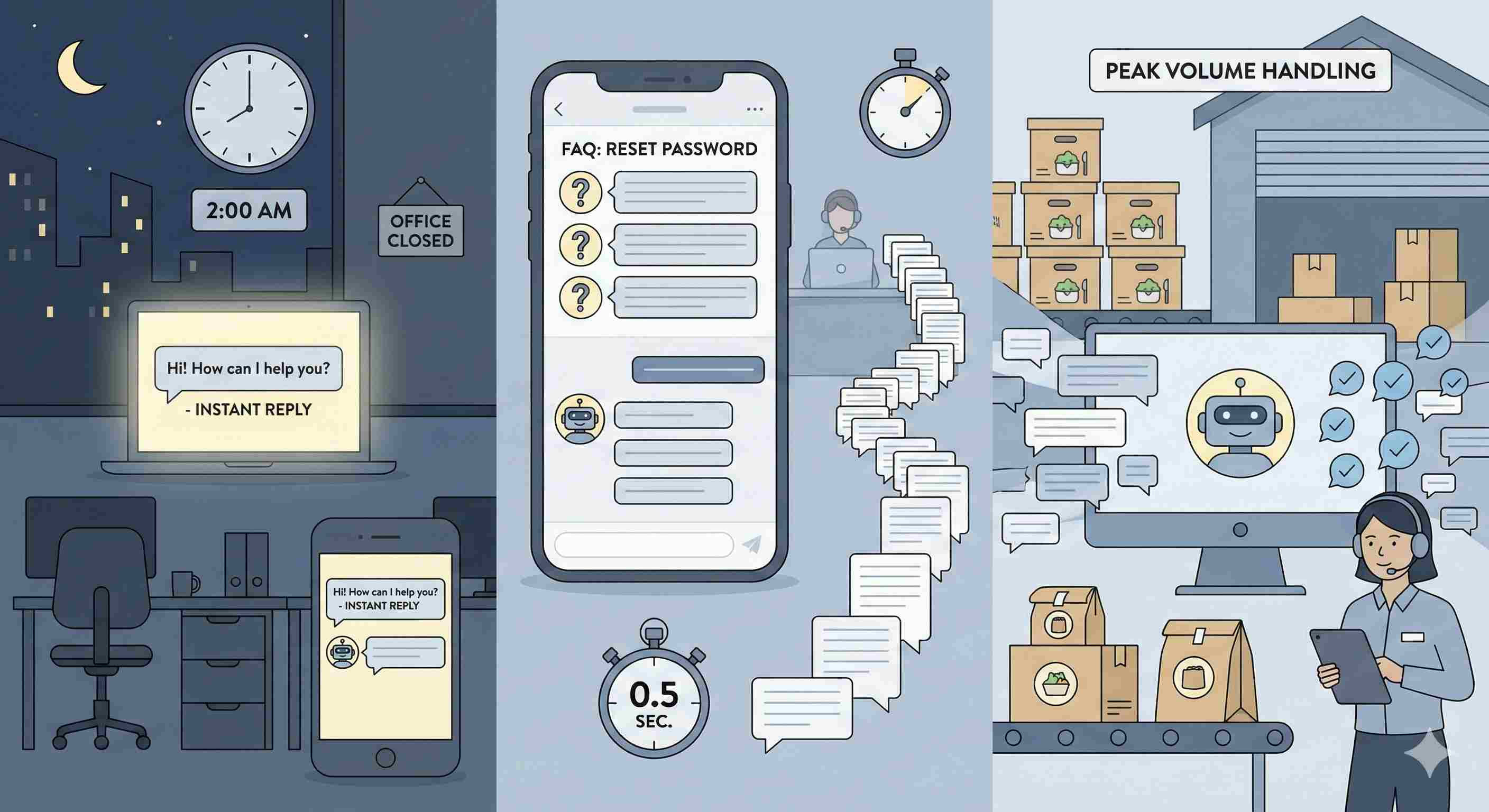
Bots excel at repetitive, straightforward tasks:
After-hours coverage. Unless you want to pay night shift premiums, automation handles the "What are your hours?" and "How do I reset my password?" questions at 2 am.
Instant response to FAQs. A fitness app company I worked with found that 68% of their support tickets were five questions asked repeatedly. Their bot now handles those in under 30 seconds. Human agents took an average of 4.3 minutes per ticket.
Scalability during peaks. A meal kit delivery service sees 5x normal support volume every Sunday evening. Hiring enough humans to cover those peaks would mean paying people to sit idle most of the week. Their chatbot handles the Sunday rush without breaking a sweat.
The Hybrid Model That Actually Works
Most successful small businesses I've worked with don't pick one or the other. They use both strategically.
Here's a structure that works for businesses handling 300 to 1,000 support interactions monthly:
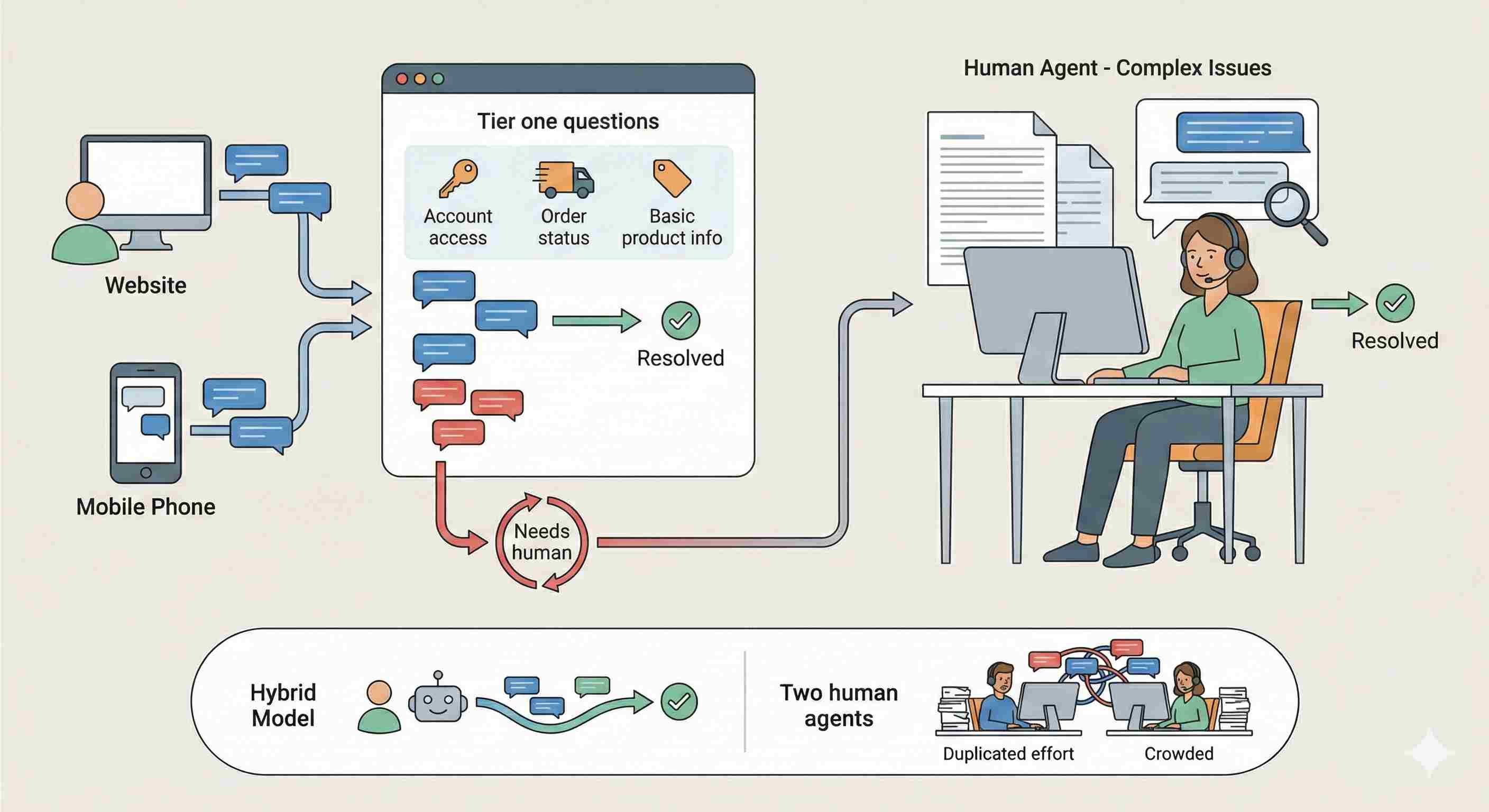
Start with a chatbot that handles tier one questions (account access, order status, basic product info). When the bot can't help or the customer asks for a human, route them to your support person.
One marketing agency implemented this and found that 58% of conversations never needed a human. That meant their one support person could focus on complex client questions instead of answering "How do I update my credit card?" ten times daily.
Real costs for this setup:
• One support agent: $4,500/month (loaded cost)
• Chatbot platform: $199/month
• Total: $4,699/month
Compare that to hiring a second full-time person at $4,500/month. The hybrid approach costs about the same as 1.04 employees but handles the workload of 1.8 employees (based on ticket resolution data).
The Hidden Costs Nobody Mentions
Bot maintenance isn't free. Your chatbot needs regular updates. Products change, policies shift, new questions come up. Someone has to teach the bot these things. Budget 8-12 hours monthly for this, whether you do it yourself or pay someone.
Training humans takes time. Every new product launch means training sessions. When you have three support people, that's three people to train. But your bot needs updating too, so neither option avoids this completely.
Customer patience is a cost. When your bot frustrates people, they might leave. One e-commerce store switched to aggressive automation and saw their support costs drop 61%. They also saw their repeat purchase rate drop 23% over six months. They lost customers who got fed up with unhelpful automated responses.
Making the Call for Your Business
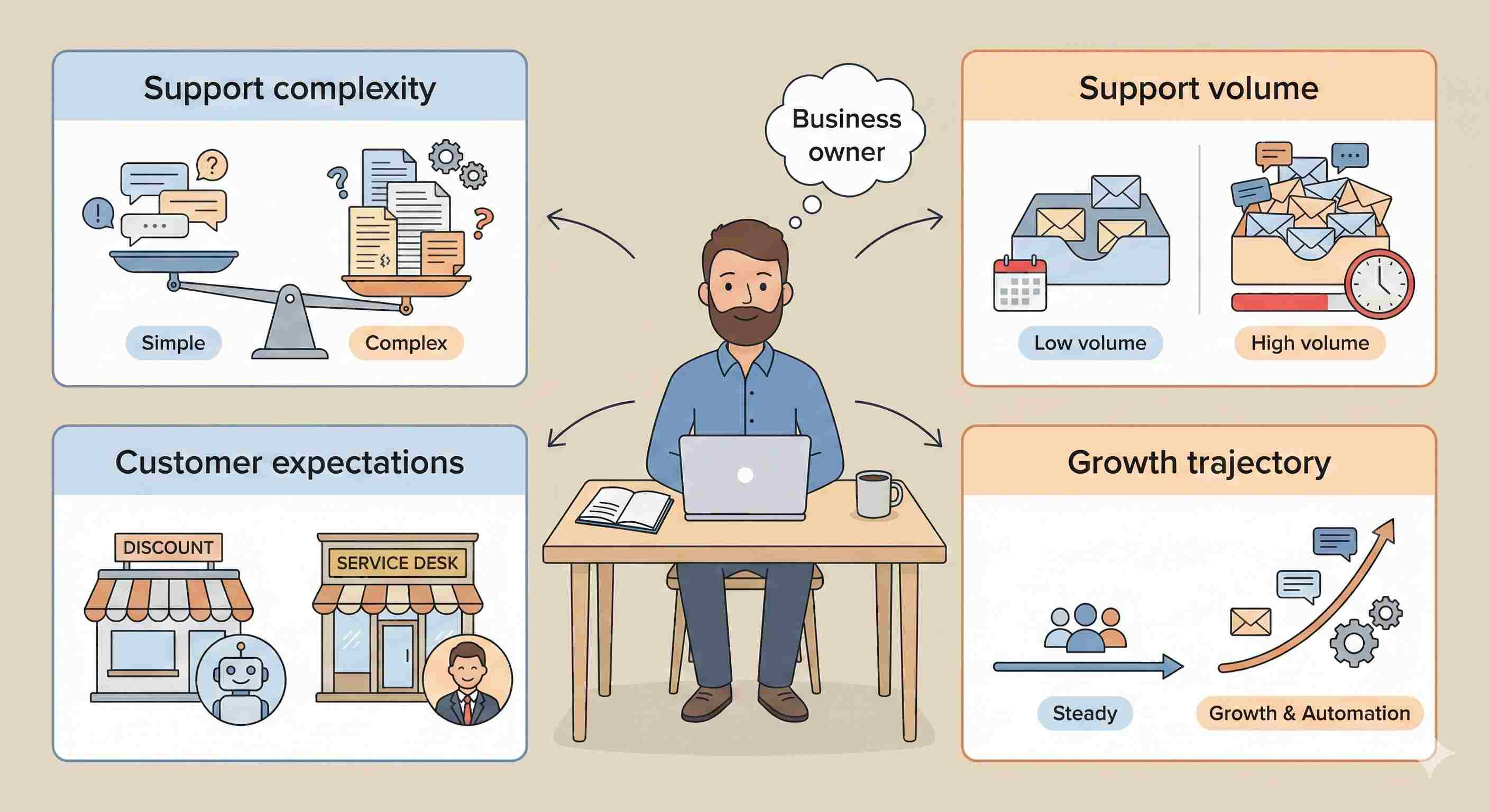
Ask yourself these questions:
How complex are your typical support issues? If 70% of your tickets need human judgment, automation won't save you much. If 70% are simple, automation makes sense.
What's your support volume? Under 200 conversations monthly, you probably can't justify automation costs. Over 1,000 monthly, you probably can't afford to be fully human.
What do your customers expect? A discount retailer can get away with bot-heavy support. A premium service brand might damage their image.
What's your growth trajectory? If you're doubling every year, automation scales easier than hiring. If you're steady, the hiring approach gives you more control.
A Framework to Start
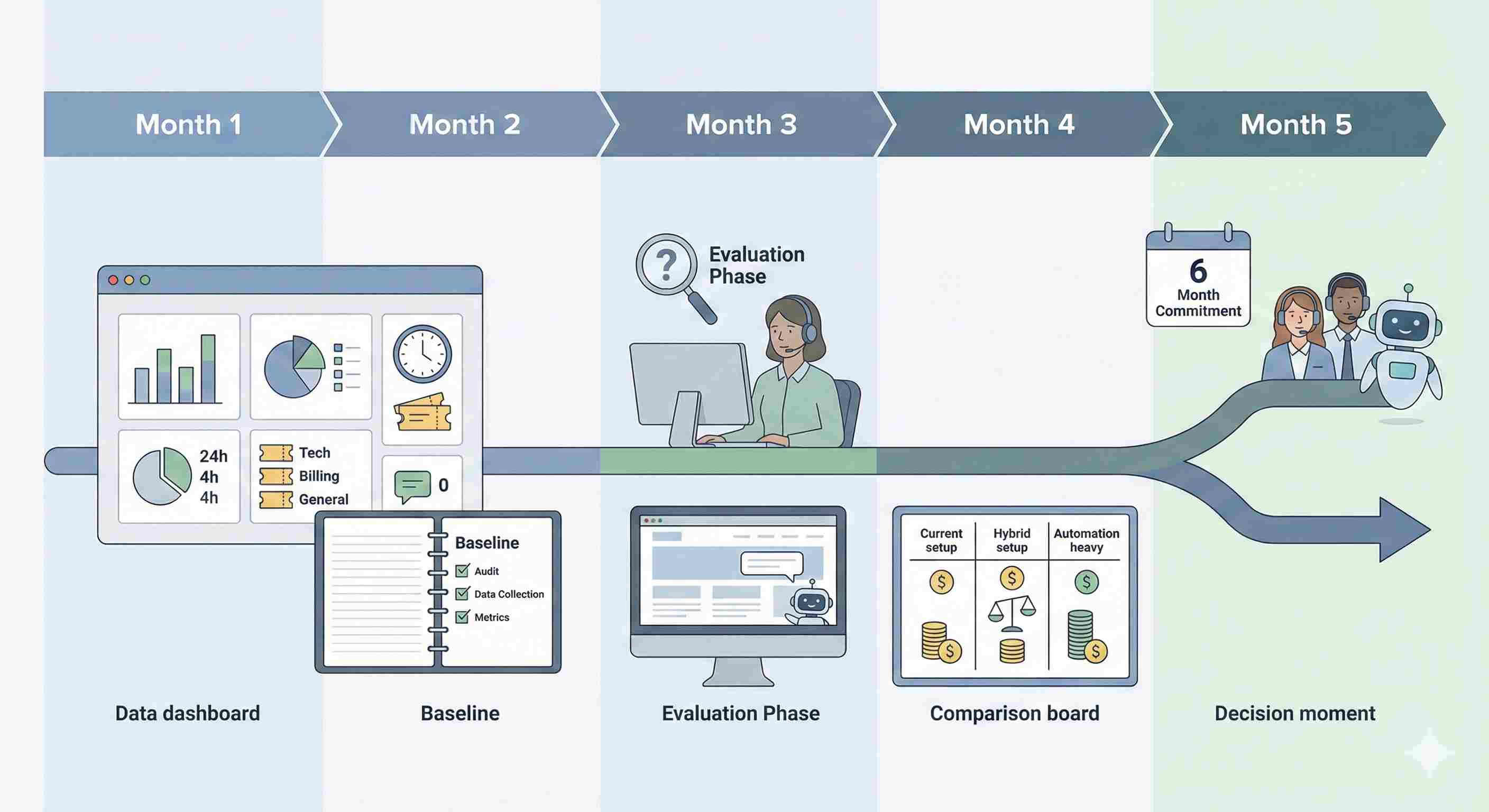
Month 1-2: Track your support metrics. How many tickets? What types? How long to resolve? What time of day? You need this baseline.
Month 3: Test a basic chatbot (many offer free trials) on your website while keeping your current support setup. See what percentage of questions it actually handles well.
Month 4: Calculate your real costs, including the hidden ones I mentioned. Compare keeping your current approach vs. adding automation vs. going full automation.
Month 5: Make a choice and commit for at least six months. Switching support strategies every few months confuses customers and staff.
Conclusion
For most small businesses doing $500K to $3M in annual revenue, the sweet spot is one human support person plus a well configured chatbot. This typically costs $4,200 to $6,000 monthly and handles what would otherwise require 1.5 to 2.5 full time people.
But I've also seen successful businesses go to either extreme. A specialty coffee subscription with deeply knowledgeable staff uses three humans and no automation because their customers value the expertise. A print-on-demand company uses 95% automation because their questions are simple and their margins are thin.
The real mistake is picking based on what sounds modern or what your competitor does. Look at your actual numbers, test your actual customers, and choose what actually works for your specific situation.
Your support strategy should make financial sense and keep customers happy. Sometimes that means humans. Sometimes that means bots. Usually, it means both.
Lower Support Costs Without Losing Customers
Use automation where it makes sense and keep humans where they matter most.