Restaurants Are Losing Customers in the First 30 Seconds - Here's Why
Created: 27/05/2026
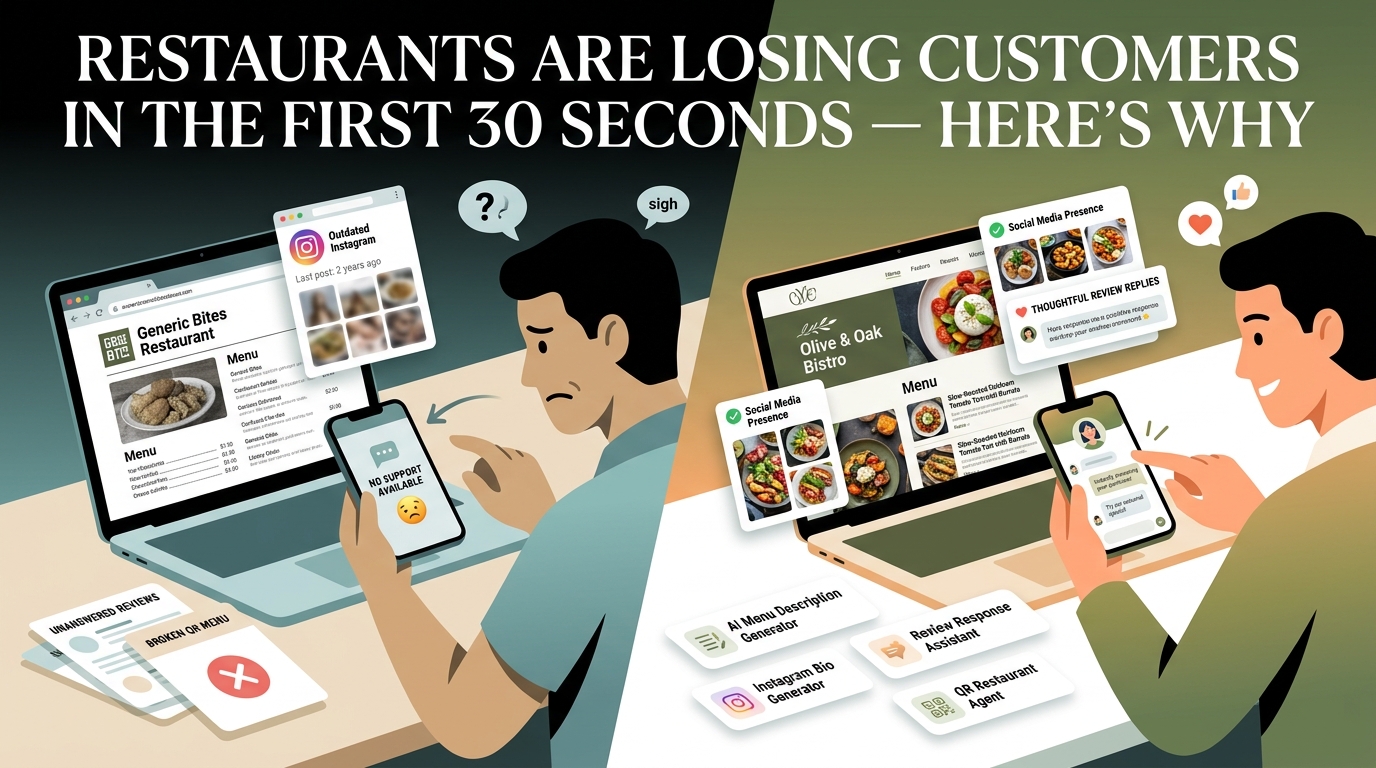
Someone finds your restaurant on Google. They click your website. They look at your name, your menu preview, and your vibe. And within 30 seconds, they've either decided to book a table or moved on to the place down the street.
You never knew they visited. You never got a chance to explain yourself. They just left.
This happens hundreds of times a day to restaurants that are otherwise doing everything right. Good food. Good service. Real reviews. But the first impression, the digital one, loses them before they ever walk through the door.
Here's where it's actually happening.
Your Restaurant Name Does More Work Than You Think
Before anyone reads your menu or sees your photos, they read your name. And your name tells them whether you're worth a second look.
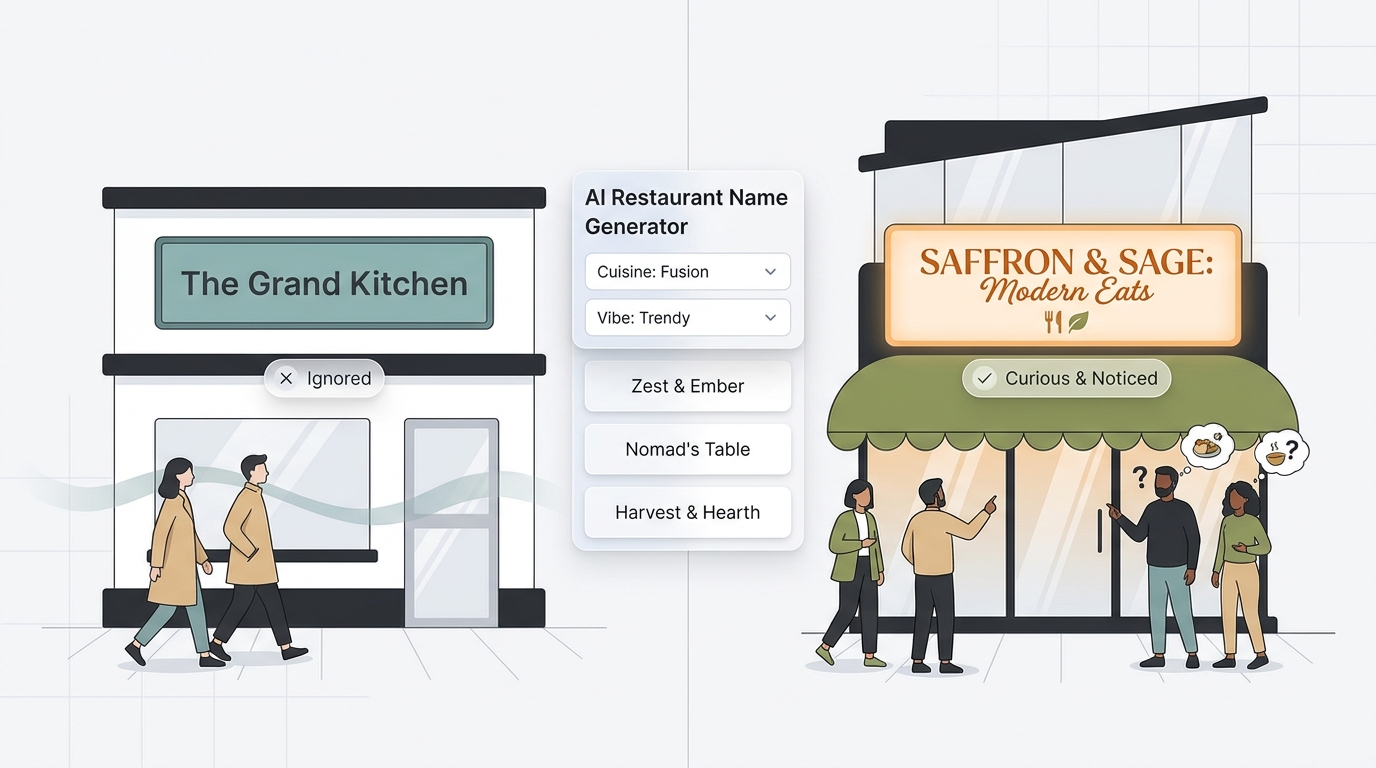
A name like "Spice Garden" or "The Grand Kitchen" says nothing. It doesn't tell someone what cuisine you serve, what experience they're walking into, or why you're different from the four other restaurants on the same block.
A good restaurant name does three things fast: it signals the cuisine or vibe, it's easy to remember, and it sounds like a place a person would actually want to go.
Most restaurant names fail all three. Not because the owners don't care, but because naming is genuinely hard. You're too close to it. You love the name because of the story behind it, but the customer doesn't know the story. They just see the name.
This is one of the fastest fixes available. Tools like a Restaurant Name Generator let you input your cuisine type, your style, and your target customer, and get back a shortlist of names that actually work. You can test variations, check availability, and arrive at something that earns a second look instead of a quick scroll past.
The Menu Is Confusing or Invisible
A customer lands on your site. They want to see the menu. They click around for 15 seconds, can't find it, and leave.
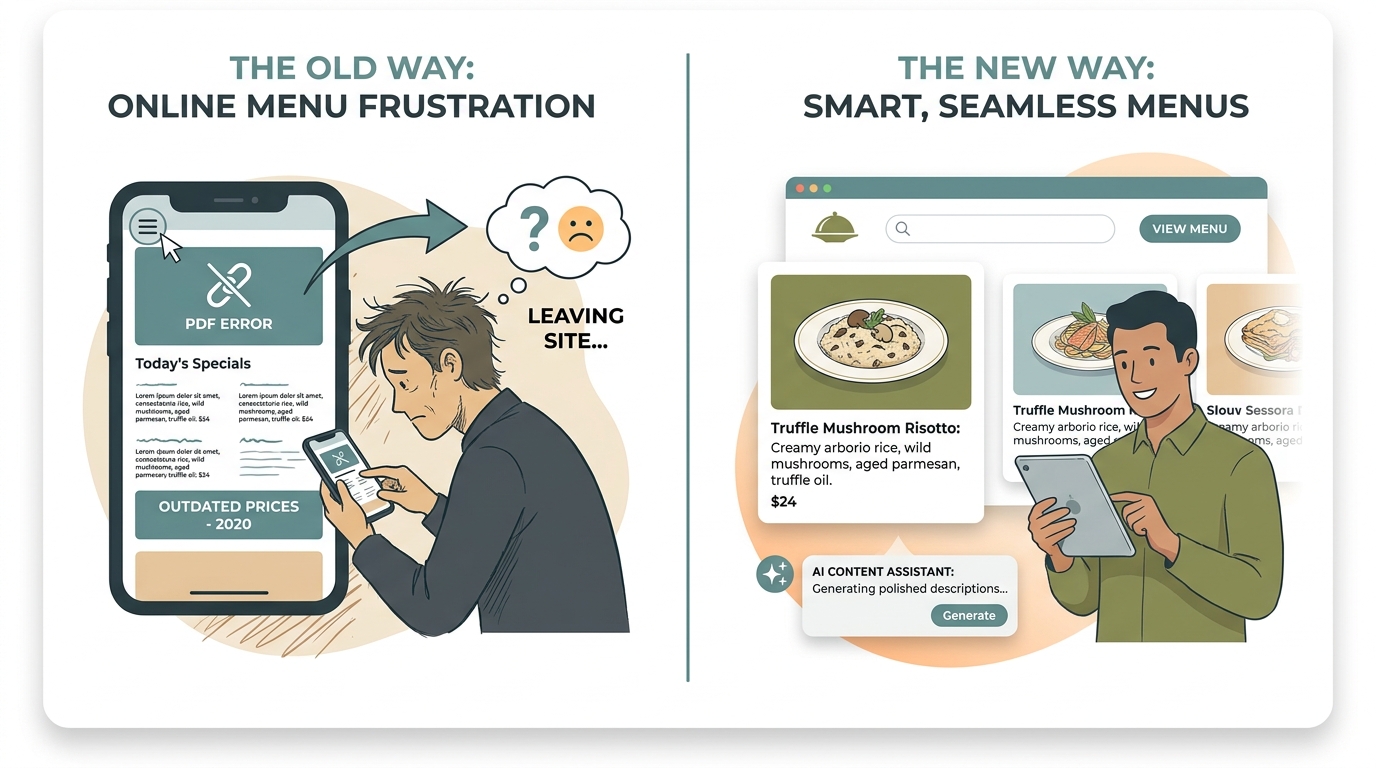
Or they find the menu, but it's a PDF that doesn't load properly on mobile. Or it's an image so small the text is unreadable. Or it hasn't been updated since last year and shows prices that no longer exist.
These are not minor inconveniences. They are the reason people bounce. A hungry person looking at lunch options is not patient. They are in decision mode. You have seconds.
The menu needs to be one click from the homepage. It needs to load fast. It needs to work on a phone. And it needs to tell a story, not just list items.
"Grilled chicken with seasonal vegetables" is a menu item. "Free-range chicken, charred on an open flame, served with roasted heritage carrots and a tarragon butter" is a reason to come in. The difference is description, and description is something an AI content tool can help you write quickly and consistently across every item on the list.
Nobody Is Answering Basic Questions
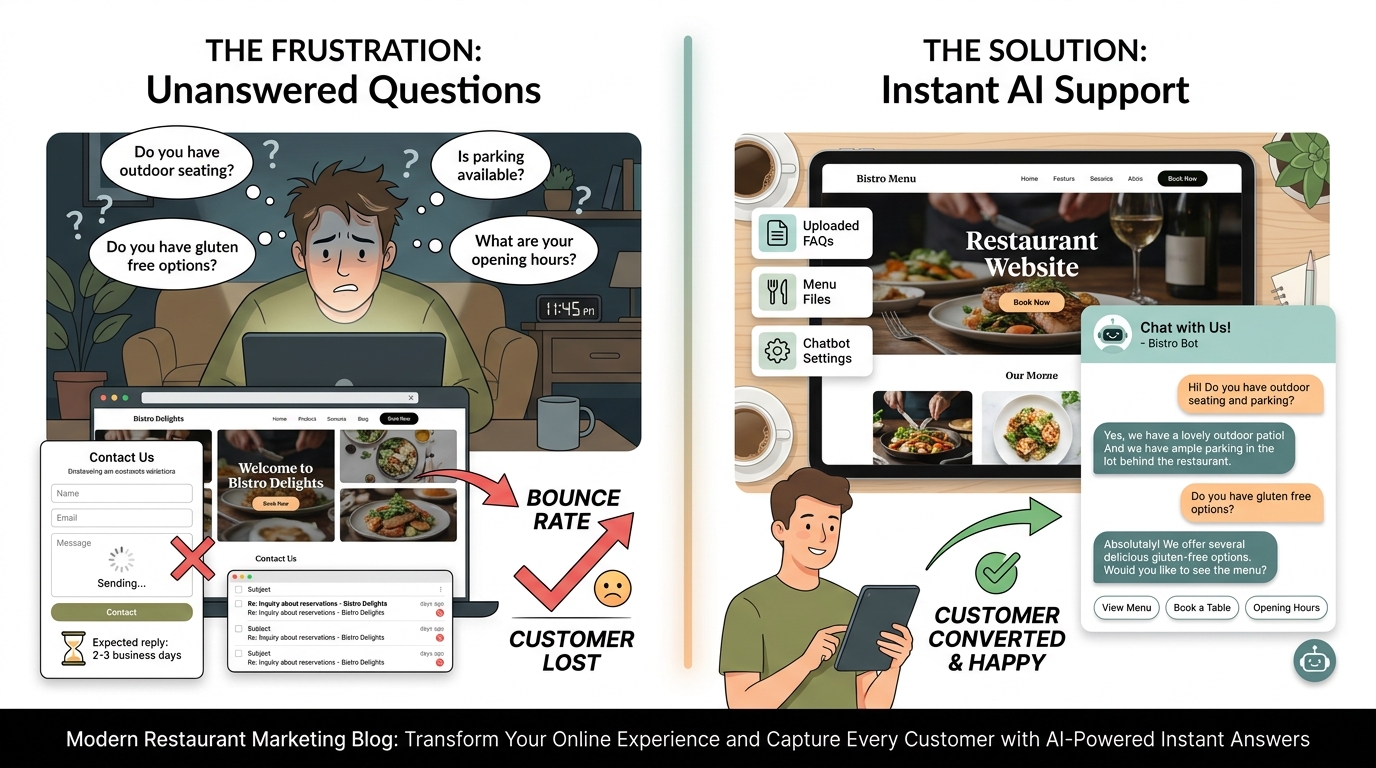
Someone visits your site with a simple question. Do you have outdoor seating? Do you take reservations? Is there parking nearby? Do you accommodate gluten-free diets?
These are not unusual questions. They are the questions every customer has before they decide to show up.
If your website doesn't answer them clearly, or if your contact form takes 48 hours to get a response, you lose the booking. The customer doesn't wait. They go somewhere that answered the question without being asked.
This is exactly what a website chatbot solves. A tool like Simplagents lets you upload your restaurant's FAQ, your menu details, your hours, your reservation policy, and any other information you want customers to have. The chatbot sits on your site and answers questions instantly, at 11pm when no one is in the office, on Sunday morning when you're prepping for service.
500 messages per month on the free plan. No code. Upload your document, customize the look, deploy it. The customer gets an answer. You get the booking.
Your Online Presence Doesn't Match Your In-Person Experience
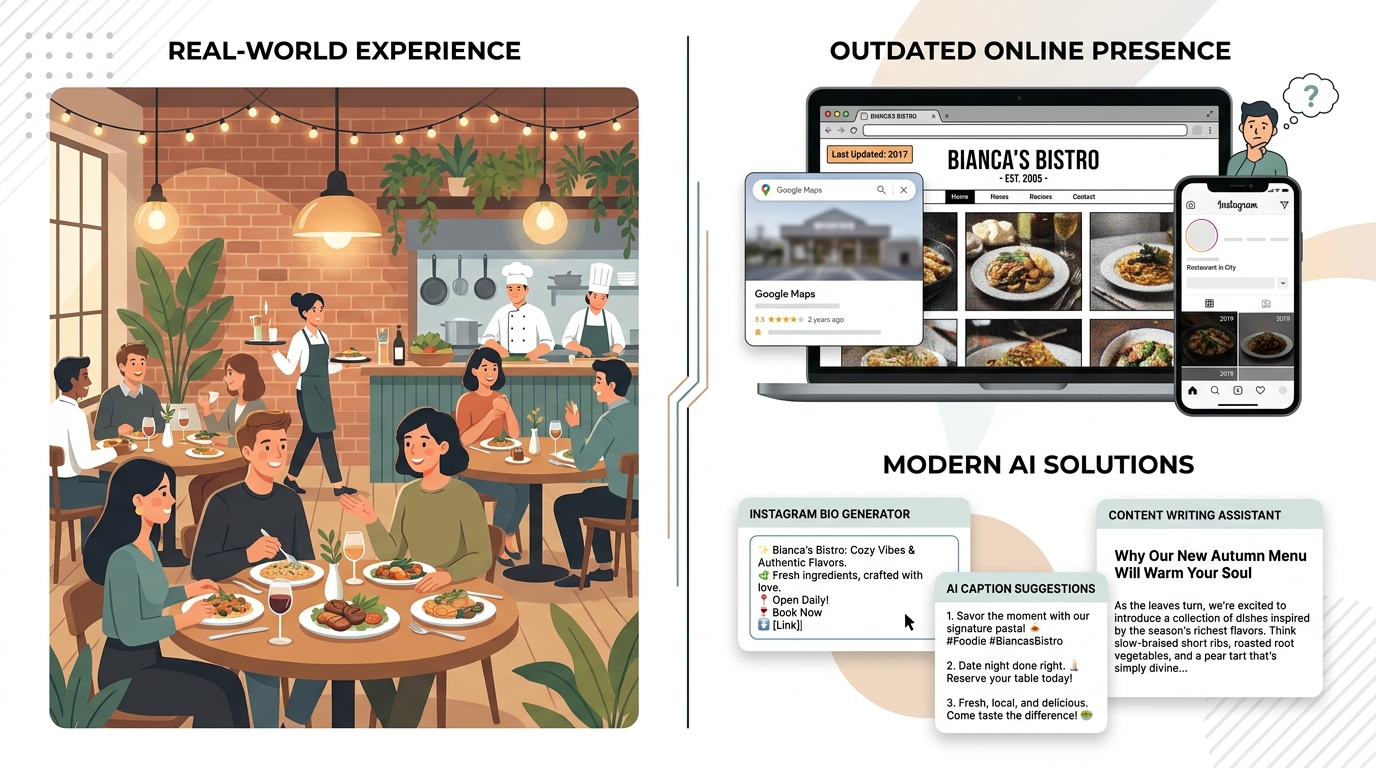
You walk into a restaurant and it's warm, lively, and the food smells incredible. But the website looked cold and generic. The Instagram hadn't been posted to in four months. The Google listing had a photo from the old decor.
The disconnect creates doubt. Before a first visit, customers are trying to predict whether they'll have a good experience. If your digital presence doesn't match the real one, they can't make that prediction with confidence. So they default to somewhere that gives them more to go on.
Your Instagram bio is a fast fix. Two or three lines that capture exactly what kind of place you are, who it's for, and why tonight should be there. An Instagram Bio Generator can give you a starting point in seconds. Not a masterpiece, but something accurate and inviting that replaces the vague placeholder most restaurant accounts use.
Titles and captions on posts matter too. The difference between a food photo that gets saved and one that gets scrolled past is often just the caption. A Meme Caption Generator or AI Text Generator can help you produce content that sounds like your brand, not like a press release.
You Have Reviews. You're Not Responding to Them.
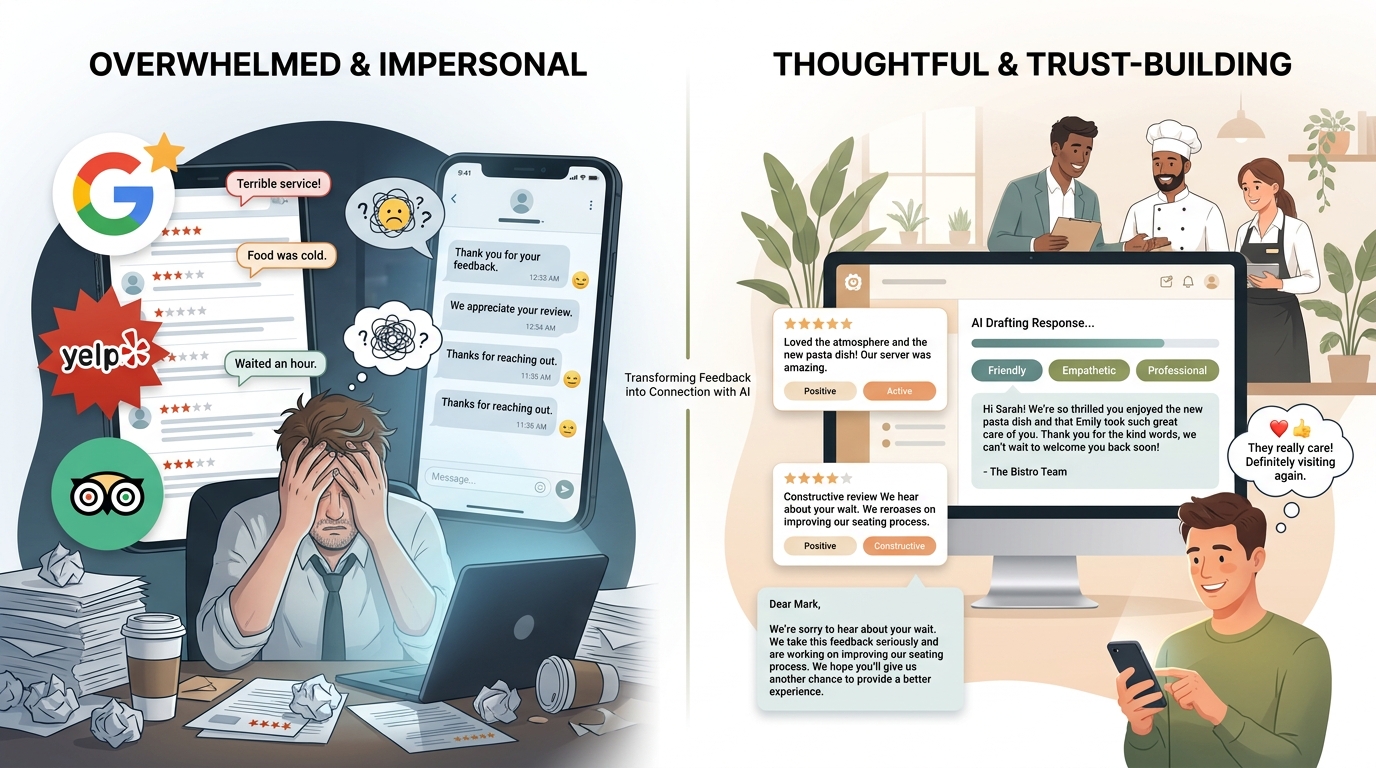
A potential customer reads your Google reviews. They see five stars, four stars, a mix. Then they scroll to how you respond.
A restaurant that replies to reviews, especially the critical ones, with genuine care and specific language, reads as a place that takes hospitality seriously off the floor, not just on it. A restaurant that never responds, or responds with "Thank you for your feedback!" every time, reads as a place that's going through the motions.
One bad review handled well can actually build more trust than five unchallenged five-stars.
The problem is time. Responding to every review, every day, across Google, Yelp, and TripAdvisor, is a real time commitment. A Response Generator lets you paste the review, pick the tone, and get a draft reply in seconds. You still read it, you still edit it to make it yours. But you're not staring at a screen trying to find the right words at the end of a 14-hour day.
The Name Is Fine. The First Impression Isn't.
All of these problems share a root cause. Restaurants put everything into the physical experience and treat the digital one as an afterthought.
That made sense 15 years ago. It doesn't anymore. The 30 seconds a customer spends looking at your online presence before they decide to visit is now part of the hospitality experience. It's the host stand. It's the first impression.
And right now, a lot of restaurants are failing it, not because they don't care, but because they don't have the time or tools to fix it.
The tools exist. Most of them take less than an hour to set up. A better restaurant name. A chatbot that answers questions overnight. A menu with real descriptions. An Instagram bio that says something. Reviews that get a thoughtful reply.
None of this replaces good food or good service. But it gets customers through the door to experience them.
That's the part you've already got covered. The first 30 seconds just need to catch up.
Build Your Restaurant QR Agent in Minutes
Turn your table QR code into an AI assistant that answers menu questions, recommends dishes, explains dietary options, and helps customers instantly without waiting for staff.
Free setup • No code required