Website Chatbot vs WhatsApp Automation: What Converts Better
Created: 13/02/2026
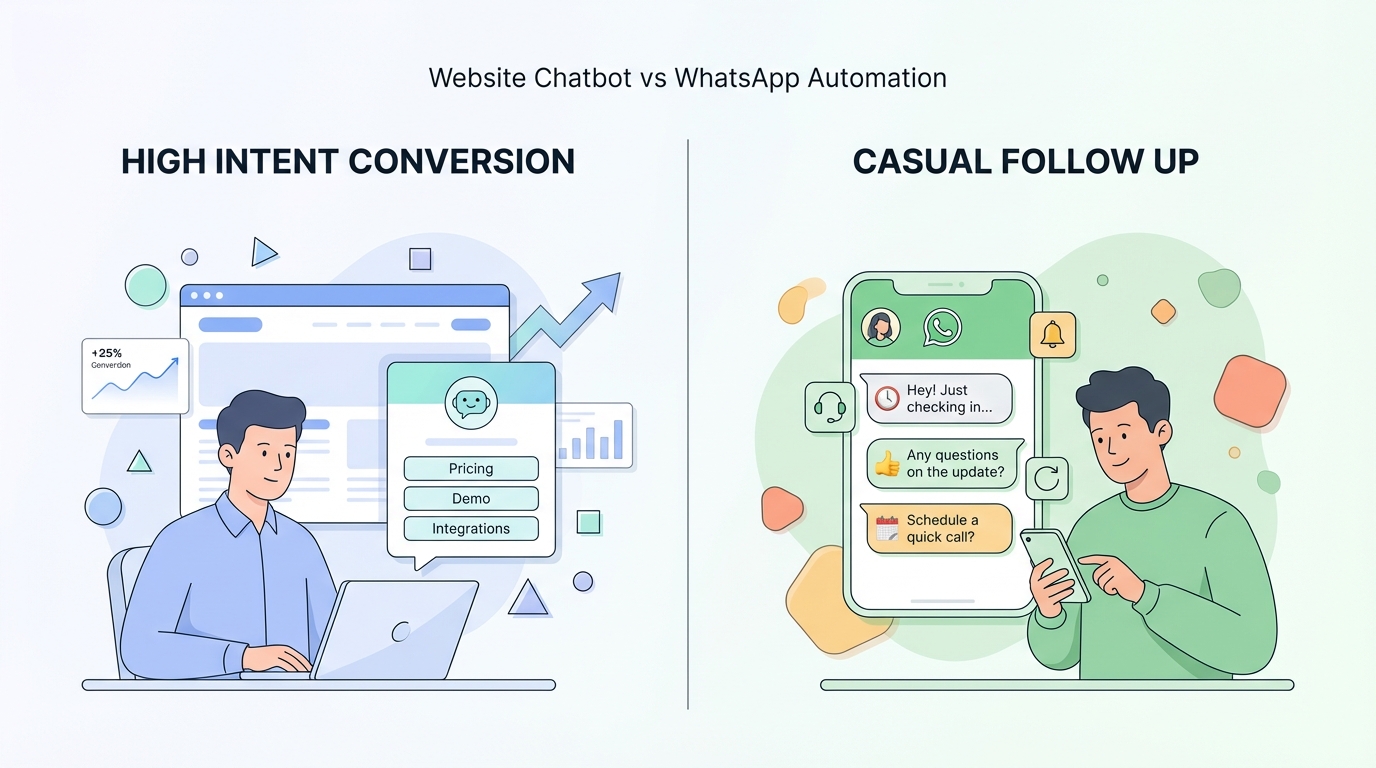
If you run paid ads or SEO, this question matters.
Where should the conversation start?
On your website with a chatbot
Or inside WhatsApp with automation
Both work. But they work differently. And the winner depends on traffic intent, control, and data.
Let’s break it down with numbers and real scenarios.
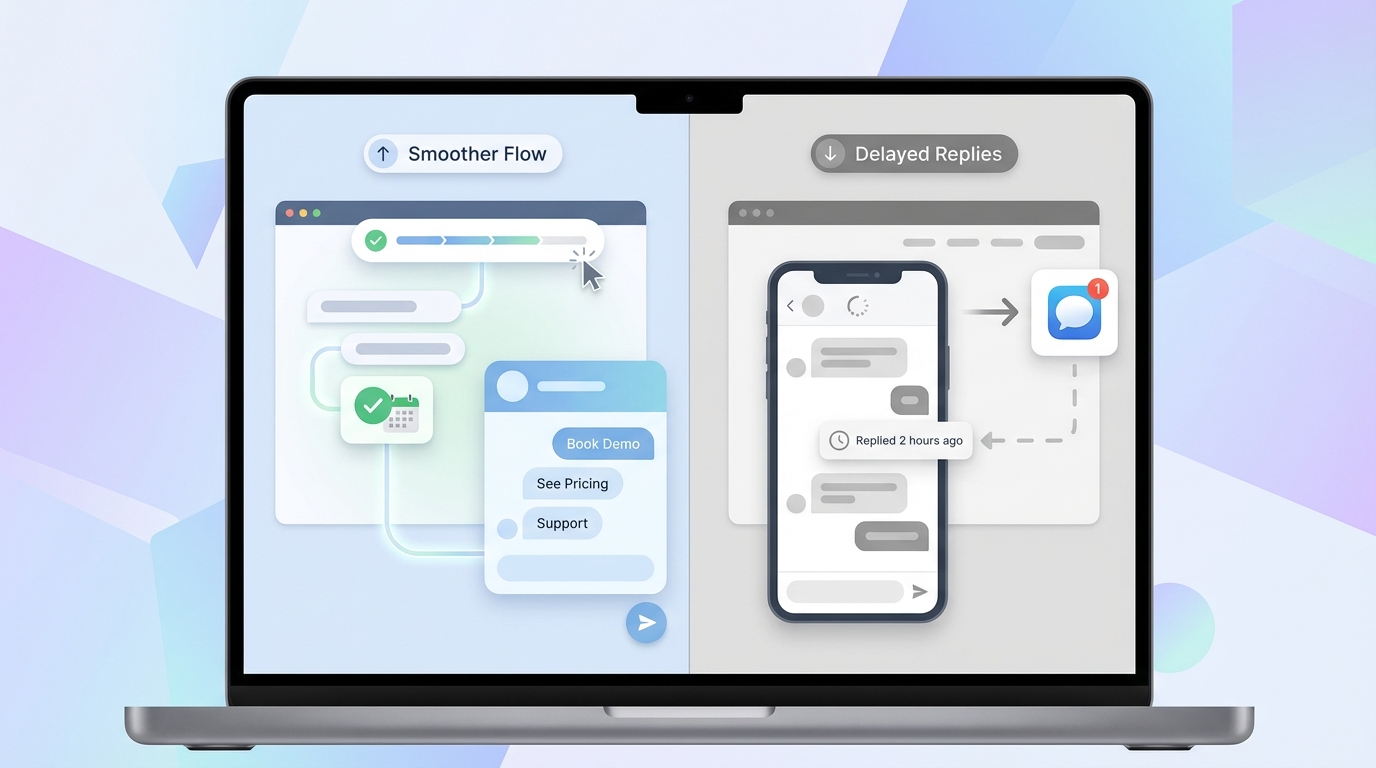
Turn Website Traffic Into Booked Demos
Use a chatbot to respond in seconds and convert search traffic before attention drops.
1. Conversion Starts With Intent
Traffic intent decides everything.
When someone lands on your website, they are already in research mode. They searched. They clicked. They are evaluating.
A website chatbot meets them at that exact moment.
When someone clicks a WhatsApp ad, they are shifting platforms. That extra step changes behavior.
Example
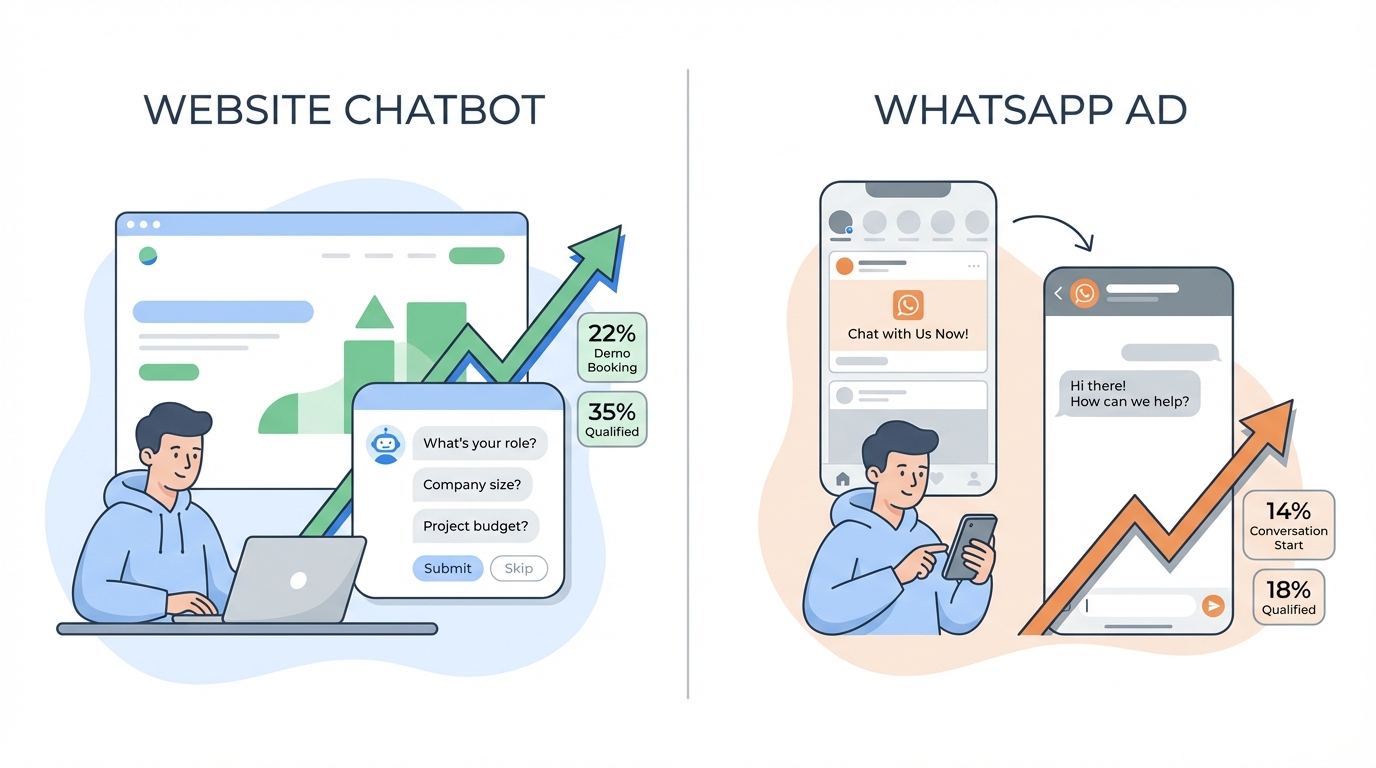
A SaaS brand running Google Ads tested both flows.
Flow A
Ad → Landing page → Website chatbot asks 3 qualifying questions → Demo booked
Flow B
Ad → Click to WhatsApp → Automated greeting → Sales team follows up
Result after 60 days:
Website chatbot flow
• 22 percent demo booking rate
• 35 percent of leads qualified
WhatsApp automation flow
• 14 percent conversation start rate
• 18 percent qualified
Why?
Because high-intent users prefer fast answers inside the same page. They do not want to switch apps.
2. Control Over the Journey
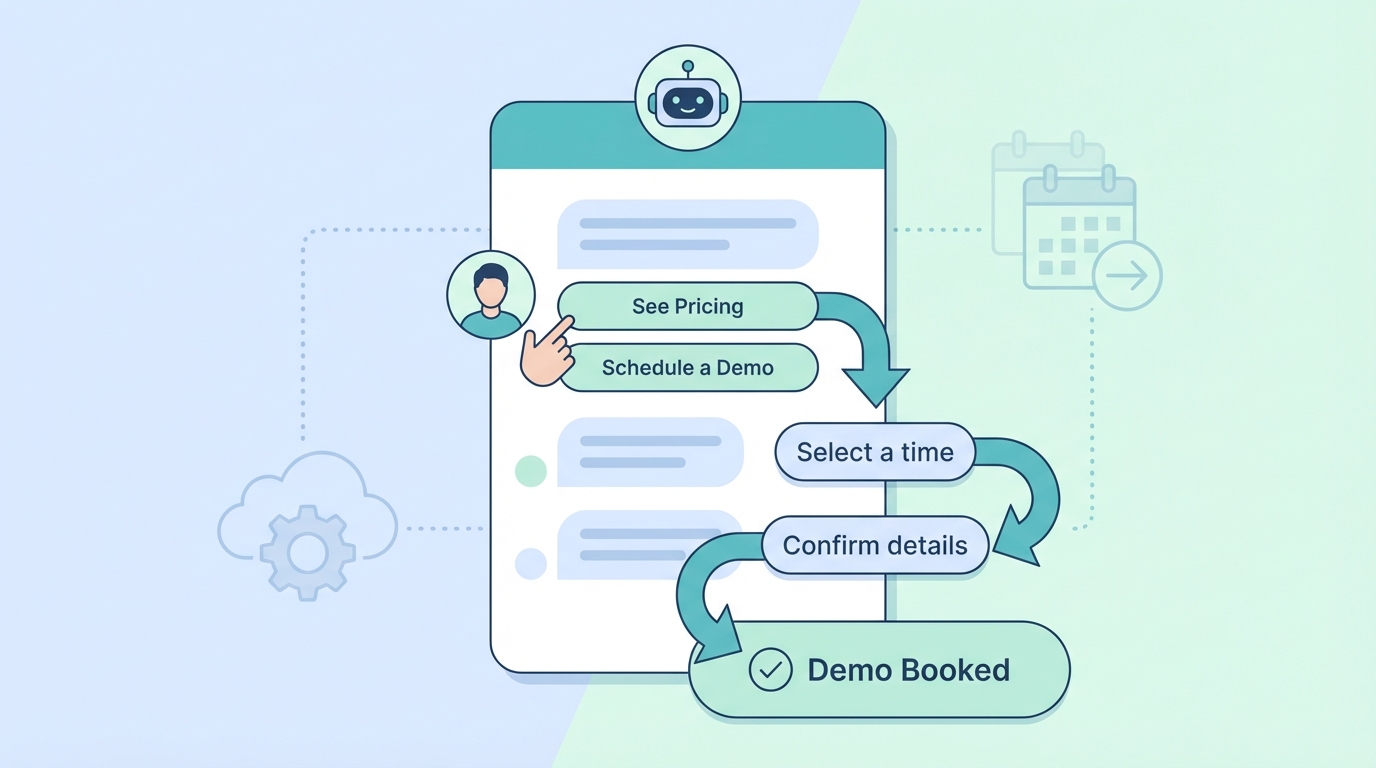
With a website chatbot, you control:
• The questions
• The logic
• The qualification flow
• The handoff to sales
• The booking calendar
You can show pricing instantly. You can route enterprise visitors differently from small businesses. You can integrate CRM in real time.
With WhatsApp automation, you depend on:
• Template approval
• 24-hour messaging windows
• User reply to continue conversation
And if the user stops replying, the flow breaks.
Real World Scenario
An EdTech company used WhatsApp automation for lead capture.
Problem
40 percent of users read the first message but did not reply.
When they switched to a website chatbot with button-based responses:
Reply rate increased to 68 percent.
Friction was reduced because users could click instead of type.
3. Speed to Answer
Speed drives revenue.
A website chatbot answers instantly on page load.
No app switching.
No waiting for a rep.
No typing required.
And speed changes outcomes.
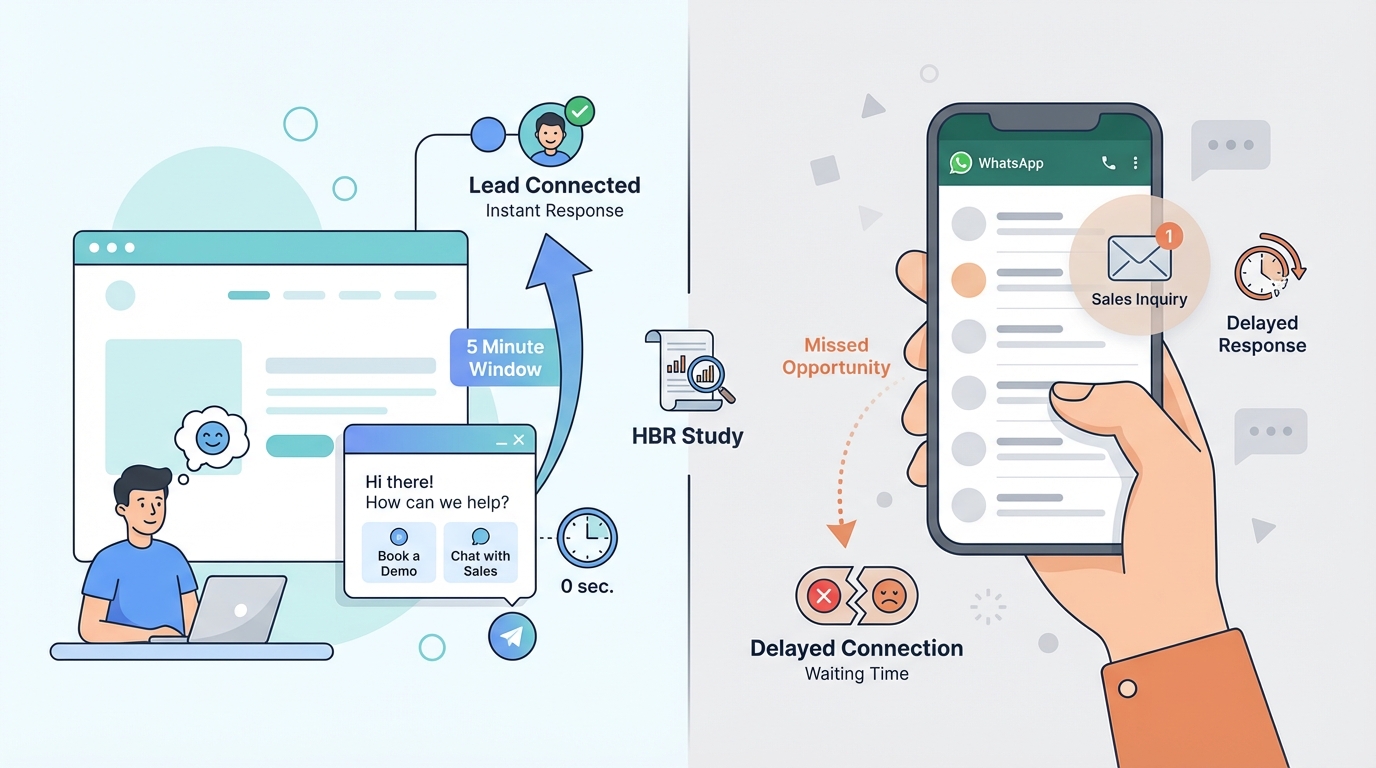
According to a study by Harvard Business Review, companies that respond within five minutes are 100 times more likely to connect with a lead compared to responding after 30 minutes.
A chatbot guarantees that five minute window.
WhatsApp automation depends on the user opening the app and replying.
That delay matters.
4. Data Depth and Tracking
If you run ads, you care about attribution.
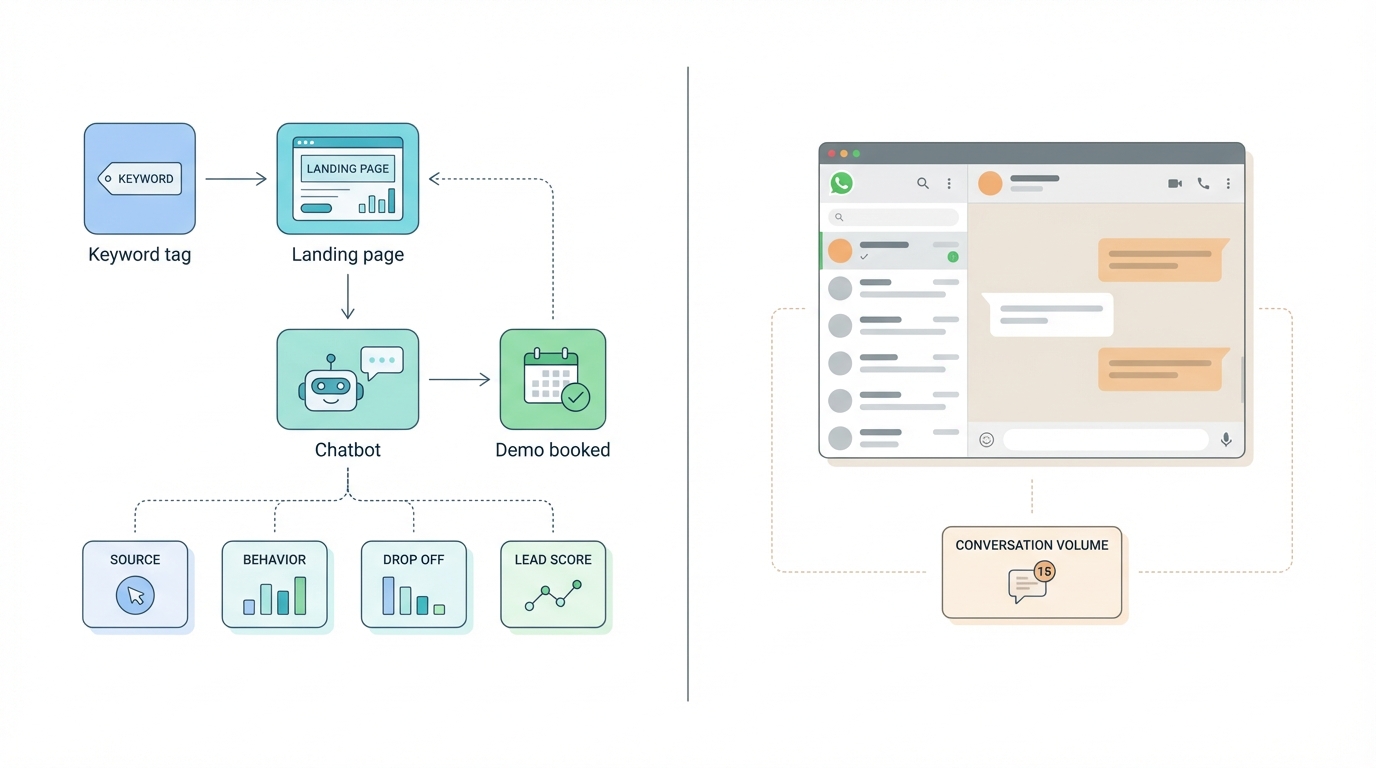
Website chatbot advantages:
• You track the user source
• You track session behavior
• You track drop-off points
• You score leads automatically
You know which keyword generated the demo.
WhatsApp has limited tracking. You see conversation volume, but deep attribution is harder.
If your goal is scale with performance marketing, website chatbot data is easier to optimize.
5. User Psychology
People behave differently on each channel.
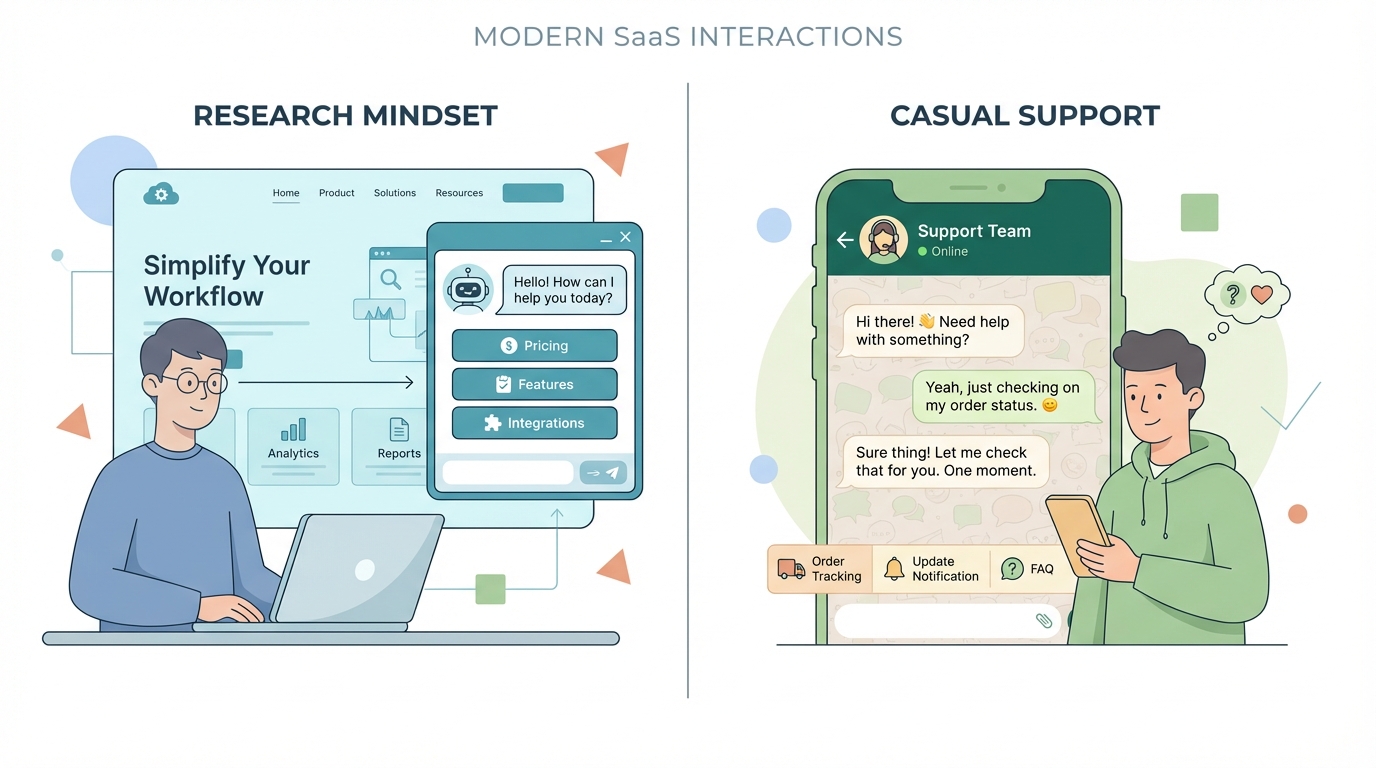
On your website:
They expect information.
On WhatsApp:
They expect conversation.
That sounds subtle, but it changes outcomes.
When users are researching pricing, features, and integrations, they prefer structured answers. A chatbot with guided options works better.
When users need support updates or order tracking, WhatsApp feels natural.
Context decides conversion.
6. Cost Efficiency
Let’s talk numbers.
Assume:
10,000 website visitors per month
2 percent convert to demo through the form
That gives 200 leads.
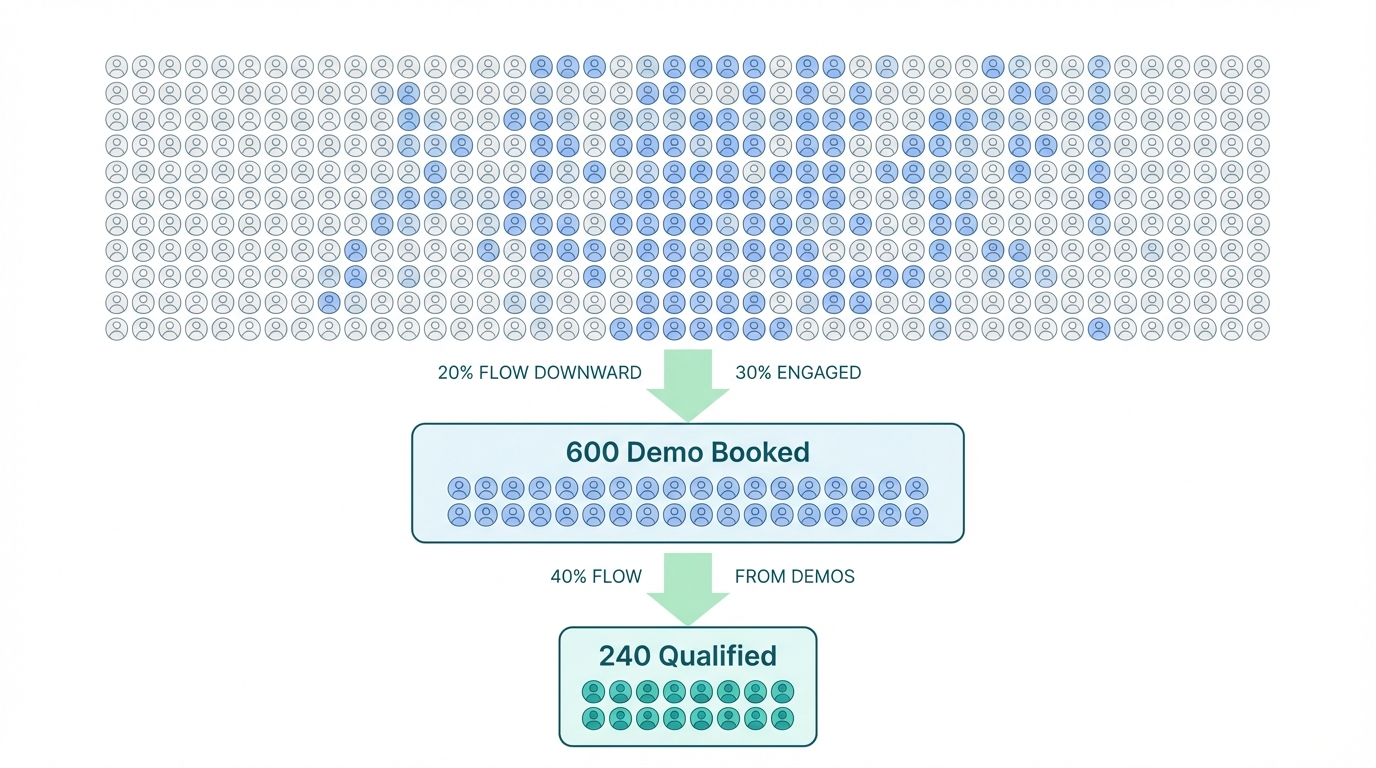
Now add a website chatbot that engages 30 percent of visitors and converts 20 percent of those to demo.
10,000 visitors
3,000 engage
600 book demo
Even if only 40 percent are qualified, that is 240 strong leads.
Forms rarely do that alone.
WhatsApp ads cost per click can also be higher because you pay for platform shift plus conversation drop offs.
7. Where WhatsApp Automation Wins
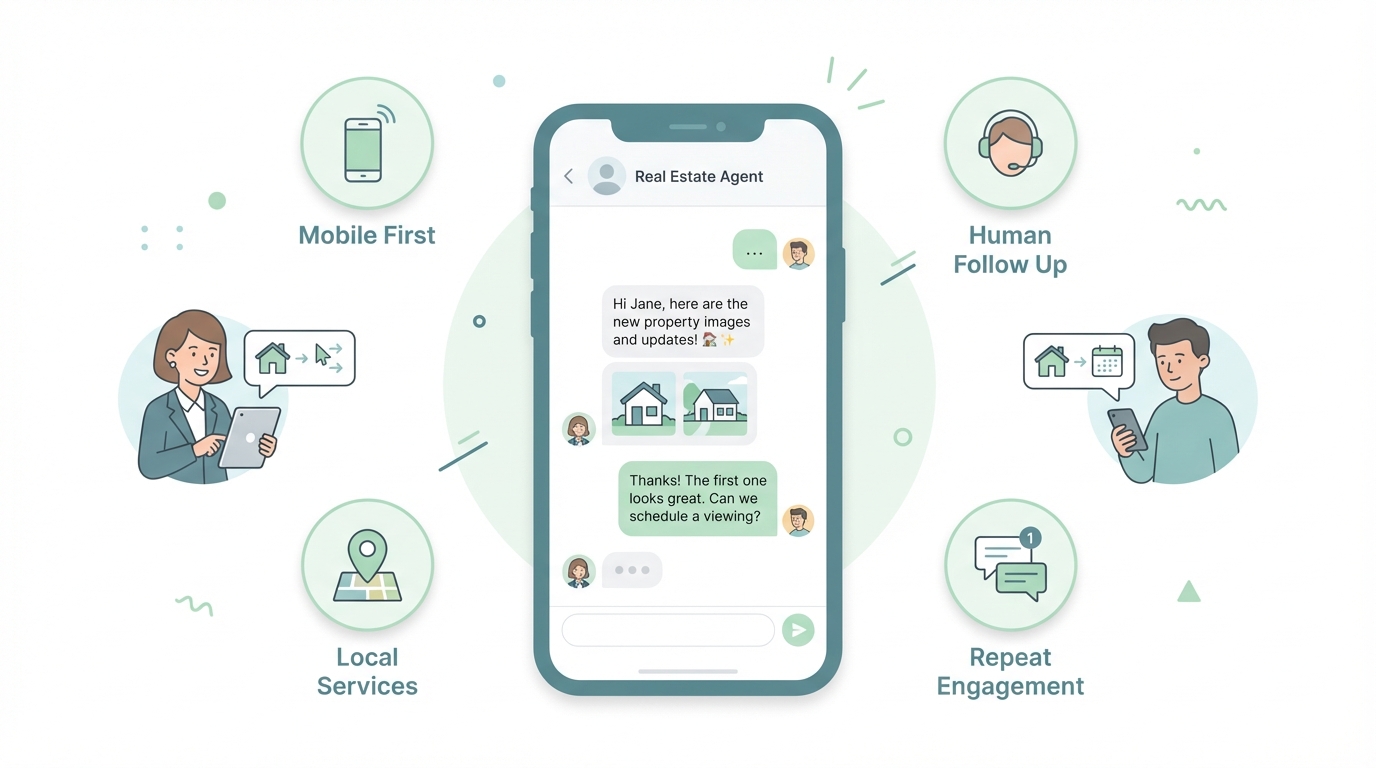
WhatsApp works well when:
• Your audience is mobile first
• Your sales process requires human follow-up
• You sell local services
• You rely on repeat engagement
For example, a real estate agent sending property updates benefits from WhatsApp continuity.
But for B2B SaaS or high-intent search traffic, a website chatbot usually converts better.
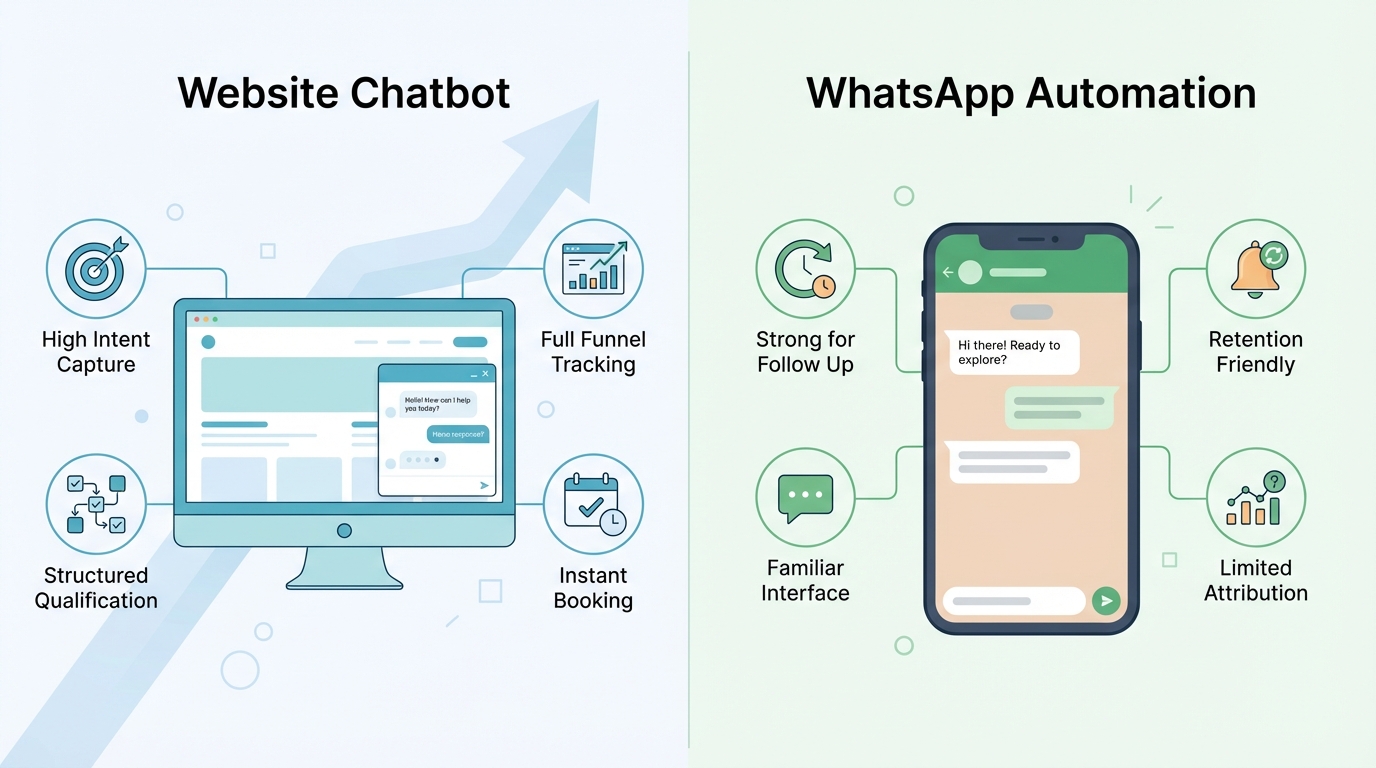
Visual Comparison
Website Chatbot
• High intent capture
• Structured qualification
• Full funnel tracking
• Instant booking
WhatsApp Automation
• Strong for follow-up
• Familiar interface
• Works well for retention
• Limited deep attribution
So What Converts Better
If your goal is:
Search traffic → Demo booking → Predictable revenue
Website chatbot wins more often.
If your goal is:
Ad click → Human chat → Relationship building
WhatsApp automation supports that journey.
Many fast-growing SaaS brands use both.
Website chatbot captures and qualifies.
WhatsApp nurtures and follows up.
But if you must choose one for conversion rate optimization on your own website, start with the chatbot.
Because when intent is high, and answers are instant, people move forward.
And speed wins revenue.
Capture High-Intent Leads Instantly
Add a website chatbot that qualifies visitors, answers questions instantly, and books demos without platform switching.