What Happens to Your Business When Customers Wait More Than 5 Minutes
Created: 27/01/2026

You check your watch. You tap your foot. You look at the door.
We all know the feeling of waiting. It is annoying. It is frustrating. But for a business owner, it is dangerous.
There is a specific number you need to watch. That number is five minutes.
Data shows that five minutes is the breaking point. Before that mark, customers are patient. After that mark, you enter a danger zone where revenue drops and reputation crumbles.
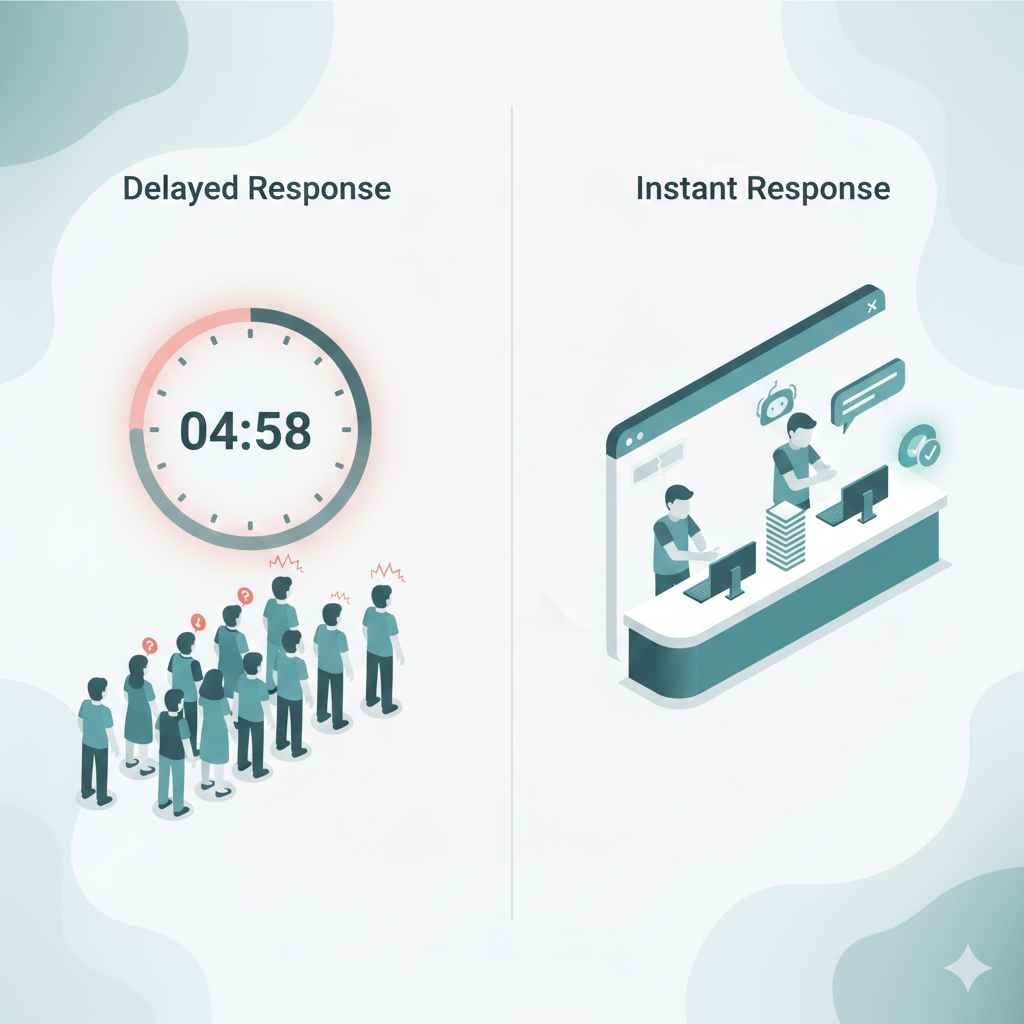
Stop Losing Customers to Slow Responses
Set up instant responses for common questions so customers feel acknowledged within seconds, not minutes.
The 5-Minute Window Changes Everything
Companies that contacted potential customers within five minutes were 100 times more likely to connect than those who waited 30 minutes.
Think about that. The difference between responding in five minutes versus half an hour isn't marginal. It's exponential.
But this isn't just about lead conversion. It applies to customer service, support tickets, and any interaction where someone's waiting for your response.

Your Customers Are Making Decisions Without You
Here's what actually happens when customers wait longer than five minutes:
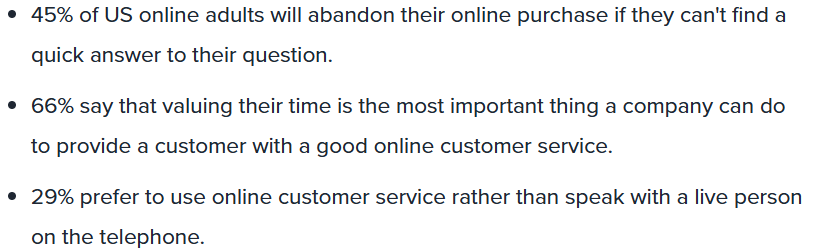
They contact your competitor. A Forrester study found that 45% of US consumers will abandon an online transaction if their questions aren't answered quickly. They're not sitting around refreshing their email. They're opening a new tab and searching for someone who will respond.
They form negative opinions about your brand. Microsoft's State of Global Customer Service report revealed that 60% of consumers have stopped doing business with a brand due to poor customer service. Wait times are the most common complaint.

They tell other people. According to American Express, Americans tell an average of 15 people about poor service experiences. That number jumps to 20 people when it comes to exceptional service. The difference? Often, it's response time.
Here is the data on what happens to your business when the clock ticks past minute five.
1. You Lose the Sale Immediately
Most customers will not wait. They simply leave.
Studies on retail and service queues show a sharp drop in patience after five minutes. About 73% of customers will abandon a purchase if they have to wait longer than five minutes to check out.
Think about that. You paid for marketing to get them in the door. You paid for inventory. You paid for the lights. The customer picked out the item. They wanted to buy it.
Then they saw a line. They waited. They checked their phone. Then they put the item down and walked out.
You did not just lose a sale. You lost the return on every dollar you spent to acquire that customer.

2. Your Customer Lifetime Value Tank
The damage does not stop at the lost sale. It hits your future revenue too.
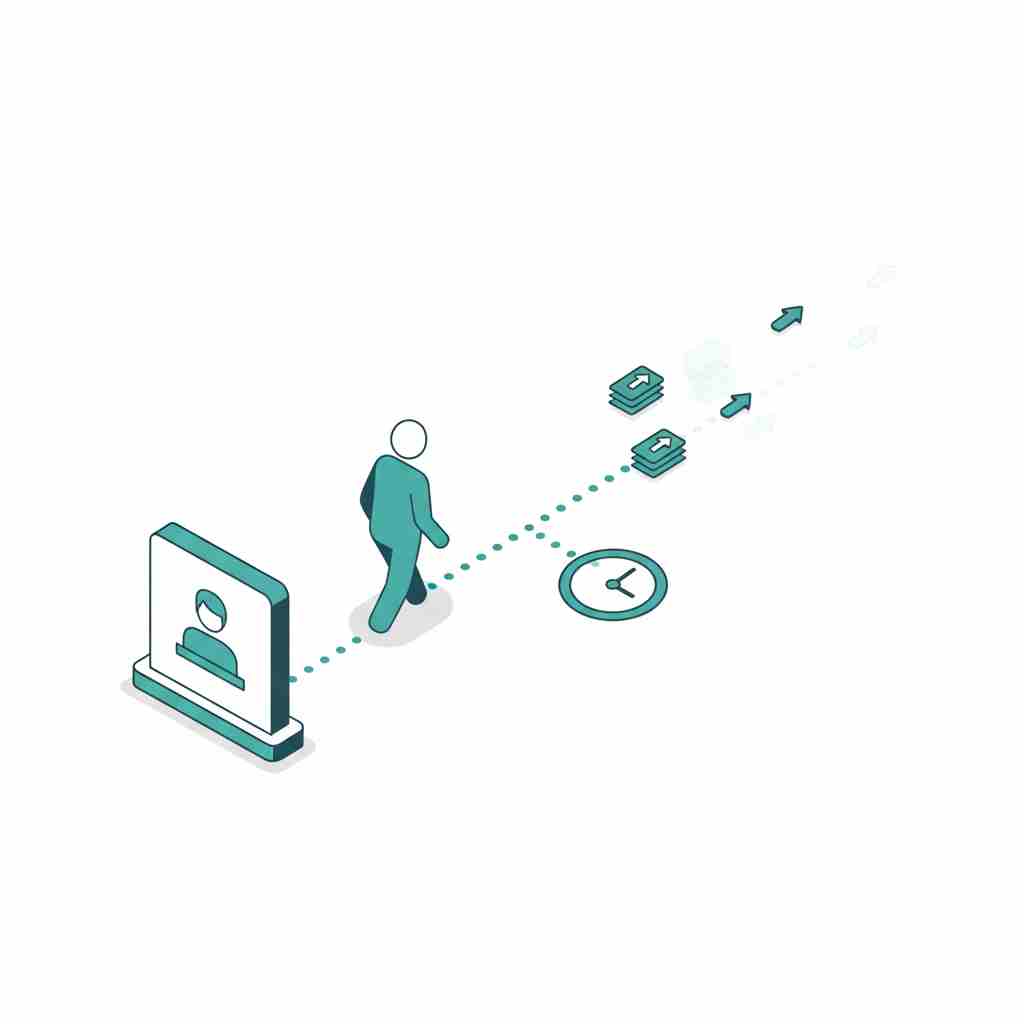
Customers who wait too long do not come back. Research indicates that 68% of customers leave a business because of perceived indifference. Long wait times scream indifference. They tell the customer you do not respect their time.
When a customer leaves angry, they take their future wallet with them.
If your average customer spends $50 a month and stays for two years, that customer is worth $1,200. If you make them wait ten minutes and they vow never to return, you did not lose $50. You lost $1,200.
3. The Negative Reviews Pile Up
Angry customers talk louder than happy ones.
A customer who gets fast service might tell one friend. A customer who waits 20 minutes will tell everyone.
Data suggests customers are 50% more likely to share a bad experience on social media than a good one. One bad review mentioning "slow service" or "long lines" scares away future customers who have never even visited you.
It creates a reputation tax. You have to work twice as hard to convince new people to visit because your Google Maps profile warns them about the wait.

4. Your Staff Burns Out
This is the hidden cost most managers miss. Long waits hurt your employees as much as your customers.
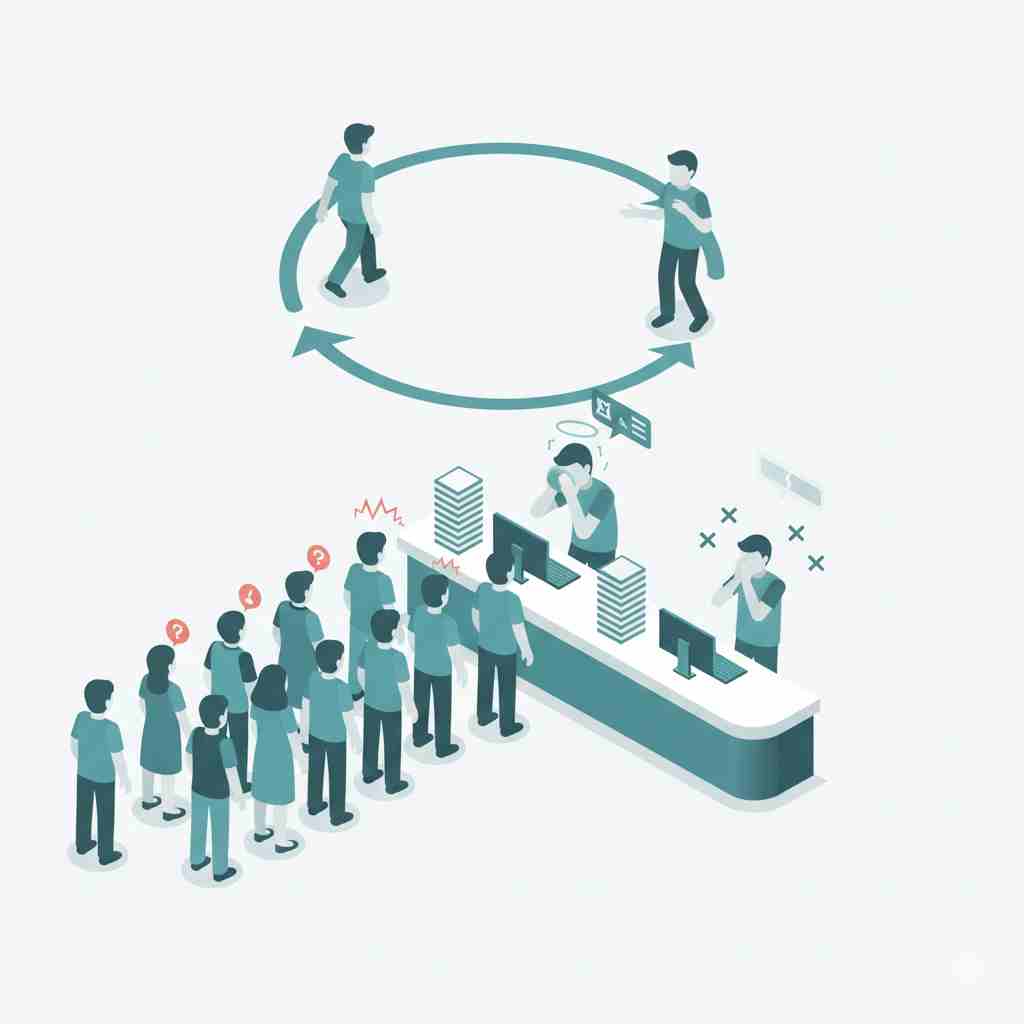
When the queue is long, your team is under siege. Every person who reaches the front of the line is already annoyed. Your staff has to start every interaction with an apology. They have to deescalate tension before they can even do their job.
This is exhausting. Staff satisfaction scores drop by around 18% when employees consistently deal with frustrated customers.
Burnt out staff make more mistakes. They work slower. They quit. Now you have to hire and train new people, which makes the service even slower. It is a downward spiral.
What Businesses That Fix This Do Differently
The companies that avoid this problem do not magically hire huge teams. They redesign how information flows.
Here is what works in practice.
First, acknowledge fast even if resolution takes time. A simple response within one minute changes the entire tone.
Second, answer repeat questions automatically. Shipping status, pricing details, refund rules, schedules. These do not need humans.
Third, route complex issues to humans with context. When agents start with the full history, resolution speeds up.
Fourth, measure first response time obsessively. Not average. Look at the worst cases. That is where trust breaks.
Why Five Minutes Is the Line
Five minutes is not arbitrary. It aligns with human attention and anxiety thresholds.
Before five minutes, people assume delay is temporary.
After five minutes, they assume neglect.
Once that switch flips, recovery costs more time, more effort, and more goodwill.
That is why response speed often matters more than resolution speed.
The Real Cost of Waiting
Waiting does not just slow things down. It changes how customers judge your business.
• They buy less.
• They trust less.
• They recommend less.
And none of this shows up neatly in a dashboard unless you look for it.
If customers are waiting more than five minutes, the business is paying for it every day. Quietly. Consistently. And unnecessarily.
Stop Losing Customers to Slow Responses
Use AI to handle first responses automatically and keep customers from walking away while they wait.