Social Media Manager Portfolio: How to Showcase Your Skills and Work
Created: 28/10/2026
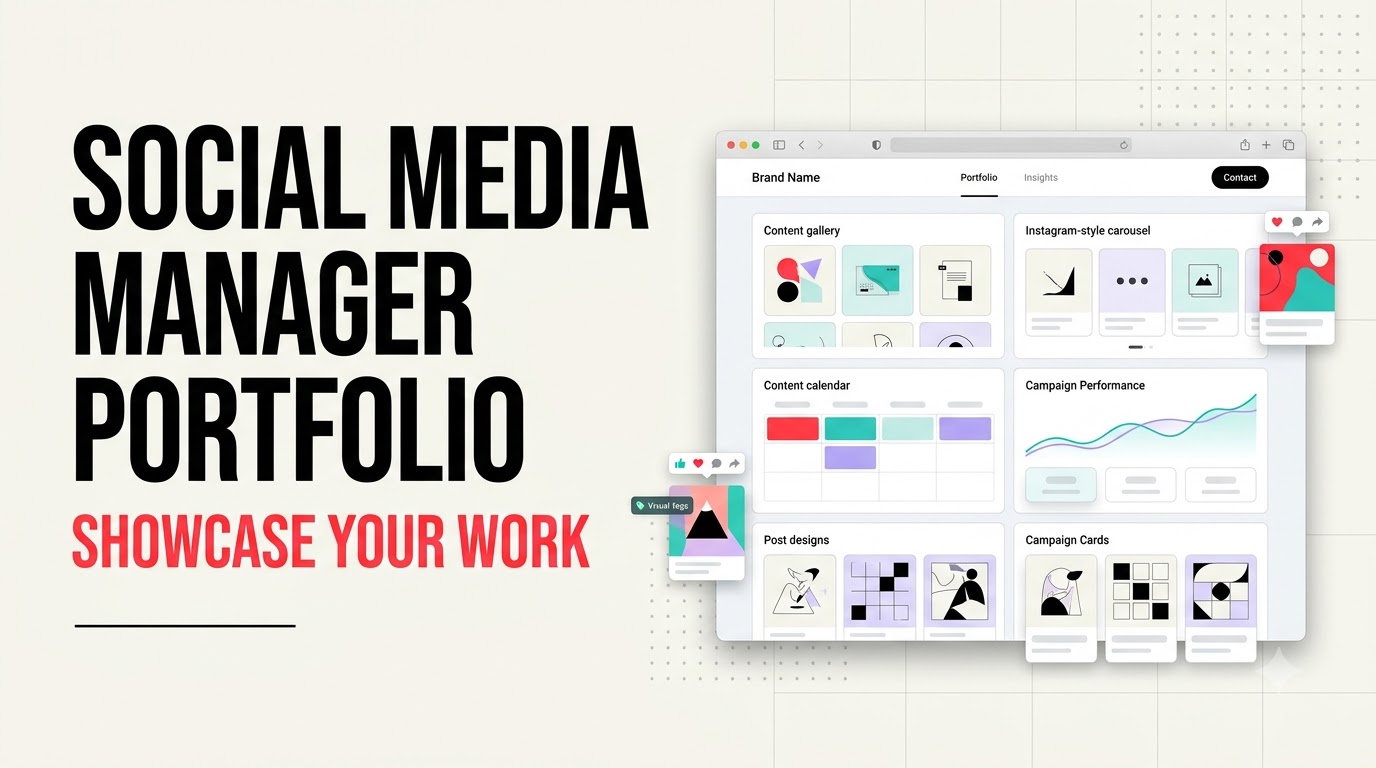
A social media manager portfolio website helps you showcase your content, campaigns, creative ideas, and marketing skills in one place. Whether you're a freelancer, student, or aspiring social media manager, a portfolio can help you attract clients, apply for jobs, and demonstrate what you can do.
You don't need years of professional experience to create one. Personal projects, sample campaigns, and content created for practice can also help you build a portfolio.
What to Include in a Social Media Manager Portfolio
A professional portfolio should highlight your ability to create content, plan campaigns, and understand social media audiences.
Include these sections:
• Introduction: Briefly explain who you are and what type of social media management you specialize in.
• Content Portfolio: Showcase social media posts, reels, carousels, and other content you've created.
• Campaigns: Present marketing campaigns with their goals, creative concepts, and results.
• Skills: Highlight content planning, copywriting, analytics, social media strategy, and community management.
• Case Studies: Explain the challenge, your approach, and the outcome of selected projects.
• Contact: Add your email address and professional social media profiles.
Social Media Manager Portfolio Project Ideas
If you don't have client work yet, you can create sample projects to demonstrate your skills.
Some ideas include:
• Create a 30-day Instagram content calendar for a fictional brand.
• Design a social media campaign for a product launch.
• Develop a content strategy for a local business.
• Create sample posts and reels for a brand in your preferred industry.
• Analyze a brand's social media presence and suggest improvements.
Clearly label practice projects as self-initiated or conceptual work.
How to Create a Social Media Manager Portfolio With AI
You can create a portfolio website without coding by using an AI website builder. These tools help generate a website structure and design from a simple description.
For example, with Simplagents, you can describe the portfolio you want and use AI to generate the initial website.
Try this prompt:
“Create a modern social media manager portfolio website. Include a homepage, introduction, social media services, content gallery, campaign case studies, skills, and contact section. Use a clean editorial design with a white background, black typography, and vivid red accents. Make it responsive and easy to navigate.”
Once the website is generated, add your actual content, project images, campaign examples, and professional details. Review the website carefully before publishing.
What portfolio website would you like to create?
Describe your work, skills, or personal brand, and AI will create a professional portfolio website for you.
Tips for a Strong Portfolio
Keep your portfolio organized and easy to navigate. Focus on showing the quality of your work and explaining your contribution to each project.
Use clear descriptions and include campaign results when you have reliable data. If you're showcasing sample work, make it clear that it's a concept or practice project.
Make sure the website works well on mobile devices and that visitors can easily contact you.
Final Thoughts
A social media manager portfolio helps you demonstrate your creative skills, strategic thinking, and ability to plan content and campaigns.
Start with a few strong projects, showcase your best work, and keep updating your portfolio as you gain experience.
You can build your website by coding it yourself or use an AI website builder such as Simplagents to create the initial portfolio without coding.
Social Media Manager Portfolio Templates
Explore ready-made templates to showcase your content, social media campaigns, skills, services, and case studies. Customize your portfolio to attract clients, recruiters, and potential employers.